Galaxy Z Fold7 Vs Motorola Moto G14

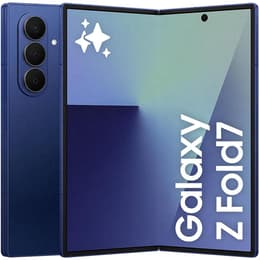
Galaxy Z Fold7
Galaxy Z Fold7
Starting at

Refurbished price:£916.00

Versus £1,799.00 new

See options
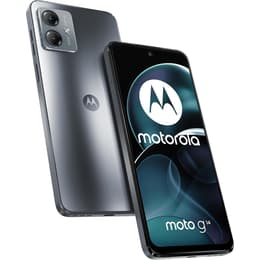
Motorola Moto G14
Motorola Moto G14
See options

Ratings

The Samsung Galaxy Z Fold7, released in July 2025, and the Motorola Moto G14, launched in August 2023, represent distinct approaches to smartphone design and functionality. The Z Fold7 offers a premium, foldable experience, transforming from a traditional smartphone into a tablet-like device, while the Moto G14 provides a conventional, budget-friendly smartphone experience. Both devices operate on the Android platform, but cater to very different user needs and expectations.

Scores

Durability

The longevity and support for these two devices differ significantly, primarily due to their market positioning and release timelines.

  • Software Support: The Galaxy Z Fold7 is designed for extended use, launching with Android 16 and One UI 8, and is promised up to seven years of operating system and security updates, potentially extending its support until October 2032. In contrast, the Moto G14, originally released with Android 13, typically receives fewer major Android updates and security patches, often limited to two to three years, and these updates can sometimes be delayed.
  • Physical Durability: The Z Fold7 features an IP48 rating for dust and water resistance, along with a Ceramic Shield on its cover screen and an Advanced Armour Aluminium frame, contributing to its overall robustness. However, its complex foldable design, particularly the inner screen, can be challenging to repair, with some assessments giving it a low repairability score. The Moto G14 offers an IP52 rating, indicating dust and splash resistance, and is constructed with plastic materials. While its simpler design may make certain repairs more straightforward, its overall build is less premium.
  • Expected Lifespan: Users prioritizing long-term software support and access to the latest features will find the Z Fold7's extended update policy beneficial. For the Moto G14, its practical lifespan is more aligned with its shorter software support window, though its less complex hardware might offer a different kind of reliability for everyday use.

Year of Release

2025

2023

Compatible with latest Update

Yes

Yes

OS

Android

Android

Foldable

Yes

No

Performance

The performance capabilities of the Galaxy Z Fold7 and the Moto G14 are tailored to their respective market segments, offering vastly different user experiences.

  • Processing Power: The Galaxy Z Fold7 is equipped with a high-end, current-generation processor, enabling it to handle demanding applications, intensive multitasking, and graphic-rich gaming with smooth and responsive performance. This allows for seamless transitions between multiple open applications on its large internal display. The Moto G14, powered by an entry-level processor, is suitable for everyday tasks such as web browsing, social media, and light applications. Some users have reported occasional lag or performance issues, particularly after software updates.
  • Memory and Storage: The Z Fold7 comes with substantial RAM options, typically 12GB or 16GB for the highest storage variant, supporting its advanced multitasking features. Its storage options range up to 1TB, utilizing faster UFS 4.0 technology for quicker data access. The Moto G14 offers 4GB or 8GB of RAM and storage options up to 256GB, using UFS 2.2 technology. While adequate for basic use, these specifications mean less headroom for heavy multitasking or storing large amounts of data and applications.
  • Battery Performance: The Galaxy Z Fold7 features a 4,400 mAh dual battery, with mixed user feedback regarding its ability to last a full day under heavy usage, and charging speeds are noted as moderate. The Moto G14 houses a larger 5,000 mAh battery, but some users have reported that its battery life can be less than expected, even with basic usage.

Memory (GB)

12 GB

4 GB

Screen quality

The display technologies and viewing experiences offered by these two smartphones are a primary point of differentiation.

  • Display Technology and Clarity: The Galaxy Z Fold7 features two Dynamic AMOLED 2X displays. The main foldable screen measures 8.0 inches, offering vibrant colors, deep blacks, and high contrast, with a resolution of 2184 x 1968 pixels for sharp visuals. The cover display is a 6.5-inch Dynamic AMOLED 2X panel with a resolution of 2520 x 1080 pixels and a wider 21:9 aspect ratio, providing a more traditional smartphone experience when folded. The Moto G14 utilizes a 6.5-inch IPS LCD display with a Full HD+ resolution of 2400x1080 pixels. While offering clear visuals, LCD technology generally provides less vibrant colors and contrast compared to AMOLED panels.
  • Brightness and Refresh Rate: The Z Fold7's displays boast an adaptive refresh rate ranging from 1Hz to 120Hz, ensuring smooth scrolling and responsive interactions, and can reach high brightness levels of up to 2,600 nits for excellent outdoor visibility. The Moto G14 features a standard refresh rate, which is suitable for general use but does not offer the same level of fluidity as higher refresh rate displays. Its brightness levels are also typically lower than premium AMOLED screens.
  • Viewing Experience: The Z Fold7's large, foldable inner screen provides an expansive canvas ideal for media consumption, productivity with multiple applications open simultaneously, and immersive gaming. The Moto G14 offers a conventional smartphone viewing experience, suitable for everyday tasks and media, but without the tablet-like versatility of a foldable device.

Resolution

1968 x 2184

1080 x 2400

Audiovisual

The camera systems of the Galaxy Z Fold7 and the Moto G14 are designed for different levels of photographic capability and user expectations.

  • Rear Camera System: The Galaxy Z Fold7 features a versatile triple-camera setup on the rear, including a high-resolution 200 MP wide-angle primary sensor with optical image stabilization, a 12 MP ultra-wide lens, and a 10 MP telephoto lens capable of 3x optical zoom and up to 30x digital zoom. This system is enhanced by advanced image processing, allowing for detailed photos, improved low-light performance, and sophisticated scene analysis. The Moto G14 comes with a dual-camera system, comprising a 50 MP primary sensor and a 2 MP macro lens. This setup is designed for basic photography, performing well in good lighting conditions but offering less versatility and detail in challenging environments.
  • Front-Facing Cameras and Video: For selfies and video calls, the Z Fold7 includes a 10 MP camera on its cover screen and another 10 MP camera integrated into the main display. Its video recording capabilities are advanced, supporting high-resolution capture with features like always-on 10-bit HDR+. The Moto G14 features an 8 MP front-facing camera. Both devices are capable of recording video, with the Moto G14 supporting 1080p at 30 frames per second.
  • Audio Experience: The Galaxy Z Fold7 provides a rich audio experience, suitable for media consumption and calls. The Moto G14 includes stereo speakers with Dolby Atmos support, offering an enhanced audio output for its class.

Miscellaneous

Beyond core features, several practical elements distinguish the Galaxy Z Fold7 and the Moto G14, impacting daily usability and connectivity.

  • Connectivity Standards: The Galaxy Z Fold7 supports 5G connectivity, along with newer Wi-Fi standards and Bluetooth 5.3, ensuring fast and reliable wireless connections for data, streaming, and peripheral devices. The Moto G14 supports 4G LTE networks, Wi-Fi 5 (802.11 a/b/g/n/ac), and Bluetooth 5.0, providing solid connectivity for everyday needs.
  • Ports and Sensors: Both devices feature a USB Type-C port for charging and data transfer. The Moto G14 retains a 3.5mm headphone jack, offering direct compatibility with wired audio accessories. The Z Fold7 relies on USB-C for audio output or wireless solutions. For security, the Z Fold7 incorporates advanced biometric options, while the Moto G14 includes a side-mounted fingerprint sensor.
  • Design and Handling: The Z Fold7, at 215g, is notably thin and light for a foldable device, measuring 8.9mm when folded and 4.2mm when unfolded, making it comfortable to handle in both its smartphone and tablet forms. Its premium build materials include glass and aluminum. The Moto G14, weighing 177g, has a traditional slab design with dimensions of 161.46 x 73.82 x 7.99 mm, and features a plastic build.

Weight

187 g

177 g

Screen size (in)

8

6.5

Mobile network

5G

4G

SIM card

Dual Physical SIM + eSIM

Dual Physical SIM

Carrier compatibility

Unlocked

Unlocked

Connector

USB-C

USB-C + Jack 3.5mm

The Samsung Galaxy Z Fold7 and the Motorola Moto G14 cater to fundamentally different user demographics, each excelling in its intended purpose. The Z Fold7 is frequently praised by users for its innovative foldable form factor, offering the versatility of a large tablet display in a portable smartphone design. Its thinness and improved cover screen are often highlighted as significant advancements, enhancing one-handed use and overall user experience. Users appreciate its powerful performance for demanding tasks and the extensive software support. However, some common criticisms include concerns about the long-term durability of the inner foldable screen, the camera quality being good but not always matching the absolute best in traditional flagship phones, and moderate battery life with slower charging speeds compared to some competitors.

The Motorola Moto G14 is generally seen as a reliable, straightforward smartphone that offers good value for basic daily use. Users often commend its traditional design and the inclusion of a 3.5mm headphone jack. However, frequent criticisms revolve around its performance, with some users reporting lag, buggy software experiences, and inconsistent battery life, particularly after major Android updates. Its camera system is considered adequate for casual photography but lacks advanced features and performance in challenging conditions.

Users prioritizing cutting-edge technology, a versatile large-screen experience for productivity and media, and long-term software support will find the Samsung Galaxy Z Fold7 well-suited to their needs. It is an ideal choice for those who desire a device that can seamlessly transition between a compact smartphone and a mini-tablet. Conversely, users seeking a dependable, traditional smartphone for essential communication, social media, and light browsing, without the need for advanced features or a foldable design, may lean towards the Motorola Moto G14. For those considering either device, exploring quality-assured refurbished options can provide an eco-friendly alternative to access these technologies.

See all articles

Our recent comparisons