
Galaxy Z Fold7 Vs Google Pixel 9 Pro Fold

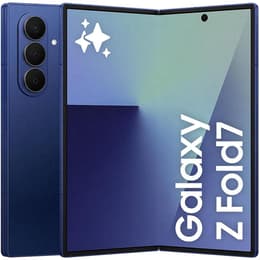
Galaxy Z Fold7
Galaxy Z Fold7
Starting at

Refurbished price:£916.00

Versus £1,799.00 new

See options
Google Pixel 9 Pro Fold
Starting at

Refurbished price:£543.00

Versus £1,739.49 new

See options

Ratings

The Samsung Galaxy Z Fold7, released in July 2025, and the Google Pixel 9 Pro Fold, launched in September 2024, represent two distinct approaches to the foldable smartphone experience. Both devices offer a large, tablet-like display when unfolded, alongside a more conventional smartphone form factor when closed. Key differentiators lie in their design philosophy, camera systems, and the underlying software experiences they offer.

Scores

Durability

When considering the long-term usability of these foldable devices, several factors contribute to their expected lifespan, including software support and physical durability.

  • Release Timeline: The Galaxy Z Fold7 was released in July 2025, making it a more recent device compared to the Pixel 9 Pro Fold, which launched in September 2024. This difference in release dates means the Z Fold7 will generally receive software updates for a slightly longer period.
  • Software Longevity: Both manufacturers commit to extensive software support. The Galaxy Z Fold7 is promised up to seven years of operating system and security updates, extending its support until approximately October 2032. Similarly, the Pixel 9 Pro Fold also offers seven years of OS and security updates, with support expected until 2031.
  • Physical Durability: The Galaxy Z Fold7 features an IP48 rating, Ceramic Glass 2, Advanced Armour Aluminium, and an Armor FlexHinge, designed to withstand up to 500,000 folds, which translates to a potential 10-year durability for an average user. The Pixel 9 Pro Fold comes with an IPX8 water resistance rating, indicating protection against submersion in water.

Year of Release

2025

2024

Compatible with latest Update

Yes

Yes

OS

Android

Android

Foldable

Yes

Yes

Performance

The performance of a foldable smartphone is crucial for seamless multitasking and demanding applications, with both devices offering robust capabilities tailored to their respective ecosystems.

  • Processing Power: The Galaxy Z Fold7 is equipped with a current-generation processor designed for high performance, particularly noted for its efficiency and capability in handling intensive tasks and gaming. The Pixel 9 Pro Fold utilizes Google's own processor, which is optimized for artificial intelligence tasks and overall system efficiency, providing a smooth user experience for everyday applications and AI-driven features.
  • Multitasking and Responsiveness: The Galaxy Z Fold7 offers 12GB of RAM in its standard configuration, with a 16GB option available for the 1TB storage variant, facilitating fluid multitasking across its expansive display. The Pixel 9 Pro Fold comes standard with 16GB of RAM, which supports its AI capabilities and ensures responsive performance even with multiple applications running simultaneously.
  • Storage Options: Users of the Galaxy Z Fold7 can choose from 256GB, 512GB, or a substantial 1TB of internal storage, utilizing UFS 4.0 technology for faster data access. The Pixel 9 Pro Fold provides 256GB or 512GB storage options, using UFS 3.1.

Memory (GB)

12 GB

16 GB

Screen quality

The display experience is central to foldable phones, and both the Galaxy Z Fold7 and Pixel 9 Pro Fold offer high-quality screens with distinct characteristics.

  • Display Technology and Clarity: Both devices feature vibrant OLED displays for both their cover and main screens, delivering deep blacks and rich colors. The Galaxy Z Fold7's main 8.0-inch display and 6.5-inch cover display are Dynamic AMOLED 2X panels, offering sharp visuals. The Pixel 9 Pro Fold uses an 8.0-inch Super Actua Flex display and a 6.3-inch Actua display, both OLED, providing clear and detailed imagery.
  • Brightness and Refresh Rate: Both foldables offer high brightness levels, with the Galaxy Z Fold7's main screen reaching up to 2,600 nits under specific conditions, and the Pixel 9 Pro Fold's displays achieving up to 2,700 nits peak brightness. Both devices also feature adaptive refresh rates up to 120Hz on their main displays for smooth scrolling and responsiveness, with the Pixel 9 Pro Fold's main screen capable of dropping to 1Hz for power efficiency.
  • Screen Size and Aspect Ratio: The Galaxy Z Fold7 features a 6.5-inch cover screen with a 21:9 aspect ratio, designed to feel more like a traditional smartphone, and an 8.0-inch main screen. The Pixel 9 Pro Fold has a 6.3-inch cover display with a 20:9 aspect ratio and an 8.0-inch main display, offering a slightly different viewing experience when folded.

Resolution

1968 x 2184

2076 x 2152

Audiovisual

Camera capabilities are a significant consideration for many users, and both foldable phones integrate advanced systems with different strengths.

  • Rear Camera System: The Galaxy Z Fold7 boasts a triple rear camera setup, including a high-resolution 200 MP wide-angle sensor with optical image stabilization (OIS), a 12 MP ultra-wide lens, and a 10 MP telephoto lens offering 3x optical zoom. The Pixel 9 Pro Fold also features a triple rear camera system, comprising a 48 MP wide-angle camera with OIS, a 10.5 MP ultra-wide lens with autofocus, and a 10.8 MP telephoto lens capable of 5x optical zoom and 20x Super Res Zoom.
  • Photography Performance: The Galaxy Z Fold7 leverages its ProVisual Engine for enhanced image processing, aiming for detailed photos in various conditions. The Pixel 9 Pro Fold is known for its computational photography, offering features like Night Sight for low-light conditions and advanced AI photo editing tools.
  • Video and Audio Features: Both devices offer robust video recording capabilities. The Pixel 9 Pro Fold includes features such as Video Boost, Night Sight Video, and Audio Magic Eraser to enhance video quality and sound. The Galaxy Z Fold7 also provides high-quality video recording, benefiting from its powerful processor and image processing.

Miscellaneous

Beyond core specifications, several practical elements contribute to the overall user experience of these foldable smartphones.

  • Connectivity and Ports: The Galaxy Z Fold7 supports Wi-Fi 7, 5G, and Bluetooth 5.4, along with NFC and satellite capabilities. It features a USB Type-C port. The Pixel 9 Pro Fold also offers 5G connectivity (sub-6 and mmWave) and includes a new modem for improved call quality and satellite emergency services.
  • Design and Handling: The Galaxy Z Fold7 is notably thinner and lighter than its predecessor and the Pixel 9 Pro Fold, weighing 215 grams and measuring 8.9 mm when folded, making it feel more like a traditional smartphone. The Pixel 9 Pro Fold weighs 257 grams and is 10.5 mm thick when folded. Both devices feature a book-style folding mechanism.
  • Biometric Security and AI Integration: Both phones incorporate advanced security features. The Pixel 9 Pro Fold heavily integrates Google's AI, including Gemini Live and on-device AI photo generation. The Galaxy Z Fold7 also features the latest Galaxy AI and Google Gemini advancements, offering a blend of both ecosystems' intelligent functionalities.

Weight

187 g

257 g

Screen size (in)

8

8.0

Mobile network

5G

5G

SIM card

Dual Physical SIM + eSIM

Physical SIM + eSIM

Carrier compatibility

Unlocked

Unlocked

Connector

USB-C

USB-C

Choosing between the Samsung Galaxy Z Fold7 and the Google Pixel 9 Pro Fold involves weighing their distinct strengths against individual user needs. Users frequently praise the Galaxy Z Fold7 for its refined, lighter, and thinner design, which makes it feel more comfortable as a daily driver. Its larger cover screen with a more traditional aspect ratio is also a common point of appreciation, making it more usable when folded. The powerful processor and high-resolution main camera are also frequently highlighted as strong points.

On the other hand, the Pixel 9 Pro Fold receives acclaim for its deep integration of Google's AI features, offering a seamless and intelligent software experience. Its consistent camera performance, backed by Google's computational photography, is often a draw, along with its larger standard RAM. Some users, however, note its comparatively thicker and heavier build.

Users prioritizing a sleek, lightweight design with a high-resolution main camera and extensive storage options may find the Galaxy Z Fold7 well-suited to their needs. Its wider cover screen also appeals to those seeking a more conventional smartphone experience when the device is closed. Conversely, users who prioritize a deeply integrated AI experience, consistent camera performance with advanced computational photography, and a larger standard RAM configuration might lean towards the Google Pixel 9 Pro Fold. Both devices offer a premium foldable experience, and for those looking for an eco-friendly, quality-assured alternative, refurbished options for both models provide a sustainable choice.

See all articles

Our recent comparisons