
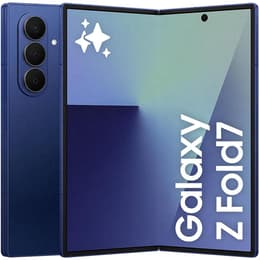
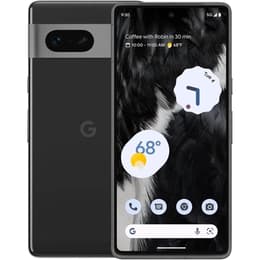

Galaxy Z Fold7 Vs Google Pixel 7

Galaxy Z Fold7
Galaxy Z Fold7
Starting at

Refurbished price:£916.00

Versus £1,799.00 new

See options
Google Pixel 7
Google Pixel 7
Starting at

Refurbished price:£140.99

Versus £649.99 new

See options

Ratings

The Samsung Galaxy Z Fold7, a foldable smartphone released in 2025, offers a distinct user experience compared to the Google Pixel 7, a traditional slab smartphone launched in 2022. The primary differentiator lies in their form factors, with the Z Fold7 providing an expansive, adaptable display and the Pixel 7 focusing on a conventional, pocketable design. Both devices operate on the Android platform, but their approaches to hardware and software integration cater to different user priorities.

Scores

Durability

When considering the longevity of these devices, their respective release timelines and software support policies are key factors.

  • Software Support: The Galaxy Z Fold7, being a newer device, is expected to receive Android operating system updates and security patches for a longer duration than the Pixel 7. The Pixel 7 is guaranteed OS updates until October 2025 and security updates until October 2027, offering a solid period of support from its 2022 release.
  • Physical Durability: The Pixel 7 features Corning Gorilla Glass Victus for its display and an IP68 rating for dust and water resistance, indicating robust protection against environmental elements. The Galaxy Z Fold7 incorporates an improved Armor FlexHinge and an Advanced Armor Aluminum frame, with its cover display protected by Gorilla Glass Ceramic 2. While foldable technology has advanced significantly, the Z Fold7 carries an IP48 rating, offering substantial water resistance but less dust protection compared to the Pixel 7. Foldable hinges are now rated for hundreds of thousands of folds, suggesting a practical lifespan for the folding mechanism.
  • Practical Lifespan: Users can expect the Pixel 7 to remain a capable device for several years, benefiting from its continued software support. The Z Fold7, with its newer technology and extended support window, is designed for a longer functional life, particularly for those who value cutting-edge features and the evolving foldable experience.

Year of Release

2025

2022

Compatible with latest Update

Yes

Yes

OS

Android

Android

Foldable

Yes

No

Performance

The performance capabilities of these two smartphones reflect their different generations and design philosophies.

  • Processing Power: The Galaxy Z Fold7 is equipped with a more recent and powerful processor, the Snapdragon 8 Elite for Galaxy chipset, which is designed to handle demanding applications and extensive multitasking with ease. The Pixel 7, powered by the Google Tensor G2, delivers smooth performance for everyday tasks, app switching, and casual gaming, with its focus on AI and machine learning enhancements.
  • Multitasking and Responsiveness: With up to 16GB of RAM in its highest configuration, the Z Fold7 is built for seamless multitasking across its large foldable display, allowing users to run multiple applications simultaneously without noticeable slowdowns. The Pixel 7, with 8GB of RAM, provides a responsive experience for typical smartphone usage, though it may not match the Z Fold7's capacity for heavy, simultaneous application use.
  • Storage Options: Both devices offer various internal storage capacities, with the Z Fold7 extending to 1TB in some models, catering to users with extensive storage needs for media and applications. The Pixel 7 typically comes with 128GB or 256GB storage options.

Memory (GB)

12 GB

8 GB

Screen quality

The display experience is a major point of divergence between the Galaxy Z Fold7 and the Google Pixel 7, primarily due to the Z Fold7's foldable design.

  • Display Technology and Size: The Galaxy Z Fold7 features two Dynamic AMOLED 2X displays: an expansive 8-inch inner foldable screen and a 6.5-inch cover screen. This allows for a tablet-like experience when unfolded and a more traditional smartphone experience when closed. The Pixel 7 has a single 6.3-inch OLED display.
  • Resolution and Refresh Rate: The Z Fold7's inner display offers a resolution of 1968 x 2184 pixels, while its cover screen is 1080 x 2520 pixels, both supporting a variable refresh rate of 1-120Hz for smooth visuals. The Pixel 7 provides a Full HD+ (2400x1080) resolution with a 90Hz refresh rate, delivering clear images and fluid scrolling.
  • Brightness and Clarity: The Z Fold7's inner display can reach a peak brightness of 2,600 nits, ensuring excellent visibility even in bright outdoor conditions. The Pixel 7's display can achieve up to 1000 nits in typical use and a peak of 1400 nits, offering good outdoor readability.

Resolution

1968 x 2184

1080 x 2400

Audiovisual

Both devices offer capable camera systems, though they approach photography with different hardware and software strengths.

  • Camera Hardware: The Galaxy Z Fold7 boasts a high-resolution 200MP main sensor, complemented by a 12MP ultrawide lens and a 10MP telephoto lens with 3x optical zoom. It also includes two 10MP front-facing cameras. The Pixel 7 features a 50MP main camera and a 12MP ultrawide camera, along with a 10.8MP front camera.
  • Photography Performance: The Z Fold7's advanced hardware, particularly its 200MP sensor, is designed to capture significant detail and vibrant colors, with AI enhancements for various lighting conditions. The Pixel 7 is renowned for its computational photography, which uses software to enhance images, resulting in excellent low-light performance, accurate colors, and sharp details even without a dedicated telephoto lens.
  • Video and Audio: Both phones are capable of high-quality video recording. The Z Fold7's ProVisual Engine processes images faster, and it offers features like Night Video. The Pixel 7 also provides strong video capabilities, with features like Cinematic Blur. For audio, both devices offer stereo speakers for media consumption and clear microphone quality for calls.

Miscellaneous

Beyond the core features, several practical elements contribute to the overall user experience of each device.

  • Connectivity: Both the Galaxy Z Fold7 and the Google Pixel 7 support 5G networks for fast mobile data. The Z Fold7 is expected to feature newer Wi-Fi standards and Bluetooth 5.3, offering potentially faster and more stable wireless connections. The Pixel 7 supports Wi-Fi 6E and Bluetooth 5.2.
  • Ports and Sensors: Both devices utilize a USB-C port for charging and data transfer. Neither includes a traditional 3.5mm headphone jack. For security, the Pixel 7 offers an under-display optical fingerprint sensor and face unlock. The Z Fold7 also incorporates advanced biometric security.
  • Design and Handling: The Galaxy Z Fold7 is designed to be thinner and lighter than previous foldable generations, weighing 215 grams and measuring 8.9mm when folded and 4.2mm unfolded. This makes it a versatile device that can be used as a compact phone or an expansive tablet. The Pixel 7, at 197 grams and 8.7mm thick, offers a more traditional, comfortable single-hand grip.

Weight

187 g

197 g

Screen size (in)

8

6.3

Mobile network

5G

5G

SIM card

Dual Physical SIM + eSIM

Physical SIM + eSIM

Carrier compatibility

Unlocked

Unlocked

The choice between the Samsung Galaxy Z Fold7 and the Google Pixel 7 largely depends on individual user preferences and priorities. Users often praise the Pixel 7 for its exceptional camera performance, particularly its computational photography features that deliver consistent and high-quality images across various conditions. Its clean Android experience and timely software updates are also frequently highlighted as strong points. Some users, however, have noted that while its battery life is generally sufficient for a full day, it might require a top-up for very heavy usage.

The Galaxy Z Fold7, on the other hand, receives acclaim for its innovative foldable form factor, offering a unique blend of smartphone portability and tablet-like screen real estate. Its powerful performance and enhanced multitasking capabilities are significant advantages for productivity-focused users. The improved durability of its hinge and frame, along with a high-resolution camera system, are also strong points. Potential concerns for foldable devices often revolve around their long-term screen durability and the overall bulk compared to traditional smartphones, though the Z Fold7 aims to address these with a thinner and lighter design.

Users prioritizing a cutting-edge, versatile device for productivity and immersive media consumption may find the Galaxy Z Fold7 well-suited to their needs. Conversely, those who value a more compact, traditional smartphone experience with a focus on exceptional photography and a streamlined software experience will likely lean towards the Google Pixel 7. Both devices offer a quality-assured refurbished option, providing an eco-friendly alternative for consumers seeking to make informed and sustainable choices.

See all articles

Our recent comparisons





