
Compare models
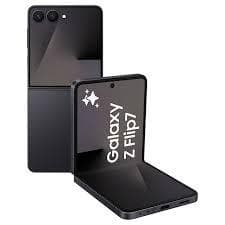
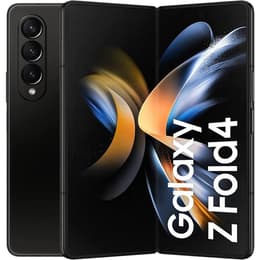
Galaxy Z Flip7 Vs Galaxy Z Fold4
- 1-year minimum warranty
- Free delivery on all items
- Free 30-day returns
Differences at a glance
The Samsung Galaxy Z Flip7 (2025) and the Samsung Galaxy Z Fold4 (2022) represent two distinct visions of foldable mobile technology. While the Galaxy Z Flip7 adopts a compact clamshell form factor that folds down into a pocket-friendly square, the Galaxy Z Fold4 offers a book-style design that unfolds into a tablet-sized workspace. Both devices operate on the Android platform with Samsung's custom interface, providing modern software features, but their physical hardware builds cater to entirely different daily workflows.
Available Models
Colour
Storage (GB)
Scores
Durability
When evaluating structural durability and expected software longevity, these two foldable devices reflect different generations of hinge and display engineering.
- Release timeline and age: The Galaxy Z Fold4 launched in 2022, placing it further along its support lifecycle, whereas the newer Galaxy Z Flip7 benefits from a more recent 2025 release date.
- Software support duration: The Galaxy Z Flip7 enjoys an extended software update window, ensuring newer system features and security patches arrive for a longer duration compared to its older counterpart.
- Practical lifespan: Both units utilize advanced folding glass technology, though the newer generation incorporates refined hinge mechanisms designed to withstand long-term daily folding habits.
Year of Release
2025
2022
Compatible with latest Update
Yes
Yes
OS
Android
Android
Foldable
Yes
Yes
Performance
System responsiveness and everyday processing capabilities differ noticeably based on the internal hardware generations packed into each device chassis.
- Everyday multitasking: Both models handle demanding applications, split-screen viewing, and background tasks smoothly, though the newer processor in the Galaxy Z Flip7 offers extra efficiency for heavy usage sessions.
- Battery behavior: The Galaxy Z Flip7 manages power efficiency effectively through modern hardware architecture, whereas the Galaxy Z Fold4 features a larger physical capacity to sustain its dual-screen configuration during heavy workloads.
- Storage configurations: Both devices provide ample internal storage tiers for media libraries and large applications, though neither model supports expandable storage cards.
Screen quality
Display technology represents a core differentiator, dictating how users interact with media, reading material, and outdoor visibility.
- Display technology: Both models rely on vibrant organic light-emitting diode panels that deliver deep contrast levels and rich colors, but the Galaxy Z Fold4 offers a massive tablet-like internal workspace alongside an outer cover screen.
- Brightness and outdoor use: The Galaxy Z Flip7 features a high-peak brightness panel that remains legible under direct sunlight, paired with an expansive outer cover screen for quick tasks without opening the phone.
- Refresh rate: Both screens support smooth high refresh rates, ensuring fluid scrolling through web pages and responsive touch interactions during gaming or note-taking.
Resolution
1080x2520
1812 x 2176
Audiovisual
Photography and media consumption setups vary significantly to match the unique physical postures available on each foldable chassis.
- Camera capabilities: The Galaxy Z Fold4 includes a dedicated telephoto zoom lens for distant subjects, while the Galaxy Z Flip7 relies on versatile wide and ultra-wide sensors paired with high-resolution main shooting modes.
- Selfie and video flexibility: Both devices excel at hands-free recording by utilizing their folding angles as built-in tripods, letting users capture stable video content or group shots without external mounts.
- Audio output: Stereo speakers on both models deliver clear sound for casual video viewing, phone calls, and media playback.
Main camera
50 megapixels
50 megapixels
Front camera
10 megapixels
4 megapixels
Miscellaneous
Physical dimensions, weight distribution, and connectivity standards dictate how comfortably each foldable fits into daily routines.
- Handling and weight: The Galaxy Z Flip7 is lighter and smaller when folded, sliding easily into tight pockets, whereas the Galaxy Z Fold4 is heavier and wider to accommodate its dual-screen tablet layout.
- Biometrics and sensors: Both devices feature responsive biometric security options, utilizing side-mounted fingerprint sensors and facial recognition for quick unlocking.
- Connectivity standards: Both models support rapid fifth-generation cellular networks, modern wireless local area network standards, and reliable Bluetooth pairing for wireless accessories.
Weight
188 g
263 g
Screen size (in)
6.9
7.6
Mobile network
5G
5G
SIM card
Physical SIM + eSIM
Dual Physical SIM + eSIM
Carrier compatibility
Unlocked
Unlocked
What the community thinks
User feedback highlights distinct preferences for each device based on everyday habits. Owners of the Galaxy Z Flip7 frequently praise its pocketable clamshell design, larger outer cover screen for quick interactions, and modern processor efficiency. Conversely, users of the Galaxy Z Fold4 often emphasize the productivity benefits of the expansive inner tablet screen and the inclusion of a dedicated zoom camera lens for photography. Common criticisms for the flip model revolve around battery capacity during intensive gaming, while the fold model receives notes regarding its heavier weight and bulkier pocket profile.
Users prioritizing pocket convenience, a stylish compact footprint, and modern daily smartphone ergonomics will find the Galaxy Z Flip7 well-suited to their needs. Meanwhile, users prioritizing expanded workspace for document editing, multitasking across multiple apps, and a tablet-sized viewing area may lean toward the Galaxy Z Fold4. For buyers seeking a sustainable choice, a quality-assured refurbished option provides a reliable path to owning either of these versatile foldable devices while reducing environmental impact.