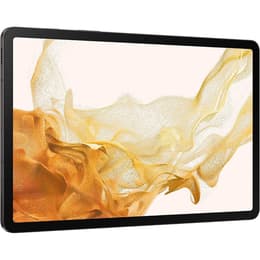
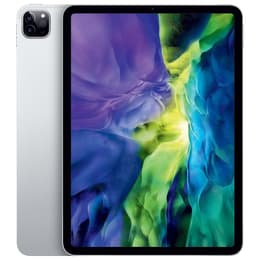
Galaxy Tab S8+ (12.4", 2022) Vs iPad Pro (2020, A12 series)

Galaxy Tab S8+ (12.4", 2022)
Starting at

Refurbished price:£323.36

Versus £999.00 new

See options
iPad Pro (2020, A12 series)
Starting at

Refurbished price:£296.00

Versus £769.00 new

See options

Ratings

The Samsung Galaxy Tab S8+ (released in 2022) and the Apple iPad Pro 12.9-inch (released in 2020) are both large-format tablets designed for productivity and media consumption. While the Galaxy Tab S8+ operates on Android with Samsung's One UI, the iPad Pro runs on Apple's iPadOS, offering distinct software experiences. Key differentiators include their display technologies and the ecosystems they belong to, influencing app availability and peripheral compatibility.

Scores

Durability

When considering the long-term usability of these devices, their release timelines and software support are important factors.

  • Release Timeline: The Galaxy Tab S8+ was released in early 2022, making it two years newer than the iPad Pro 12.9-inch, which launched in early 2020. This difference in release date typically translates to a longer period of official software support for the newer device.
  • Software Longevity: Samsung has committed to providing four major Android OS upgrades and five years of security updates for the Galaxy Tab S8+ series, suggesting support could extend until around 2027. Apple generally offers a longer software support window for its devices, often providing five to seven years of iPadOS updates, meaning the iPad Pro 2020 still receives current updates.
  • Build and Repairability: Both tablets feature premium constructions with glass fronts and aluminum backs and frames, contributing to their overall durability. While specific repairability scores can vary, both are designed with a focus on robust build quality.

Year of Release

2022

2020

Compatible with latest Update

Yes

Yes

OS

Android

iPadOS

Performance

Both tablets offer robust performance suitable for demanding tasks, though their underlying architectures differ.

  • Processing Power: The Galaxy Tab S8+ handles demanding applications, multitasking, and graphic-intensive games smoothly, thanks to its modern processor. Users report a responsive experience for everyday use and content creation. The iPad Pro 2020 also delivers strong performance, capable of running professional-grade applications and handling complex workflows without significant slowdowns. [10, 26]
  • Multitasking and Responsiveness: The Galaxy Tab S8+ benefits from 8GB or 12GB of RAM, allowing for efficient multitasking with multiple applications open simultaneously. The iPad Pro 2020, equipped with 6GB of RAM, also provides a fluid experience when switching between apps and managing various tasks. [3, 6, 7, 10, 11, 20]
  • Storage Options: The Galaxy Tab S8+ comes with 128GB or 256GB of internal storage and offers expandable storage via a microSD card slot, providing flexibility for users with large media libraries or extensive document collections. [2, 11, 20] The iPad Pro 2020 offers a wider range of internal storage configurations, from 128GB up to 1TB, but does not support expandable storage. [1, 6, 7, 15, 25, 26]
  • Battery Behavior: The Galaxy Tab S8+ features a 10,090 mAh battery, which users generally find provides good endurance for a full day of mixed usage. [12, 16, 20, 29, 36] The iPad Pro 2020, with its 9,720 mAh battery, is rated for up to 10 hours of web browsing or video playback on Wi-Fi. [6, 9, 15, 25]

Memory (GB)

8 GB

6 GB

Screen quality

The visual experience on both tablets is a highlight, though they employ different display technologies.

  • Display Technology: The Galaxy Tab S8+ features a 12.4-inch Super AMOLED display, known for its deep blacks, high contrast, and vibrant color reproduction. [2, 4, 12, 22, 23] The iPad Pro 2020 utilizes a 12.9-inch Liquid Retina IPS LCD panel, which offers excellent color accuracy, wide viewing angles, and consistent brightness. [1, 5, 6, 9, 10, 15, 25, 26]
  • Resolution and Clarity: The Galaxy Tab S8+ has a resolution of 2800 x 1752 pixels, resulting in sharp images and text. [2, 4, 23] The iPad Pro 2020 offers a resolution of 2732 x 2048 pixels, providing a high level of detail and clarity for reading, viewing content, and creative work. [1, 5, 6, 9, 15]
  • Refresh Rate and Brightness: Both tablets feature a 120Hz refresh rate, known as ProMotion on the iPad Pro, which contributes to smooth scrolling and a fluid user interface. [1, 2, 4, 6, 9, 10, 15, 22, 25] The iPad Pro 2020 has a typical brightness of 600 nits, while the Galaxy Tab S8+ reaches around 378 nits, impacting outdoor visibility. [1, 22, 25]

Resolution

1752 x 2800

2388 x 1668

Screen type

Super AMOLED

Liquid Retina display

Pixel density

270ppp

264ppp

Audiovisual

While tablets are not typically primary photography devices, both offer capable camera systems for various uses.

  • Rear Camera System: The Galaxy Tab S8+ includes a dual rear camera setup with a 13MP wide lens and a 6MP ultrawide lens, suitable for document scanning and casual photography. [2, 4, 11, 35] The iPad Pro 2020 features a more advanced dual rear camera system, comprising a 12MP wide lens, a 10MP ultrawide lens, and a LiDAR Scanner. [1, 3, 5, 8, 10, 13] The LiDAR Scanner enhances augmented reality (AR) experiences and improves depth sensing. [1, 3, 10, 26]
  • Front Camera Performance: For video calls and selfies, the Galaxy Tab S8+ is equipped with a 12MP ultrawide front camera, which can intelligently auto-frame subjects. [2, 4, 11, 12, 35, 36] The iPad Pro 2020 has a 7MP TrueDepth front camera, which supports Face ID for secure authentication and offers features like Portrait mode for selfies. [1, 10, 13]
  • Video Recording and Audio: Both tablets are capable of recording video in 4K resolution. [1, 35] The iPad Pro 2020 is noted for its improved onboard microphones, which are beneficial for video conferencing and content creation. [26] Both devices feature quad speakers, providing a rich audio experience for media consumption. [1, 25, 33]

Miscellaneous

Beyond core specifications, several practical elements differentiate these two tablets.

  • Connectivity Standards: The Galaxy Tab S8+ supports Wi-Fi 6E, offering faster and more stable wireless connections where compatible, along with Bluetooth 5.2 and optional 5G cellular connectivity. [12, 20, 31, 36] The iPad Pro 2020 features Wi-Fi 6 and Bluetooth 5.0, with optional Gigabit-class LTE for cellular data. [1, 3, 6, 8, 26]
  • Ports and Biometrics: Both tablets utilize a versatile USB-C port for charging, data transfer, and connecting accessories. [1, 4, 8, 10, 15, 20, 25] The Galaxy Tab S8+ incorporates an on-screen fingerprint scanner for secure unlocking. [12, 24, 31] The iPad Pro 2020 uses Face ID, Apple's facial recognition technology, for biometric security. [10, 26]
  • Stylus and Accessories: The Galaxy Tab S8+ includes the S Pen stylus in the box, offering low latency for writing and drawing. [22] The iPad Pro 2020 supports the second-generation Apple Pencil, which is sold separately, and also works with the Magic Keyboard, enhancing its laptop-like functionality. [1, 10, 25]
  • Dimensions and Handling: The Galaxy Tab S8+ measures 285 x 185 x 5.7 mm and weighs around 567g. [4, 20] The 12.9-inch iPad Pro 2020 measures 280.6 x 214.9 x 5.9 mm and weighs approximately 641g. [5, 6, 15] The slightly lighter weight of the Tab S8+ may offer a more comfortable handheld experience for some users.

Weight

567 g

471 g

Screen size (in)

12.4

11

Network

Wi-Fi + 5G

Wi-Fi

Carrier compatibility

Unlocked

Without SIM Port

User feedback for the Samsung Galaxy Tab S8+ often highlights its stunning Super AMOLED display, the included and highly responsive S Pen, and its capable quad speakers as major strengths. [29, 33] Many appreciate its performance for media consumption and creative tasks, with some noting its utility as a second screen for Windows laptops. [29, 36] Criticisms sometimes point to the limitations of Android for a full desktop replacement experience, even with DeX mode, and occasional minor software stutters. [14]

The iPad Pro 2020 is frequently praised for its powerful performance, the fluidity of its 120Hz ProMotion display, and the robust iPadOS ecosystem with a wide array of optimized applications. [10, 25] Its support for the Apple Pencil 2 and Magic Keyboard is a significant draw for users seeking a versatile productivity tool. The LiDAR Scanner is noted for its potential in augmented reality applications. Some users find the 12.9-inch model to be somewhat large and heavy for extended handheld use. [1, 25]

Users prioritizing a vibrant, high-contrast AMOLED display and an included stylus for note-taking and drawing may find the Galaxy Tab S8+ well-suited to their needs. Those who value a vast app ecosystem, a highly refined tablet operating system, and a strong accessory lineup for productivity might lean towards the iPad Pro 2020. Both devices offer a quality-assured refurbished option, providing a sustainable choice for consumers.


See all articles

Our recent comparisons