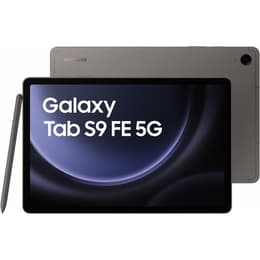
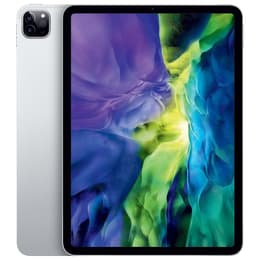

Galaxy Tab S9 FE (10.9", 2023) Vs iPad Pro (2020, A12 series)

Galaxy Tab S9 FE (10.9", 2023)
Starting at

Refurbished price:£227.00

Versus £606.86 new

See options
iPad Pro (2020, A12 series)
Starting at

Refurbished price:£296.00

Versus £769.00 new

See options

Ratings

The Samsung Galaxy Tab S9 FE, released in 2023, and the Apple iPad Pro 2020 (11-inch model) represent distinct approaches to the tablet experience. While the Tab S9 FE offers a more recent release with Samsung's Android-based One UI, the iPad Pro 2020, though older, runs on Apple's iPadOS and features a powerful processor designed for demanding tasks. This comparison will explore their practical differences to help users determine which device aligns best with their needs.

Scores

Durability

When considering the longevity of a tablet, several factors come into play, including software support and physical resilience.

  • Release Timeline: The Galaxy Tab S9 FE was released in October 2023, making it a newer device compared to the iPad Pro 2020, which launched in March 2020. This difference in release date impacts their remaining software support windows.
  • Software Longevity: Samsung has committed to providing the Galaxy Tab S9 FE with four major Android OS updates and five years of security patches, extending its support until Android 17. The iPad Pro 2020, running iPadOS, typically receives 5-7 years of major OS updates from its release, meaning its remaining update cycle is shorter than the Tab S9 FE's. [7, 14, 24, 27]
  • Physical Durability: The Galaxy Tab S9 FE features an IP68 rating for dust and water resistance, offering a degree of protection against environmental elements. [6, 13, 28] The iPad Pro 2020 does not carry an official IP rating. Both devices are constructed with aluminum frames, contributing to their overall build quality. [8, 28]

Year of Release

2023

2020

Compatible with latest Update

Yes

Yes

OS

Android

iPadOS

Performance

The performance of a tablet dictates its responsiveness and capability across various applications, from everyday browsing to more intensive tasks.

  • Processor Capabilities: The Galaxy Tab S9 FE is equipped with an Exynos 1380 processor, which handles daily tasks, web browsing, and streaming smoothly. [13, 23] The iPad Pro 2020 features the Apple A12Z Bionic chip, known for its robust performance that was considered faster than many laptops at its release. [2, 9, 37, 41] This allows the iPad Pro to manage demanding applications, complex multitasking, and graphics-intensive games with notable fluidity. [3, 41]
  • Multitasking and Responsiveness: Both tablets offer sufficient RAM for effective multitasking, with the Tab S9 FE available in 6GB or 8GB configurations and the iPad Pro 2020 consistently featuring 6GB of RAM across its models. [1, 4, 13, 17, 21] Users of the Tab S9 FE report smooth operation for split-screen use and general navigation. [36] The iPad Pro's processing power ensures a highly responsive experience, even with multiple applications running simultaneously. [41]
  • Battery Behavior: The Galaxy Tab S9 FE houses an 8,000 mAh battery, providing approximately 10-12 hours of browsing at a 90Hz refresh rate and up to 17 hours of mixed usage in some tests. [10, 13, 30] The 11-inch iPad Pro 2020 has a 7,538 mAh battery, rated for around 10 hours of wireless web surfing. [2, 3] Actual battery life for both can vary significantly based on usage, with demanding tasks or accessories potentially reducing endurance. [3, 15, 32, 37]

Memory (GB)

6 GB

6 GB

Screen quality

The display is a primary interface for any tablet, influencing everything from media consumption to productivity.

  • Display Technology and Clarity: Both tablets feature IPS LCD panels. The Galaxy Tab S9 FE has a 10.9-inch display with a resolution of 2304 x 1440 pixels. [8, 19] The iPad Pro 2020 offers an 11-inch Liquid Retina IPS LCD with a resolution of 2388 x 1668 pixels. [4, 21] Both provide clear and sharp visuals for reading and viewing content.
  • Refresh Rate and Smoothness: The Tab S9 FE supports a 90Hz refresh rate, contributing to smoother scrolling and a more fluid user interface experience. [6, 8, 17, 31] The iPad Pro 2020 features a 120Hz ProMotion display, which dynamically adjusts the refresh rate for exceptionally smooth motion and responsiveness, particularly noticeable in fast-paced content and stylus input. [1, 5, 21]
  • Brightness and Color: Both displays offer good brightness levels, with the Tab S9 FE reaching an average of nearly 700 nits in some measurements, making it legible in various lighting conditions. [28] The iPad Pro 2020 also achieves a peak brightness of 600 nits and includes True Tone technology for adaptive white balance and P3 wide color support for vibrant, accurate colors. [1, 5, 18, 21]

Resolution

1440 x 2304

2388 x 1668

Screen type

IPS LCD

Liquid Retina display

Pixel density

250ppp

264ppp

Audiovisual

While tablets are not typically primary photography devices, their cameras serve various practical purposes, including video calls and document scanning.

  • Camera System Capabilities: The Galaxy Tab S9 FE features an 8MP main rear camera and a 12MP ultrawide front camera. [6, 25] The iPad Pro 2020 has a more comprehensive rear setup with a 12MP wide lens, a 10MP ultrawide lens, and a LiDAR Scanner, alongside a 7MP TrueDepth front camera. [4, 18, 20]
  • Photography and Video Quality: The Tab S9 FE's rear camera is generally considered adequate for scanning documents or quick snapshots, while its front camera is well-suited for video conferencing. [6, 19, 22, 30] The iPad Pro 2020's rear cameras offer good quality for a tablet, with the front camera also performing well for video calls and enabling Face ID. [18, 20, 38] The LiDAR scanner on the iPad Pro enhances augmented reality applications. [5, 9, 37]
  • Audio Experience: The Galaxy Tab S9 FE is equipped with dual speakers tuned by AKG. [6] The iPad Pro 2020 features a quad-speaker system, providing a more immersive audio experience for media consumption. [18, 20] Both devices offer good microphone quality for calls and recordings. [22]

Miscellaneous

Beyond core specifications, several practical features contribute to the overall user experience and versatility of a tablet.

  • Connectivity Options: Both tablets support modern wireless standards, including Wi-Fi 6. The Galaxy Tab S9 FE features Bluetooth 5.3, while the iPad Pro 2020 uses Bluetooth 5.0. [8, 17, 4, 5] Both offer optional 5G cellular connectivity for on-the-go internet access. [8, 12, 29, 4]
  • Ports and Biometrics: Both devices utilize a USB-C port for charging and data transfer. [8, 12, 4, 5] The Galaxy Tab S9 FE integrates a fingerprint sensor into its power button for secure unlocking. [6, 19, 28] The iPad Pro 2020 employs Face ID, Apple's facial recognition system, for secure authentication. [5, 20, 21]
  • Stylus Support: The Galaxy Tab S9 FE includes an S Pen in the box, offering a responsive writing and drawing experience. [6, 13, 23, 31] The iPad Pro 2020 supports the second-generation Apple Pencil, which is sold separately and provides precise input for creative and productivity tasks. [21, 42]
  • Design and Handling: The Tab S9 FE has dimensions of 254.3 x 165.8 x 6.5 mm and weighs around 523g. [8, 25] The 11-inch iPad Pro 2020 is slightly thinner and lighter at 247.6 x 178.5 x 5.9 mm and approximately 471g. [5, 15, 18] Both feature a premium aluminum build. [23, 28]

Weight

129 g

471 g

Screen size (in)

10.9

11

Network

Wi-Fi + 5G

Wi-Fi

Carrier compatibility

Unlocked

Without SIM Port

User feedback for the Galaxy Tab S9 FE often praises its included S Pen, IP68 rating, and solid battery life for everyday use. [6, 13, 36] Some users note that while its processor is capable for general tasks, it may struggle with very graphics-intensive gaming. [13, 23] The display, while a good LCD, is sometimes mentioned as a point of difference compared to higher-end OLED panels. [19, 23] For the iPad Pro 2020, users frequently highlight its exceptional performance, smooth 120Hz display, and the robust iPadOS ecosystem for creative and professional applications. [2, 21, 41] Criticisms sometimes point to its older release date impacting future software support and the cost of essential accessories like the Apple Pencil. [26, 37]

Users prioritizing a newer device with an included stylus, an IP rating for added durability, and a strong commitment to software updates within the Android ecosystem may find the Galaxy Tab S9 FE well-suited to their needs. It offers a balanced experience for productivity, media consumption, and light creative work. Conversely, users who require top-tier performance for demanding applications, a higher refresh rate display, and prefer the iPadOS ecosystem for its extensive app selection and creative tools, might lean towards the iPad Pro 2020. Both devices, especially when considering quality-assured refurbished options, present eco-friendly alternatives for consumers seeking reliable tablets.


See all articles

Our recent comparisons