

Compare models
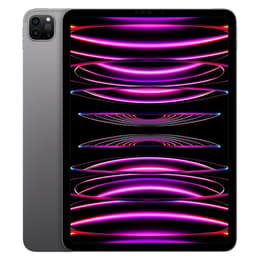
Galaxy Tab A11 (8.7", 2025) Vs iPad Pro (2022, M2 series)
- 1-year minimum warranty
- Free delivery on all items
- Free 30-day returns
Differences at a glance
The Samsung Galaxy Tab A11 (2025) and the Apple iPad Pro (2022, M2 series) represent two distinct approaches to portable computing, balancing different screen form factors, operating systems, and user capabilities. While the Galaxy Tab A11 provides a compact, lightweight Android experience designed for everyday portability, the iPad Pro delivers heavy-duty workstation performance running iPadOS. These devices cater to fundamentally different workflows, physical preferences, and software environments.
Available Models
Colour
Storage
Scores
Durability
Both tablets approach long-term usability differently, factoring in release timelines, software update support, and physical construction robustness.
- Software lifecycle and support: The Galaxy Tab A11 benefits from an extended Android update window typical of modern Samsung devices, while the iPad Pro relies on Apple's established history of multi-year iPadOS support.
- Repairability and physical endurance: Both models feature sealed designs requiring professional service for internal components, though choosing a quality-assured refurbished option provides a sustainable way to extend device life cycles.
- Expected longevity: The iPad Pro's high-tier hardware offers significant performance headroom for future software demands, whereas the Galaxy Tab A11 provides reliable longevity for everyday tasks and media viewing.
Year of Release
2025
2022
Compatible with latest Update
Yes
Yes
OS
Android
iPadOS
Performance
Underneath their exteriors, these devices utilize vastly different hardware configurations to handle everyday apps, multitasking, and demanding workloads.
- Processing capability: The iPad Pro handles intensive creative suites, multi-app windowing, and high-end gaming smoothly, while the Galaxy Tab A11 manages daily browsing, streaming, and casual applications efficiently.
- Storage and memory handling: The iPad Pro offers extensive internal storage tiers paired with high-bandwidth memory for heavy multitasking, whereas the Galaxy Tab A11 provides standard storage capacity supplemented by a microSD card slot for physical expansion.
- Battery behavior: The Galaxy Tab A11's compact cell comfortably supports daily mixed use, while the larger iPad Pro cell delivers consistent power through intensive work sessions.
Screen quality
Display characteristics differ significantly in size, panel technology, and visual fluidity to match their intended usage environments.
- Panel technology and resolution: The iPad Pro features a high-resolution display with advanced backlighting for deep contrast and accurate colors, while the Galaxy Tab A11 uses a practical LCD panel suited for general indoor and outdoor readability.
- Refresh rate and motion smoothness: The Galaxy Tab A11 incorporates a 90Hz refresh rate for fluid scrolling, while many iPad Pro configurations utilize high-refresh technology for responsive pen input and seamless animations.
- Viewing space: The iPad Pro provides a expansive workspace for document editing and split-screen apps, whereas the Galaxy Tab A11 offers a smaller 8.7-inch footprint ideal for single-handed holding and travel.
Resolution
800x1340
2388 x 1668
Pixel density
180ppp
264ppp
Audiovisual
Camera systems and multimedia outputs are tailored to each tablet's physical size and expected role in daily communication or content creation.
- Imaging capabilities: The iPad Pro includes advanced multi-lens rear arrays and a high-resolution front sensor positioned for landscape video calls, while the Galaxy Tab A11 features standard single front and rear cameras for basic snapshots and scanning.
- Audio output: The iPad Pro utilizes a multi-speaker setup that dynamically adjusts sound based on orientation, whereas the Galaxy Tab A11 delivers stereo sound enhanced by virtual surround processing for casual media viewing.
- Microphone performance: Both models integrate multiple microphones that isolate voices clearly during video conferences and online classes.
Miscellaneous
Physical design choices, connectivity standards, and daily handling characteristics dictate how easily each tablet fits into various travel or work routines.
- Physical dimensions and weight: The Galaxy Tab A11 emphasizes compact portability with a lightweight plastic-backed frame, whereas the iPad Pro features a slim aluminum chassis with a larger surface area.
- Port connectivity: The Galaxy Tab A11 retains a traditional 3.5mm headphone jack alongside USB-C, while the iPad Pro relies entirely on a versatile USB-C port supporting high-speed accessories and external displays.
- Authentication and security: The iPad Pro utilizes facial recognition technology for quick unlocking, while the Galaxy Tab A11 relies on standard passcode methods and camera-based recognition.
Weight
335 g
466 g
Screen size (in)
8.7
11
Network
Wi-Fi
Wi-Fi
Carrier compatibility
Without SIM Port
Without SIM Port
What the community thinks
User feedback highlights distinct preferences across both device ecosystems. Owners of the Galaxy Tab A11 frequently praise its compact, lightweight dimensions, expandable storage support, and reliable everyday performance for reading and streaming. Conversely, iPad Pro users frequently emphasize the raw processing power, fluid display response, and comprehensive app ecosystem that support demanding creative and professional tasks. Frequent discussions note that while the iPad Pro excels as a laptop replacement, its larger footprint is less suited for casual, one-handed reading.
Users prioritizing maximum portability, simple media consumption, and expandable storage will find the Galaxy Tab A11 well-suited to their daily routine. Meanwhile, users requiring advanced processing power, professional drawing capabilities, and a large workstation display will lean toward the iPad Pro. Choosing a quality-assured refurbished option for either model provides an eco-friendly alternative that supports sustainable technology consumption without compromising on performance expectations.