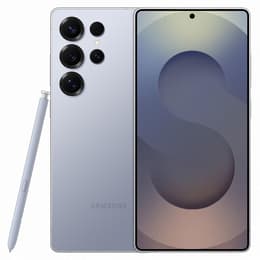


Galaxy S25 Ultra Vs Google Pixel 9 Pro XL

Galaxy S25 Ultra
Galaxy S25 Ultra
Starting at

Refurbished price:£654.00

Versus £1,249.00 new

See options
Google Pixel 9 Pro XL
Starting at

Refurbished price:£384.00

Versus £1,093.99 new

See options

Ratings

The Samsung Galaxy S25 Ultra (released February 2025) and the Google Pixel 9 Pro XL (released August 2024) represent the pinnacle of their respective Android smartphone lines. While both devices offer premium experiences, the Galaxy S25 Ultra emphasizes a versatile camera system and integrated stylus functionality, whereas the Pixel 9 Pro XL focuses on advanced computational photography and a streamlined software experience. Both operate on the latest Android versions, with each manufacturer providing extensive software support.

Scores

Durability

When considering the long-term usability of these devices, both manufacturers have committed to extended software support, which is a key factor in their practical lifespan.

  • Software Updates: The Samsung Galaxy S25 Ultra launched with Android 15 and One UI 7, and Samsung has pledged 7 years of OS and security updates, extending support until approximately 2032. The Google Pixel 9 Pro XL also shipped with Android 15 and is guaranteed 7 years of updates, ensuring support until Android 22.
  • Physical Durability: The Galaxy S25 Ultra features a titanium frame and Gorilla Glass Armor 2 for screen protection, offering robust build quality. The Pixel 9 Pro XL utilizes a stronger aluminum construction and Gorilla Glass Victus 2, with Google stating it is twice as durable as its predecessor.
  • Repairability: The Galaxy S25 Ultra received a provisional iFixit repairability score of 5 out of 10, noting improvements like easier battery replacement with pull tabs and modular camera components, though screen repair remains challenging. The Pixel 9 Pro XL also received an iFixit score of 5 out of 10, benefiting from a dual-entry design that allows independent removal of the front screen or back panel, which can simplify certain repairs.

Year of Release

2025

2024

Compatible with latest Update

Yes

Yes

OS

Android

Android

Foldable

No

No

Performance

Both the Galaxy S25 Ultra and Pixel 9 Pro XL are equipped with powerful internal components designed to handle demanding tasks and provide a responsive user experience.

  • Processing Power: The Galaxy S25 Ultra is powered by a customized current-generation processor, optimized for Samsung's ecosystem, which delivers solid performance across various applications and intensive gaming. The Pixel 9 Pro XL features Google's Tensor G4 processor, designed with a strong emphasis on artificial intelligence and machine learning tasks, contributing to efficient on-device AI processing.
  • Multitasking and Storage: The Galaxy S25 Ultra typically comes with 12GB of RAM, with some configurations offering 16GB, alongside storage options up to 1TB. The Pixel 9 Pro XL is equipped with 16GB of RAM as standard, with storage capacities also extending up to 1TB, providing ample room for applications and media.
  • Battery Performance: The Galaxy S25 Ultra houses a 5000 mAh battery, capable of lasting over 17 hours in continuous usage tests and generally providing a full day of power for most users. The Pixel 9 Pro XL features a 5060 mAh battery, with user reports indicating it can comfortably last through a full day, often extending to two days with moderate use, and offering around 7 hours of screen-on time.

Memory (GB)

12 GB

16 GB

Screen quality

The visual experience on both devices is a highlight, with each offering large, high-resolution displays that cater to immersive viewing.

  • Display Technology and Size: The Galaxy S25 Ultra features a 6.9-inch Dynamic LTPO AMOLED 2X display, providing deep blacks and vibrant colors. The Pixel 9 Pro XL sports a 6.8-inch QHD+ flat flexible OLED display, also known for its rich contrast and color accuracy.
  • Resolution and Clarity: The Galaxy S25 Ultra offers a resolution of 1440 x 3120 pixels, resulting in a pixel density of approximately 498 pixels per inch (ppi). The Pixel 9 Pro XL's QHD+ display (2992x1344 pixels) provides a sharp viewing experience, with a high pixel density that ensures crisp text and detailed images.
  • Brightness and Smoothness: Both phones feature adaptive refresh rates up to 120Hz for smooth scrolling and animations. The Galaxy S25 Ultra can reach a peak brightness of 2600 nits, while the Pixel 9 Pro XL offers a peak brightness between 2000 and 3000 nits, ensuring good visibility even in bright outdoor conditions.

Resolution

1440x3120

1344 x 2992

Audiovisual

Both smartphones are equipped with advanced camera systems, each with distinct strengths in capturing photos and videos.

  • Rear Camera Systems: The Galaxy S25 Ultra boasts a quad-camera setup, including a 200MP wide-angle main sensor, a 50MP ultrawide, a 10MP telephoto with 3x optical zoom, and a 50MP periscope telephoto with 5x optical zoom, offering a versatile Quad Tele System for various zoom levels. The Pixel 9 Pro XL features a triple rear camera system with a 50MP wide main sensor, a 48MP ultrawide with macro focus, and a 48MP telephoto lens with 5x optical zoom.
  • Photography Features: The Galaxy S25 Ultra includes a ProVisual Engine with AI imaging features for adaptive scene optimization and noise reduction, and supports 200MP RAW images. The Pixel 9 Pro XL emphasizes computational photography with features like Night Sight, Astrophotography, Portrait Mode, and Pro Controls for manual adjustments, often producing images with high contrast and vibrant colors.
  • Video Capabilities: The Galaxy S25 Ultra can record 8K video at 30fps across its primary, ultrawide, and 50MP telephoto cameras, and supports 10-bit HDR video. The Pixel 9 Pro XL records 4K video at up to 60fps natively, and can achieve 8K video through its cloud-based Video Boost feature, which also enhances lighting and reduces noise.

Front camera

12

42 megapixels

Miscellaneous

Beyond core performance and display, several practical features and design elements differentiate these two flagship devices.

  • Connectivity and Ports: Both devices support 5G, Wi-Fi 7, and modern Bluetooth standards. The Galaxy S25 Ultra includes a USB-C port and lacks a 3.5mm headphone jack. The Pixel 9 Pro XL also features a USB-C port and stereo speakers.
  • Biometric Security: The Galaxy S25 Ultra incorporates an ultrasonic under-display fingerprint sensor and face recognition. The Pixel 9 Pro XL offers an ultrasonic fingerprint scanner that works well even with screen protectors, alongside high-security face unlock.
  • Design and Handling: The Galaxy S25 Ultra has dimensions of 162.8 x 77.6 x 8.2 mm and weighs 218g, featuring a refined design with slightly rounded edges and an integrated S Pen. The Pixel 9 Pro XL measures 162.8 x 76.6 x 8.5mm and weighs 221g, with a more boxy design and a slightly larger screen than previous Pixel Pro models. The S Pen on the S25 Ultra, while integrated, no longer includes Bluetooth capabilities.

Weight

233 g

221 g

Screen size (in)

6.9

6.8

Mobile network

5G

5G

SIM card

Dual Physical SIM + eSIM

Physical SIM + eSIM

Carrier compatibility

Unlocked

Unlocked

Connector

USB-C

USB-C

User feedback for the Samsung Galaxy S25 Ultra often praises its comprehensive camera system, particularly the versatility offered by its multiple telephoto lenses and high-resolution main sensor. Users appreciate the expansive and bright display, as well as the consistent performance for demanding applications. Some criticisms have noted the S Pen's loss of Bluetooth features, which may impact users accustomed to its remote control capabilities. The Pixel 9 Pro XL is frequently lauded for its exceptional computational photography, with many users highlighting the quality of its images, especially in challenging conditions, and the seamless integration of AI features. Its battery life is also a common point of praise, often exceeding a full day of heavy use. Some users might find the cloud-based approach to 8K video processing less immediate than native recording.

Users prioritizing a highly versatile camera with extensive zoom capabilities and an integrated stylus for productivity might find the Galaxy S25 Ultra well-suited to their needs. Its robust performance and vibrant display make it a strong choice for multimedia consumption and power users. Conversely, individuals who value cutting-edge computational photography, a streamlined Android experience with strong AI integration, and extended battery life may lean towards the Google Pixel 9 Pro XL. Both devices offer long-term software support, making them sustainable choices for users looking for a device that will remain current for many years. Exploring quality-assured refurbished options for either model can provide an eco-friendly alternative for acquiring these advanced smartphones.


See all articles

Our recent comparisons