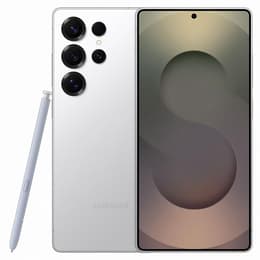

Galaxy S25 Ultra Vs Google Pixel 7A

Galaxy S25 Ultra
Galaxy S25 Ultra
Starting at

Refurbished price:£654.00

Versus £1,249.00 new

See options
Google Pixel 7A
Google Pixel 7A
Starting at

Refurbished price:£129.00

Versus £649.99 new

See options

Ratings

The Samsung Galaxy S25 Ultra, released in February 2025, and the Google Pixel 7A, launched in May 2023, represent distinct offerings within the Android smartphone market. While both devices operate on the Android platform, the Galaxy S25 Ultra is positioned as a premium flagship, emphasizing advanced hardware and a comprehensive feature set, whereas the Pixel 7A focuses on delivering a strong core experience with Google's computational photography and software integration. The primary differentiators lie in their display technology, camera versatility, and overall processing power.

Scores

Durability

The longevity of a smartphone is influenced by its release timeline, software support, and physical durability. The Galaxy S25 Ultra, being a newer device released in February 2025, benefits from a longer projected software support period compared to the Google Pixel 7A, which debuted in May 2023.

  • OS Support Duration: The Galaxy S25 Ultra is promised 7 years of OS and security updates, extending its support until 2032. In contrast, the Pixel 7A is expected to receive 5 years of OS upgrades and security updates from its release. This means the S25 Ultra will continue to receive the latest Android features and security patches for a significantly longer duration.
  • Build Materials and Durability: The S25 Ultra features a titanium frame and Corning Gorilla Armor 2 on the front display, which offers enhanced durability and scratch resistance. The Pixel 7A utilizes an aluminum frame and Corning Gorilla Glass 3 for its display. The more advanced materials on the S25 Ultra suggest a higher degree of physical resilience against daily wear and tear.
  • Expected Practical Lifespan: Users prioritizing the absolute longest software support and cutting-edge hardware will find the S25 Ultra better suited for extended use. The Pixel 7A, while still offering substantial support, will reach its end-of-life for major OS updates sooner.

Year of Release

2025

2023

Compatible with latest Update

Yes

Yes

OS

Android

Android

Foldable

No

No

Performance

Performance in smartphones is determined by the interplay of processing power, memory, and storage, impacting how smoothly applications run and how efficiently tasks are handled. The Galaxy S25 Ultra and Pixel 7A offer different levels of responsiveness and capability for various user demands.

  • Processing Capabilities: The Galaxy S25 Ultra is equipped with a current-generation processor, specifically optimized for Samsung devices, which provides substantial power for demanding applications, intensive gaming, and complex multitasking. The Pixel 7A features a Google Tensor G2 processor, designed to handle everyday tasks and Google's AI-driven features efficiently.
  • Multitasking and Responsiveness: With 12GB of RAM as standard, the Galaxy S25 Ultra offers considerable headroom for running numerous applications simultaneously and switching between them without noticeable slowdowns. The Pixel 7A comes with 8GB of RAM, which is sufficient for typical daily usage and moderate multitasking.
  • Storage Options and Speed: The S25 Ultra provides multiple storage configurations, starting from 256GB and going up to 1TB, utilizing fast internal storage technology. The Pixel 7A is available with 128GB of UFS 3.1 internal storage, which is non-expandable.

Memory (GB)

12 GB

8 GB

Screen quality

The visual experience on a smartphone is largely defined by its display quality, encompassing factors like technology, resolution, brightness, and refresh rate. The Galaxy S25 Ultra and Pixel 7A present different display characteristics tailored to their respective segments.

  • Display Technology and Clarity: The Galaxy S25 Ultra features a 6.9-inch Dynamic LTPO AMOLED 2X display with a QHD+ resolution (3120x1440 pixels), offering exceptional sharpness and vibrant colors. The Pixel 7A has a 6.1-inch OLED display with an FHD+ resolution (2400x1080 pixels), providing clear visuals suitable for everyday viewing.
  • Brightness and Outdoor Visibility: The S25 Ultra's display can reach a peak brightness of 2600 nits and includes an anti-reflective coating, making it highly visible even in bright outdoor conditions. The Pixel 7A's display offers good brightness for indoor and typical outdoor use, though it may not match the S25 Ultra's peak luminosity in direct sunlight.
  • Refresh Rate and Smoothness: The Galaxy S25 Ultra boasts a variable refresh rate of 1Hz to 120Hz, which contributes to very smooth scrolling and animations while also conserving battery life. The Pixel 7A features a 90Hz refresh rate, providing a smoother experience than standard 60Hz displays.

Resolution

1440x3120

1080 x 2400

Audiovisual

Camera capabilities are a significant consideration for many users, with both devices offering distinct approaches to photography and videography. The Galaxy S25 Ultra emphasizes hardware versatility, while the Pixel 7A leverages computational photography.

  • Rear Camera Systems: The Galaxy S25 Ultra features a quad-camera setup, including a 200MP wide-angle main sensor, a 50MP ultra-wide, a 10MP telephoto with 3x optical zoom, and a 50MP periscope telephoto with 5x optical zoom, enabling a wide range of focal lengths and detailed zoom. The Pixel 7A has a dual-camera system with a 64MP wide-angle main sensor and a 13MP ultra-wide lens.
  • Photography Performance: The S25 Ultra's advanced hardware and ProVisual Engine deliver high-resolution images with extensive detail, particularly benefiting from its optical zoom capabilities and AI-enhanced features for scene optimization and noise reduction. The Pixel 7A excels in computational photography, producing consistently good images with natural colors and strong dynamic range, especially in everyday scenarios, using its Pixel Shift and Auto-HDR features.
  • Video Recording and Audio: Both devices support 4K video recording, with the S25 Ultra capable of 8K at 30fps and offering advanced stabilization and an Audio Eraser feature for clearer sound in videos. The Pixel 7A supports 4K at 30/60fps on its rear camera and 4K at 30fps on the front, with effective electronic and optical image stabilization.

Front camera

12

13 megapixels

Miscellaneous

Beyond core specifications, various practical elements contribute to the overall user experience, including connectivity, physical ports, biometric security, and device ergonomics. The Galaxy S25 Ultra and Pixel 7A offer different sets of these features.

  • Connectivity Standards: The Galaxy S25 Ultra supports the latest connectivity standards, including 5G, Wi-Fi 7, and Bluetooth 5.4, along with Ultra-Wideband (UWB) for enhanced spatial awareness and satellite connectivity for emergency and two-way communication. The Pixel 7A offers 5G, Wi-Fi 6E, and Bluetooth 5.3, providing reliable and fast wireless connections for most users.
  • Ports and Biometrics: Both devices feature a USB-C port for charging and data transfer. The S25 Ultra includes an ultrasonic in-screen fingerprint sensor, while the Pixel 7A offers an in-display fingerprint sensor and face recognition for unlocking.
  • Design and Handling: The S25 Ultra has a larger 6.9-inch display and a titanium frame, contributing to its premium feel and durability, though it is a larger and heavier device. The Pixel 7A, with its 6.1-inch display and aluminum frame, offers a more compact and lighter form factor, which can be more comfortable for one-handed use. The S25 Ultra also integrates an S Pen for note-taking and precise interaction.

Weight

233 g

193 g

Screen size (in)

6.9

6.1

Mobile network

5G

5G

SIM card

Dual Physical SIM + eSIM

Physical SIM + eSIM

Carrier compatibility

Unlocked

Unlocked

The Samsung Galaxy S25 Ultra and Google Pixel 7A cater to different user needs and priorities within the Android ecosystem. User feedback for the Galaxy S25 Ultra often praises its expansive and vibrant display, the versatility of its camera system with advanced zoom capabilities, and its robust performance for demanding tasks. Common criticisms sometimes point to its larger size and weight, which might not appeal to all users. Conversely, the Google Pixel 7A is frequently lauded for its exceptional computational photography, delivering consistent and high-quality images, and its clean software experience with timely updates. Some users note that its performance might not match flagship levels for intensive applications, and its battery life, while adequate, may require more frequent charging for heavy users.

Users prioritizing a top-tier multimedia experience, extensive camera versatility with optical zoom, and the highest levels of processing power for gaming or professional applications will find the Galaxy S25 Ultra well-suited to their needs. Its integrated S Pen also makes it ideal for productivity and creative tasks. On the other hand, users who value a more compact device, a streamlined Android experience with Google's unique AI features, and excellent point-and-shoot photography without needing extensive optical zoom, may lean toward the Google Pixel 7A. Both devices offer compelling features, and choosing between them depends on whether a user prioritizes ultimate performance and advanced features or a balanced, user-friendly experience with strong camera performance. For those considering a more sustainable choice, both models are available as quality-assured refurbished options.

See all articles

Our recent comparisons