
Compare models
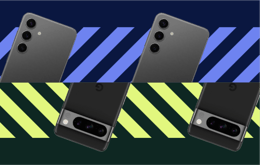
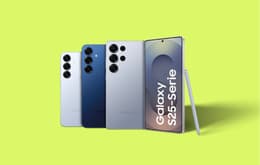
Galaxy S25 FE Vs Google Pixel 8
- 1-year minimum warranty
- Free delivery on all items
- Free 30-day returns
Differences at a glance
The Samsung Galaxy S25 FE (2025) and the Google Pixel 8 (2023) represent mainstream smartphone options designed to balance advanced features with everyday practicality. While the Galaxy S25 FE arrives as a later generation model with updated hardware, the Google Pixel 8 focuses deeply on integrated software intelligence and streamlined design. Both devices serve users seeking reliable mobile technology, though they diverge significantly in software philosophy and hardware approach.
Operating systems differ fundamentally between the two, with the Galaxy S25 FE running Samsung's feature-rich interface over Android, and the Google Pixel 8 utilizing a clean, stock version of Android directly from the developer. These distinct software ecosystems shape everything from daily navigation to long-term customization options for users.
Available Models
Colour
Storage (GB)
Scores
Durability
When evaluating the long-term viability of the Samsung Galaxy S25 FE and the Google Pixel 8, software update commitments and build quality form the primary foundations for longevity.
- Software longevity: The Google Pixel 8 benefits from a long-term software commitment providing extensive operating system and security updates, while the Galaxy S25 FE also features a multi-year support window typical of recent flagship-tier releases.
- Repairability and durability: Both models incorporate modern glass and metal construction alongside robust dust and water resistance ratings, though repair accessibility varies by regional service networks.
- Expected lifespan: Users can expect several years of reliable daily operation from either device, with battery degradation remaining the primary factor influencing practical longevity over time.
Year of Release
2025
2023
Compatible with latest Update
Yes
Yes
OS
Android
Android
Foldable
No
No
Performance
Daily responsiveness and multitasking capabilities vary across the Samsung Galaxy S25 FE and the Google Pixel 8 based on their internal hardware configurations and memory allocation.
- Multitasking and memory: The Galaxy S25 FE provides ample RAM to keep numerous background applications active simultaneously, while the Pixel 8 handles daily operations smoothly through tight integration between software and hardware.
- Storage capacity: Both devices offer multiple internal storage tiers to accommodate applications, media, and offline files without expansion slots.
- Battery behavior: Typical use cases reveal that both smartphones comfortably manage a full day of standard tasks, though heavy gaming or navigation will require more frequent recharging.
Screen quality
Visual output and display responsiveness are crucial for media consumption, outdoor legibility, and everyday navigation on both smartphones.
- Display technology: Each device utilizes vibrant OLED screen technology that delivers deep contrast levels, sharp text rendering, and rich color reproduction.
- Brightness and outdoor visibility: Maximum peak brightness capabilities on both models ensure that content remains legible under direct sunlight or bright outdoor environments.
- Refresh rate: Smooth scrolling and fluid animation support are standard across both displays, enhancing the responsiveness of daily interactions and web browsing.
Audiovisual
Capturing photos and recording video involve different hardware configurations and image processing strategies between Samsung and Google.
- Camera hardware: The Galaxy S25 FE features a versatile multi-lens setup including a dedicated telephoto option, whereas the Pixel 8 relies on a dual-lens system paired with advanced computational photography software.
- Low-light and everyday capture: Both models perform consistently in standard daylight, while specialized night modes help preserve detail and manage exposure in dimly lit environments.
- Audio and video quality: Built-in microphone arrays capture clear dialogue during calls and video recordings, while integrated stereo speakers provide balanced sound output for media playback.
Miscellaneous
Physical dimensions, weight distribution, and connectivity standards dictate how each device feels and connects in daily use.
- Connectivity options: Both smartphones support modern fifth-generation cellular networks, rapid Wi-Fi standards, and Bluetooth accessories for seamless wireless pairing.
- Physical design: The Galaxy S25 FE offers a slightly larger footprint and display area, whereas the Pixel 8 features a more compact form factor that fits more easily into smaller pockets and bags.
- Security sensors: Both devices utilize responsive biometric authentication methods, combining facial recognition technology with integrated fingerprint sensors for secure unlocking.
Weight
190 g
187 g
Screen size (in)
6.7
6,2
Mobile network
5G
5G
SIM card
Physical SIM + eSIM
Physical SIM + eSIM
Carrier compatibility
Unlocked
Unlocked
Connector
USB-C
USB-C
What the community thinks
User feedback from online communities highlights distinct preferences for each device. Owners of the Google Pixel 8 frequently praise its clean software interface, reliable photo processing, and comfortable physical dimensions. Conversely, users of the Galaxy S25 FE often emphasize appreciation for its expansive display area and flexible multi-lens camera system, though some note its larger physical footprint requires two-handed use.
Users prioritizing a compact design and streamlined software experience may prefer the Google Pixel 8, while users prioritizing a larger screen and telephoto versatility will lean toward the Galaxy S25 FE. Those exploring sustainable purchasing choices can find quality-assured refurbished options for both models as an eco-friendly alternative to purchasing newly manufactured devices. Ultimately, both smartphones offer capable performance tailored to different daily workflows and hardware preferences.