
Compare models

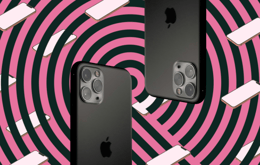
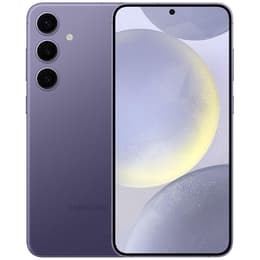
Galaxy S24+ Vs iPhone 17 Pro Max

  • 1-year minimum warranty
  • Free delivery on all items
  • Free 30-day returns
Galaxy S24+
Starting at

Refurbished price:£324.00

Versus £949.36 new

See options
iPhone 17 Pro Max
Starting at

Refurbished price:£1,024.00

Versus £1,199.00 new

See options

Differences at a glance

The Samsung Galaxy S24+ (2024) and the Apple iPhone 17 Pro Max (2025) represent large-screen flagship smartphones from competing mobile ecosystems. While both devices cater to users seeking expansive displays and high-tier capabilities, they differ significantly in their release timelines, operating systems, and physical design philosophies.

Running on Android and iOS respectively, these models provide distinct software environments alongside tailored hardware approaches designed to meet diverse daily computing needs.

Available Models

Colour

Storage (GB)

Scores

Durability

Long-term usability depends on hardware durability, software maintenance commitments, and expected structural longevity across both smartphone lines.

  • Software support lifecycle: The Galaxy S24+ provides a multi-year update commitment spanning seven generations of operating system upgrades, while the iPhone 17 Pro Max follows Apple's established pattern of extended software lifespans.
  • Build protection: The Samsung model incorporates hardened aluminum framing and durable glass protection, whereas Apple utilizes a robust unibody construction shielded by advanced ceramic glass on both front and back surfaces.
  • Repairability framework: Both manufacturers design their devices to meet strict modern standards for component replacement, though modular internal layouts vary between the Android and iOS ecosystems.

Year of Release

2024

2025

Compatible with latest Update

Yes

Yes

OS

Android

iOS

Foldable

No

No

Performance

Daily responsiveness and multitasking capabilities vary based on internal hardware configuration and system optimization across different mobile architectures.

  • Storage and memory allocation: The Galaxy S24+ offers generous random access memory paired with expansive onboard storage tiers, while the iPhone 17 Pro Max matches high memory capacities and extends storage options up to ultra-large tiers for heavy data users.
  • App execution and multitasking: Both devices handle demanding applications, complex graphics, and rapid switching between multiple active tasks with minimal latency or system slowdown.
  • Battery behavior: Energy management systems on both handsets support intensive daily workflows, though physical battery capacities and processor efficiencies result in differing stamina profiles under heavy continuous use.

Screen quality

Visual output and display responsiveness differ through distinct panel technologies and scaling dimensions tailored for media consumption.

  • Display technology: The Galaxy S24+ features a vibrant organic light-emitting diode panel with high pixel density, while the iPhone 17 Pro Max utilizes an advanced super retina display engineered for deep contrast and accurate color reproduction.
  • Outdoor visibility: Both screens reach high peak brightness thresholds to ensure comfortable reading and media viewing under direct sunlight conditions.
  • Refresh rate smoothness: Adaptive high refresh rate technology is built into both devices, enabling fluid scrolling and responsive touch interactions during gaming and web browsing.

Resolution

1440 x 3120

2868x1320

Screen type

Dynamic LTPO AMOLED 2X

Super Retina XDR

Audiovisual

Optics and media capture hardware vary across multi-lens configurations designed for photography and video recording tasks.

  • Camera sensor arrangement: The Galaxy S24+ equips a versatile triple-lens array featuring dedicated wide, ultra-wide, and telephoto options, whereas the iPhone 17 Pro Max integrates a high-resolution triple fusion camera system supporting extended optical zoom ranges.
  • Low-light and video capture: Both handsets process dark-environment imagery effectively through computational photography algorithms and offer high-definition video recording features suitable for content creation.
  • Audio and media output: Stereo speaker setups on both devices deliver clear sound reproduction for calls and media playback, supported by sensitive microphone arrays for voice capture.

Main camera

50 megapixels

48 megapixels

Front camera

12 megapixels

18 megapixels

Miscellaneous

Physical dimensions and connectivity features define the everyday handling and ecosystem integration of each smartphone.

  • Connectivity standards: Both models support modern fifth-generation cellular networks, fast Wi-Fi protocols, and advanced Bluetooth standards for accessory pairing.
  • Physical ports and biometrics: The Galaxy S24+ utilizes a USB-C port alongside an under-display fingerprint sensor, while the iPhone 17 Pro Max employs USB-C connectivity coupled with secure facial recognition technology.
  • Dimensions and weight: The Samsung model presents a slightly lighter physical footprint, whereas the larger Apple device carries added weight due to its expansive screen size and robust unibody frame.

Weight

196 g

233 g

Screen size (in)

6.7

6.9

Mobile network

5G

5G

SIM card

Dual Physical SIM + eSIM

Physical SIM + eSIM

Carrier compatibility

Unlocked

Unlocked

What the community thinks

User feedback highlights distinct preferences for each device based on ecosystem integration and hardware design. Owners of the Galaxy S24+ frequently praise its comfortable ergonomics, sharp display clarity, and long software support window. Conversely, users of the iPhone 17 Pro Max often emphasize appreciation for its advanced video recording capabilities, extended battery stamina, and fluid system performance under heavy operational demands.

Users prioritizing an Android environment with customizable multitasking features may prefer the Galaxy S24+, while individuals invested in the Apple ecosystem who prioritize maximum media creation tools and screen real estate will lean toward the iPhone 17 Pro Max. For consumers exploring sustainable purchasing routes, opting for a quality-assured refurbished option provides an eco-friendly alternative that aligns with modern environmental considerations without compromising on functional reliability.