
Compare models

Galaxy S23 Vs Google Pixel 10 Pro XL

  • 1-year minimum warranty
  • Free delivery on all items
  • Free 30-day returns
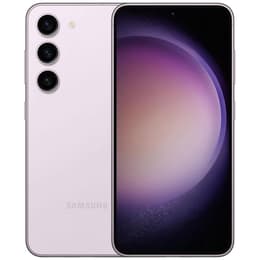
Galaxy S23
Starting at

Refurbished price:£222.00

Versus £959.00 new

See options
Google Pixel 10 Pro XL
Starting at

Refurbished price:£479.00

Versus £1,199.00 new

See options

Differences at a glance

The Samsung Galaxy S23 (2023) and the Google Pixel 10 Pro XL (2025) represent two different approaches to modern smartphone design, contrasting a compact flagship form factor with a larger, feature-dense device. Both models run the Android operating system, providing access to extensive app ecosystems while offering distinct hardware and software optimizations. The primary differences lie in their physical dimensions, generational release gap, and built-in hardware capabilities tailored to different daily usage habits.

Available Models

Colour

Storage

Scores

Durability

When evaluating the long-term potential of these devices, differences in release timing, software support windows, and physical build resilience shape overall longevity expectations.

  • Software support timelines: The Google Pixel 10 Pro XL benefits from a more recent launch window, aligning with extended software update commitments, whereas the Galaxy S23 has advanced further into its support lifecycle.
  • Repairability and build: Both handsets utilize durable glass panels and aluminum frames paired with official water-resistance ratings, contributing to predictable physical durability under normal conditions.
  • Expected lifespan: Users looking for maximum active software update longevity will find the newer Google model advantageous, while the Galaxy S23 remains a proven, stable daily companion for users retaining devices over multiple years.

Year of Release

2023

2025

Compatible with latest Update

Yes

Yes

OS

Android

Android

Foldable

No

No

Performance

System responsiveness and day-to-day multitasking capabilities vary based on internal hardware configurations, memory capacity, and power management design.

  • Multitasking and memory: The Google Pixel 10 Pro XL includes a larger pool of working memory to handle heavy background tasks and intensive applications smoothly, while the Galaxy S23 manages standard multitasking reliably with its efficient hardware layout.
  • Battery behavior: The Galaxy S23 relies on a smaller physical footprint and battery capacity requiring more frequent charging for intensive users, whereas the larger Google Pixel 10 Pro XL houses a higher-capacity cell designed to sustain extended periods of away-from-outlet use.
  • Everyday execution: Both devices load apps quickly, navigate menus fluidly, and handle everyday productivity tools without noticeable stutter or lag.

Screen quality

Visual output and screen dimensions differ significantly between the two models, directly impacting media consumption, reading comfort, and physical handling.

  • Display size and panel type: The Google Pixel 10 Pro XL features a spacious 6.8-inch OLED display providing an expansive canvas for media, while the Galaxy S23 opts for a compact 6.1-inch display tailored for effortless single-handed operation.
  • Brightness and outdoor clarity: Both models incorporate high-brightness modes that maintain legibility under bright sunlight, though newer panel calibrations offer enhanced peak luminance during HDR video playback.
  • Motion smoothness: Both screens support adaptive refresh rates scaling up to 120Hz, ensuring smooth scrolling through web pages, documents, and interface animations.

Resolution

1080 x 2340

1344x2992

Screen type

Dynamic AMOLED 2X

OLED

Audiovisual

Optics and media output capabilities provide distinct advantages for photography enthusiasts, casual content creators, and daily communication needs.

  • Camera hardware: The Google Pixel 10 Pro XL equips a versatile triple-lens array featuring high-resolution main, ultra-wide, and dedicated telephoto zoom sensors, while the Galaxy S23 utilizes a streamlined triple-lens system with optical zoom capabilities.
  • Low-light and processing: Both devices excel at capturing balanced images in challenging lighting conditions through automated software adjustments, minimizing blur and noise.
  • Audio and video output: Integrated stereo speakers deliver clear media playback and hands-free calling, supported by multi-microphone arrays designed to isolate background noise during voice recordings.

Front camera

12 megapixels

42 megapixels

Miscellaneous

Practical daily usability elements such as connectivity standards, physical dimensions, and security authentication shape how each phone integrates into a user's routine.

  • Connectivity and ports: Both smartphones support modern 5G networks, fast Wi-Fi standards, and Bluetooth connections, utilizing reversible USB-C ports for charging and data transfer.
  • Biometric security: Both models feature secure in-display fingerprint sensors alongside facial recognition options for quick device unlocking.
  • Handling and dimensions: The Galaxy S23 weighs significantly less and features a slim profile that slips easily into pockets, whereas the heavier Google Pixel 10 Pro XL provides a more substantial hand-feel suited for users who prefer expansive screens.

Weight

167 g

232 g

Screen size (in)

6.1

6.8

Mobile network

5G

5G

SIM card

Dual Physical SIM + eSIM

Physical SIM + eSIM

Carrier compatibility

Unlocked

Unlocked

Connector

USB-C

USB-C

What the community thinks

Users prioritizing a pocket-friendly physical footprint, lightweight handling, and a manageable screen size will find the Galaxy S23 well-suited to their daily routines. Conversely, users who favor an expansive display for media consumption, extended battery endurance, and advanced multi-lens photography capabilities often gravitate toward the Google Pixel 10 Pro XL. Selecting between them depends entirely on whether physical compactness or maximum screen space and battery capacity take priority in daily use.

For those exploring sustainable tech habits, choosing a quality-assured refurbished option provides an eco-friendly alternative that extends device lifecycles while delivering fully tested hardware performance.