Compare models
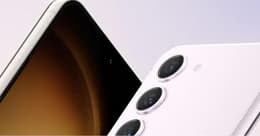
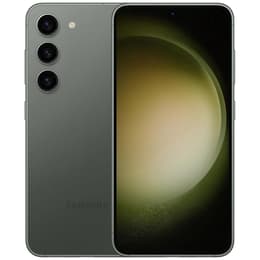
Galaxy S23 Vs Galaxy S26
- 1-year minimum warranty
- Free delivery on all items
- Free 30-day returns
Differences at a glance
The Samsung Galaxy S23 (2023) and the Samsung Galaxy S26 (2026) represent compact flagship smartphones from different generations of Samsung's mobile lineup. While both devices share a focus on pocket-friendly dimensions and versatile multi-lens cameras, the Galaxy S26 introduces refined processing capabilities, expanded software support timelines, and subtle display optimizations over its older counterpart. Both run on the Android operating system paired with Samsung's custom interface, providing a consistent software layout while differing in generation longevity.
Available Models
Colour
Storage
Scores
Durability
Comparing the release timelines reveals a three-year gap that directly influences expected software support windows and long-term hardware health.
- Update timeline and support: The Galaxy S26 benefits from an extended software support policy spanning up to seven years of major operating system updates, whereas the Galaxy S23 operates on a shorter multi-year update schedule reflecting its 2023 launch window.
- Repairability and hardware wear: Both models utilize sealed glass-and-aluminum structures with standardized internal layouts, though older units like the Galaxy S23 may require battery replacements sooner depending on prior usage history.
- Lifespan expectations: Choosing a quality-assured refurbished option provides a sustainable choice that extends device usability while keeping hardware active for longer periods.
Year of Release
2023
2026
Compatible with latest Update
Yes
Yes
OS
Android
Android
Foldable
No
No
Performance
System responsiveness and everyday multitasking differ noticeably due to advancements in hardware generation and memory allocation.
- Multitasking capacity: The Galaxy S26 features increased baseline random access memory, allowing demanding applications and background tasks to run concurrently with minimal reloading compared to the Galaxy S23.
- App loading and gaming: Current-generation processing hardware in the Galaxy S26 handles heavy 3D gaming and complex computational tasks with improved thermal efficiency and smoother frame rates.
- Battery endurance: The Galaxy S26 pairs a slightly larger physical battery capacity with power-efficient internal components, supporting extended daily use between charges relative to the older model.
Screen quality
Both smartphones feature vibrant organic light-emitting diode panels, though the newer model incorporates subtle refinements in panel efficiency and maximum luminosity.
- Display brightness: The Galaxy S26 achieves higher peak luminance levels, ensuring improved legibility when viewing content under direct sunlight outdoors.
- Refresh rate smoothness: Both devices support adaptive refresh rates reaching up to 120Hz for fluid scrolling through menus, web pages, and supported applications.
- Size and clarity: The Galaxy S26 offers a marginally expanded viewing area within a similarly compact physical footprint by narrowing the surrounding display bezels.
Resolution
1080 x 2340
1080 x 2340
Audiovisual
Photography and media recording capabilities evolve through improved image signal processing and sensor sensitivity on the newer hardware generation.
- Low-light photography: The Galaxy S26 applies advanced computational processing to reduce visual noise and preserve fine details in dimly lit environments more effectively than the Galaxy S23.
- Video stability: Both models offer optical image stabilization for steady handheld recording, with the newer device delivering refined exposure transitions during movement.
- Audio and media output: Stereo speaker configurations on both smartphones provide clear dialogue and balanced sound output for casual video viewing and calls.
Front camera
12 megapixels
12.0
Miscellaneous
Physical dimensions and connectivity standards reflect incremental design refinements between the two production years.
- Connectivity standards: The Galaxy S26 integrates updated wireless communication modules supporting faster local network speeds and improved Bluetooth reliability.
- Physical handling: Both devices maintain a lightweight, slim profile that fits comfortably in one hand or a pocket, with identical water and dust resistance ratings.
- Biometric security: Reliable ultrasonic in-screen fingerprint sensors and secure facial recognition options are present on both handsets for quick unlocking.
Weight
350 g
167 g
Screen size (in)
6.1
6.3
Mobile network
5G
5G
SIM card
Physical SIM + eSIM
Dual Physical SIM + eSIM
Carrier compatibility
Unlocked
Unlocked
Connector
USB-C
USB-C
What the community thinks
User discussions across public forums often highlight the Galaxy S23 for its reliable core performance and comfortable, compact form factor that remains practical for everyday tasks. At the same time, community feedback points to the Galaxy S26 as a compelling option for those seeking extended future software updates and improved energy efficiency. Users prioritizing long-term software longevity and peak processing power may prefer the Galaxy S26, while users focusing on essential daily smartphone capabilities often find the Galaxy S23 well-suited to their needs.
Opting for a quality-assured refurbished option provides an eco-friendly alternative that delivers flagship features while supporting sustainable technology consumption.