Galaxy S23 Vs Galaxy S25+

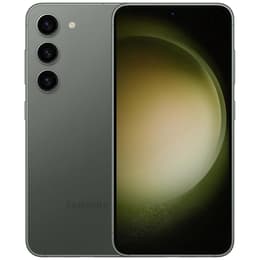
Galaxy S23
Galaxy S23
Starting at

Refurbished price:£186.84

Versus £1,019.00 new

See options
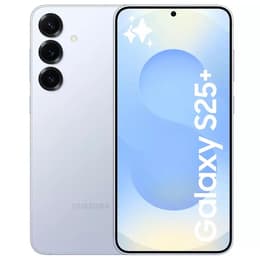
Galaxy S25+
Galaxy S25+
Starting at

Refurbished price:£550.00

Versus £958.39 new

See options

Ratings

The Samsung Galaxy S23, released in early 2023, and the Samsung Galaxy S25 Plus, launched in early 2025, represent two distinct generations within Samsung's flagship smartphone lineup. While both devices operate on the Android platform with Samsung's One UI, the S25 Plus introduces advancements in processing power, display technology, and extended software support, reflecting two years of technological evolution. This comparison will explore the practical differences between these models to help users determine which device best suits their needs.

Scores

Durability

When considering the long-term usability of a smartphone, software support and physical resilience are key factors. The Galaxy S23 and S25 Plus offer different timelines for updates and share robust build qualities.

  • Software Longevity: The Galaxy S23, launched with Android 13, is committed to receiving four major Android OS upgrades and five years of security updates, extending its support until approximately 2028. In contrast, the newer Galaxy S25 Plus, released with Android 15, benefits from Samsung's extended policy, offering seven years of OS upgrades and seven years of security updates, ensuring support until around 2032. This makes the S25 Plus a more future-proof option for users who prioritize the latest software features and security patches for an extended period.
  • Physical Durability: Both devices feature an IP68 rating for dust and water resistance, indicating protection against immersion in water. They also incorporate Gorilla Glass Victus 2 on both the front and back, paired with an Armor Aluminum frame, providing a high level of scratch and drop resistance.
  • Practical Lifespan: While both phones are built to last, the Galaxy S25 Plus's significantly longer software support means it will remain current with new features and security for several years beyond the S23. Users who tend to keep their phones for many years will find the S25 Plus's extended support more beneficial.

Year of Release

2023

2025

OS

Android

Android

Foldable

No

No

Performance

The performance of a smartphone is largely determined by its internal components, impacting everything from app responsiveness to multitasking capabilities and battery efficiency.

  • Processing Power: The Galaxy S23 is equipped with a powerful processor that handles demanding applications and multitasking smoothly, providing a responsive user experience for everyday tasks and mobile gaming. The Galaxy S25 Plus, featuring a newer generation processor, delivers a notable leap in performance, resulting in even smoother animations, faster app loading times, and enhanced capabilities for advanced tasks and AI features.
  • Battery Endurance: The Galaxy S23 houses a 3900 mAh battery, which generally provides good battery life for moderate usage, often lasting a full day. The Galaxy S25 Plus comes with a larger 4900 mAh battery, and user reports indicate excellent endurance, frequently lasting a day and a half on a single charge, even with heavy use.
  • Storage and Multitasking: Both models offer various storage configurations, ensuring ample space for apps, photos, and media. The S25 Plus typically comes with a higher base RAM configuration, which further enhances its ability to manage numerous applications simultaneously without slowdowns, contributing to a more fluid multitasking experience.

Memory (GB)

8 GB

12 GB

Screen quality

The display is a primary interface for smartphone interaction, and both the Galaxy S23 and S25 Plus offer high-quality viewing experiences with distinct differences.

  • Display Technology and Clarity: Both devices feature Dynamic AMOLED 2X displays, known for their vibrant colors, deep blacks, and excellent contrast. The Galaxy S23 has a 6.1-inch FHD+ (2340 x 1080) display, offering sharp visuals for its size. The Galaxy S25 Plus boasts a larger 6.7-inch QHD+ (3120 x 1440) display, providing a more expansive viewing area and noticeably higher pixel density for even finer detail and clarity.
  • Brightness and Refresh Rate: Both phones feature adaptive refresh rates up to 120Hz, ensuring smooth scrolling and fluid animations. The S23 offers a peak brightness of 1750 nits, providing good visibility in bright outdoor conditions. The S25 Plus elevates this with a higher peak brightness of up to 2600 nits, making it even more comfortable to view content under direct sunlight.
  • Viewing Experience: The S23's compact size makes it ideal for one-handed use and easy pocketability. The S25 Plus, with its larger screen, offers a more immersive experience for media consumption, gaming, and productivity tasks, though it requires a larger hand span for comfortable operation.

Resolution

1080 x 2340

1440x3120

Audiovisual

The camera systems on both the Galaxy S23 and S25 Plus are designed to capture high-quality images and videos, though the newer model benefits from refined processing and potentially updated hardware.

  • Rear Camera System: Both phones feature a versatile triple-camera setup, including a 50 MP main sensor with optical image stabilization, a 12 MP ultrawide lens, and a 10 MP telephoto lens with 3x optical zoom. The Galaxy S25 Plus, while maintaining similar sensor specifications, benefits from advancements in image processing and AI enhancements, which can lead to improved detail, color accuracy, and low-light performance.
  • Photography Performance: Users generally praise the Galaxy S23 for its ability to capture vibrant and detailed photos in various lighting conditions, including good low-light performance. The S25 Plus builds on this foundation, with reviews often highlighting its consistent image quality, excellent dynamic range, and particularly strong performance in portrait mode and low-light scenarios.
  • Video and Audio: Both devices are capable of high-resolution video recording with solid stabilization. The Galaxy S25 Plus introduces support for Log video recording, offering more control for professional video editors. The selfie cameras on both models are 12 MP, delivering clear and detailed self-portraits, with the S25 Plus potentially offering more natural skin tones due to software refinements.

Miscellaneous

Beyond the core features, several practical elements contribute to the overall user experience and differentiate these two Galaxy smartphones.

  • Connectivity and Ports: Both devices support 5G connectivity for fast mobile data. The Galaxy S23 features Wi-Fi 6E and Bluetooth 5.3. The Galaxy S25 Plus upgrades to newer standards, including Wi-Fi 7 and Bluetooth 5.4, offering potentially faster and more stable wireless connections. Both utilize a USB-C port for charging and data transfer.
  • Biometric Security: Both models incorporate reliable in-display fingerprint sensors for secure and convenient unlocking. They also offer face recognition capabilities.
  • Design and Handling: The Galaxy S23 is a more compact device, measuring 146.3 x 70.9 x 7.6 mm and weighing 168g, making it comfortable for one-handed use. The Galaxy S25 Plus is larger and heavier at 158.4 x 75.8 x 7.3 mm and 190g, providing a more substantial feel and a larger canvas for interaction. The S25 Plus also features a slightly thinner profile and minimal camera bump, contributing to a sleek aesthetic.

Weight

350 g

190 g

Screen size (in)

6.1

6.7

Mobile network

5G

5G

SIM card

Physical SIM + eSIM

Dual Physical SIM

Carrier compatibility

Unlocked

Unlocked

The Samsung Galaxy S23 and Galaxy S25 Plus both offer premium Android smartphone experiences, but they cater to slightly different user priorities. User feedback for the Galaxy S23 often highlights its compact form factor, capable camera system, and reliable performance as strong points for a device of its generation. Criticisms sometimes point to its battery life for heavy users, though many find it sufficient for daily use.

The Galaxy S25 Plus, being a newer model, receives praise for its significantly improved battery life, larger and brighter display, and enhanced processing power, which makes it highly responsive for all tasks. Its extended software support is also a frequently lauded feature, providing peace of mind for long-term ownership. Some users note that while its camera system is excellent, the hardware specifications are similar to its predecessor, with improvements largely coming from software optimization.

Users prioritizing a more compact device that is easy to handle with one hand and still offers strong performance and camera capabilities may prefer the Galaxy S23. It remains a capable device for everyday use, social media, and moderate gaming. For those who value a larger, more immersive display, exceptional battery endurance, and the longest possible software support, the Galaxy S25 Plus is a compelling choice. Its enhanced processing power also makes it well-suited for power users, mobile gamers, and individuals who frequently engage with demanding applications. Both devices represent solid choices within the Android ecosystem, and considering a quality-assured refurbished option for either model can be a sustainable choice.


See all articles

Our recent comparisons