
Galaxy S10 Vs iPhone 12 mini

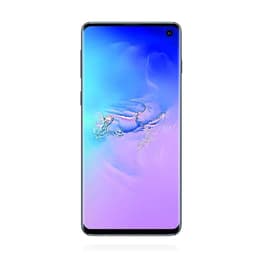
Galaxy S10
Galaxy S10
Starting at

Refurbished price:£108.00

Versus £639.00 new

See options
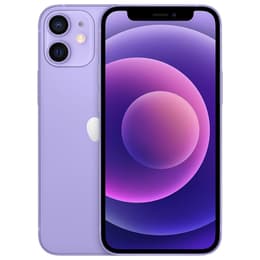
iPhone 12 mini
iPhone 12 mini
Starting at

Refurbished price:£126.00

Versus £579.00 new

See options

Ratings

The Samsung Galaxy S10, an Android smartphone released in March 2019, and the Apple iPhone 12 Mini, an iOS smartphone launched in November 2020, offer distinct experiences for users. While both devices provide capable smartphone functionality, they differ significantly in their operating systems, physical size, and overall design philosophy, reflecting their respective ecosystems and target audiences.

Scores

Durability

The practical lifespan of a smartphone is often influenced by its release timeline, software support, and repairability.

  • Release Timeline and OS Support: The Galaxy S10, released in March 2019, received major Android OS updates up to Android 12, with security updates for most models concluding around early 2023. The Galaxy S10 Lite, released later, received security updates for a longer period. In contrast, the iPhone 12 Mini, launched in November 2020, is expected to receive iOS updates until approximately 2027, offering a longer period of software longevity from its release date.
  • Repairability: The Galaxy S10 received a low repairability score of 3 out of 10 from iFixit, primarily due to extensive use of adhesive, a soldered charging port, and a glued-down battery, making repairs challenging. The iPhone 12 Mini, however, scored 6 out of 10, with iFixit noting that display and battery repairs are relatively prioritized in its design, though the glass back remains fragile.
  • Physical Durability: The iPhone 12 Mini features a Ceramic Shield front cover, which Apple states improves drop performance. Both devices offer IP68 water and dust resistance.

Year of Release

2019

2020

Compatible with latest Update

No

Yes

OS

Android

iOS

Foldable

No

No

Performance

Performance in daily use is a key factor for many smartphone users, encompassing responsiveness, app handling, and battery endurance.

  • Processing Power: The Galaxy S10 is powered by either a Samsung Exynos 9820 or a Qualcomm Snapdragon 855 processor, depending on the region. It handles most applications and games smoothly, providing a responsive experience for everyday tasks and multitasking. The iPhone 12 Mini features Apple's A14 Bionic chip, which delivers strong performance, ensuring demanding apps and graphics-intensive games run with fluidity.
  • Multitasking and Responsiveness: The Galaxy S10 typically comes with 8GB of RAM, contributing to smooth multitasking. The iPhone 12 Mini, with 4GB of RAM, is optimized by its operating system to manage applications efficiently, providing a consistently responsive user interface.
  • Battery Behavior: The Galaxy S10's 3400mAh battery generally offers acceptable battery life for moderate use, though heavy users might find it requires charging before the end of a long day. The iPhone 12 Mini, with a smaller 2227mAh battery, often requires careful battery management for heavy usage to last a full day, a common point of feedback from users.

Memory (GB)

8 GB

4 GB

Screen quality

The display is a primary interface for smartphone interaction, and both devices offer high-quality viewing experiences with distinct characteristics.

  • Display Technology and Size: The Galaxy S10 features a 6.1-inch Dynamic AMOLED display with a QHD+ resolution of 3040 x 1440 pixels, resulting in a sharp and vibrant image. It also incorporates a curved display design. The iPhone 12 Mini has a smaller 5.4-inch Super Retina XDR OLED display with a resolution of 2340 x 1080 pixels, offering a high pixel density for its size.
  • Brightness and Clarity: Both phones utilize OLED technology, providing deep blacks and vibrant colors. The iPhone 12 Mini's display can reach a peak brightness of 1200 nits when viewing HDR content, contributing to good visibility in various lighting conditions.
  • Viewing Experience: The larger screen of the Galaxy S10 provides more expansive viewing area for media consumption and productivity. The iPhone 12 Mini's compact screen size is designed for comfortable one-handed use and portability, though some users may find it less ideal for extensive media viewing.

Resolution

1440 x 3040

1080 x 2340

Screen type

Dynamic AMOLED

Super Retina XDR OLED

Audiovisual

Camera capabilities are a significant consideration for many users, and both smartphones offer capable systems for capturing photos and videos.

  • Rear Camera System: The Galaxy S10 features a versatile triple-camera setup on the rear, including a 12-megapixel main sensor with a dual aperture (f/1.5-f/2.4), a 12-megapixel telephoto lens with optical image stabilization (OIS) offering 2x optical zoom, and a 16-megapixel ultrawide lens. The iPhone 12 Mini has a dual-camera system on the rear, comprising a 12-megapixel wide lens with a f/1.6 aperture and OIS, and a 12-megapixel ultrawide lens with a f/2.4 aperture.
  • Photography Performance: The Galaxy S10 performs well in good lighting conditions, producing detailed and colorful images. Its low-light performance is solid, though not always leading in its class. The iPhone 12 Mini offers improved low-light performance, with Night mode available across all its cameras, enhancing clarity in darker environments. The S10's dedicated telephoto lens provides optical zoom capabilities that the 12 Mini lacks.
  • Video and Audio: Both devices are capable of recording high-quality video. The iPhone 12 Mini supports 4K video recording at up to 60 frames per second with Dolby Vision HDR, offering enhanced dynamic range and color. The Galaxy S10 includes a 3.5mm headphone jack, which is absent on the iPhone 12 Mini.

Main camera

12 megapixels

12 megapixels

Front camera

10 megapixels

12 megapixels

Miscellaneous

Beyond core features, several practical elements contribute to the overall user experience and device utility.

  • Connectivity and Ports: The Galaxy S10 supports 4G LTE connectivity, and features a USB-C port for charging and data transfer. It also retains a 3.5mm headphone jack. The iPhone 12 Mini supports 5G connectivity, offering faster mobile data speeds where available, and uses a Lightning port. It does not include a 3.5mm headphone jack.
  • Biometric Authentication: The Galaxy S10 incorporates an ultrasonic in-display fingerprint sensor for secure unlocking. The iPhone 12 Mini relies on Face ID, Apple's facial recognition system.
  • Design and Handling: The Galaxy S10 weighs 157 grams and has dimensions that provide a substantial feel while remaining manageable. The iPhone 12 Mini is notably lighter at 135 grams and features a compact design, making it easy for one-handed use and comfortable pocketability. The iPhone 12 Mini also introduced MagSafe for magnetic accessory attachment and wireless charging.

Weight

175 g

135 g

Screen size (in)

6.1

5.4

Mobile network

4G

5G

SIM card

Physical SIM

Physical SIM + eSIM

Carrier compatibility

Unlocked

Unlocked

Connector

USB-C + Jack 3.5mm

Lightning

The Samsung Galaxy S10 and iPhone 12 Mini cater to different user preferences, each offering a distinct set of advantages. User feedback often praises the Galaxy S10 for its vibrant, larger display, the inclusion of a traditional 3.5mm headphone jack, and its versatile camera system with a dedicated telephoto lens. However, some users have noted that its battery life can be merely acceptable for heavy use, and its software update cycle has concluded.

Conversely, the iPhone 12 Mini is frequently lauded for its exceptionally compact size, powerful performance for its form factor, and its advanced camera capabilities, particularly in low-light conditions. A common criticism, however, is its smaller battery capacity, which may require more frequent charging for intensive users. It also lacks a telephoto lens and a headphone jack.

Users prioritizing a larger screen for media consumption, the convenience of a physical headphone jack, and a camera system with optical zoom may find the Galaxy S10 well-suited to their needs. Those who value a highly portable device, robust processing power in a small form factor, extended software support, and strong computational photography will likely lean towards the iPhone 12 Mini. Both devices are available as quality-assured refurbished options, providing an eco-friendly alternative for consumers.
See all articles

Our recent comparisons