
Compare models
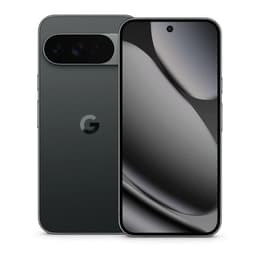
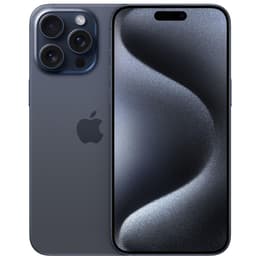
Google Pixel 10 Pro XL Vs iPhone 15 Pro Max
- 1-year minimum warranty
- Free delivery on all items
- Free 30-day returns
Differences at a glance
The Google Pixel 10 Pro XL (2025) and the Apple iPhone 15 Pro Max (2023) represent large-format flagship smartphone offerings from two major ecosystems. While they run on different operating systems—Android and iOS respectively—both devices deliver high-end specifications, premium construction, and extensive capabilities tailored to demanding daily use. Choosing between them often comes down to ecosystem preference, software interactions, and specific hardware design priorities.
Available Models
Colour
Storage (GB)
Scores
Durability
- Release timeline and support: The Google Pixel 10 Pro XL launched in 2025 running Android, while the iPhone 15 Pro Max debuted in 2023 running iOS. Google provides multi-year software and security updates matching long-term industry standards, whereas Apple maintains a well-established history of supporting devices with iOS updates for roughly five to six years from release.
- Repairability and durability: Both smartphones feature sturdy IP68 water and dust resistance ratings alongside robust display protection glass. Repair infrastructure is globally established for both manufacturers, supporting long-term usability and maintenance over the device lifecycle.
- Practical lifespan: Solid build materials and generous internal memory configurations ensure both models retain functional capability and responsiveness over years of routine ownership.
Year of Release
2025
2023
Compatible with latest Update
Yes
Yes
OS
Android
iOS
Foldable
No
No
Performance
- Storage and multitasking: Both devices begin with generous baseline internal storage capacities and feature substantial RAM allocations that effortlessly handle concurrent background apps, intensive web browsing, and heavy mobile gaming without unexpected slowdowns.
- System responsiveness: Modern current-generation processing architecture ensures rapid application loading times, fluid desktop-like multitasking, and stable thermal management during sustained graphic-heavy tasks.
- Battery behavior: Large internal battery capacities support full-day utilization under typical mixed workflows, complemented by modern fast-charging standards and wireless replenishment options.
Screen quality
- Display technology: Both models utilize advanced OLED display panels that produce deep black levels, high contrast ratios, and vivid color reproduction suitable for media consumption and text legibility.
- Brightness and outdoor clarity: High peak luminance levels allow both screens to remain clearly legible under direct sunlight, while adaptive refresh rates scaling up to 120Hz ensure buttery-smooth scrolling and motion handling.
- Viewing space: Expansive screen diagonals near the 6.7-inch to 6.8-inch range offer generous workspace for productivity, split-screen views, and immersive video playback.
Resolution
1344x2992
1290 x 2796
Audiovisual
- Multi-lens configurations: Both handsets feature versatile triple-lens rear camera arrays incorporating main wide-angle lenses, ultra-wide sensors, and dedicated optical telephoto capabilities for distant subjects.
- Low-light and video capture: Advanced computational photography algorithms on the Google Pixel 10 Pro XL excel at capturing balanced details in challenging lighting, while the iPhone 15 Pro Max delivers industry-recognized stability and cinematic video recording features.
- Audio and media output: Integrated multi-speaker setups provide balanced stereo sound output for calls and casual media streaming, supported by clear multi-microphone arrays.
Front camera
42 megapixels
12 megapixels
Miscellaneous
- Connectivity and ports: Both devices support rapid 5G cellular networks, modern Wi-Fi standards, and Bluetooth, utilizing reversible USB Type-C ports for charging and wired data transfer.
- Security and handling: Secure biometric authentication is handled via responsive in-display fingerprint sensors on the Google device and secure 3D face recognition on the Apple model.
- Physical footprint: Large chassis dimensions incorporate metal and glass construction materials, resulting in substantial builds that favor two-handed use for extended comfort.
Weight
232 g
221 g
Screen size (in)
6.8
6.7
Mobile network
5G
5G
SIM card
Physical SIM + eSIM
Physical SIM + eSIM
Carrier compatibility
Unlocked
Unlocked
Connector
USB-C
USB-C
What the community thinks
When gathering insights from active online communities, users consistently praise the Google Pixel 10 Pro XL for its intuitive software integrations, advanced photo editing assistance, and vibrant display calibration. Conversely, owners of the iPhone 15 Pro Max frequently highlight its robust video capture tools, long-term resale stability, and seamless synergy within the wider Apple device ecosystem. Common discussions note that heavy media consumers appreciate the expansive screen estate on both models, though users with smaller hands sometimes remark on the sheer physical bulk of these large-format phones.
Users prioritizing deep Android customization, flexible file management, and advanced AI-assisted photography will find the Google Pixel 10 Pro XL well-suited to their daily routines. Meanwhile, users invested in iOS continuity, superior mobile video production tools, and long-standing hardware reliability may lean toward the iPhone 15 Pro Max. For those aiming to make an eco-friendly choice, exploring a quality-assured refurbished option provides a sustainable pathway to owning either of these premium devices without compromise.