
Compare models
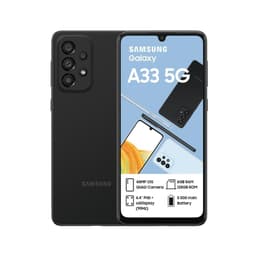
Galaxy A33 5G Vs Galaxy S25 FE
- 1-year minimum warranty
- Free delivery on all items
- Free 30-day returns
Differences at a glance
The Samsung Galaxy A33 5G (2022) and the Samsung Galaxy S25 FE (2025) represent different tiers of Samsung's smartphone lineup, balancing mid-range utility with advanced capabilities. While the Galaxy A33 5G focuses on delivering essential daily features at a accessible tier, the Galaxy S25 FE incorporates newer processing technology and higher-grade multimedia options.
Both devices run on the Android operating system paired with Samsung's custom interface, offering similar software layouts though differing in support longevity and feature depth. Choosing between them depends on whether daily essentials or advanced performance processing matter more to the user.
Available Models
Colour
Storage (GB)
Scores
Durability
When examining hardware longevity and software support, both models provide distinct upgrade timelines tied to their respective release years.
- Software support timelines: The Galaxy S25 FE benefits from a later release year, securing multi-year operating system upgrades that extend further into the future compared to the older Galaxy A33 5G.
- Repairability and build maintenance: Both models utilize standardized internal components and solid casing designs, though repair availability varies depending on regional service networks and parts accessibility.
- Expected practical lifespan: Users can anticipate several years of reliable service from both devices, with the newer model holding an advantage for long-term software relevance.
Year of Release
2022
2025
Compatible with latest Update
Yes
Yes
OS
Android
Android
Foldable
No
No
Performance
Processing capabilities and day-to-day responsiveness vary significantly between these two generations of Samsung hardware.
- App loading and multitasking: The Galaxy S25 FE handles heavy applications, split-screen tasks, and demanding mobile games with high fluidity, whereas the Galaxy A33 5G manages standard messaging, web browsing, and casual apps reliably without excessive slowdowns.
- Storage and memory configurations: The Galaxy S25 FE typically offers higher baseline random access memory and faster storage read speeds, improving overall system snappiness during intensive usage cycles.
- Battery behavior: Both devices include energy-efficient power management systems designed to last through a standard day of mixed use, though heavy gaming or navigation drains the battery more rapidly on both models.
Screen quality
Display characteristics shape the visual experience for media consumption, gaming, and everyday interface navigation.
- Panel technology and clarity: Both smartphones utilize vibrant OLED display technology, ensuring deep black levels and vivid contrast, accompanied by sharp resolutions that render text and images clearly.
- Brightness levels: The Galaxy S25 FE achieves higher peak brightness output, making on-screen content easier to read under direct outdoor sunlight compared to the Galaxy A33 5G.
- Refresh rate and smoothness: The Galaxy S25 FE features a faster refresh rate capability that results in smoother scrolling animations and fluid motion response during gaming and UI navigation.
Audiovisual
Imaging and audio hardware define how each device handles photography, video recording, and media playback.
- Camera versatility: The Galaxy S25 FE includes an upgraded multi-lens array with improved low-light sensitivity and optical stabilization, while the Galaxy A33 5G captures reliable daytime photos and standard video clips.
- Video recording quality: Higher resolution capture options and advanced stabilization features on the Galaxy S25 FE produce steadier video footage across shifting lighting conditions.
- Audio output: Both models feature stereo speaker configurations that deliver clear sound for hands-free calls and casual video viewing, though neither replaces external dedicated speakers.
Miscellaneous
Physical design traits, connectivity protocols, and everyday usability features dictate how each phone feels in daily handling.
- Build materials and handling: The Galaxy A33 5G relies on durable plastic composite framing, whereas the Galaxy S25 FE incorporates glass and aluminum elements, resulting in a distinct weight and tactile feel in the hand.
- Connectivity standards: Both smartphones support modern fifth-generation cellular networks, rapid Wi-Fi protocols, and Bluetooth pairing, ensuring stable connections for accessories and data transfer.
- Security and biometrics: Both devices integrate under-display fingerprint sensors and facial recognition systems for secure unlocking and mobile authentication.
Weight
186 g
190 g
Screen size (in)
6.4
6.7
Mobile network
5G
5G
SIM card
Dual Physical SIM
Physical SIM + eSIM
Carrier compatibility
Unlocked
Unlocked
What the community thinks
User feedback from online communities highlights distinct preferences for each device based on practical everyday experiences. Owners of the Galaxy A33 5G frequently praise its dependable battery longevity, lightweight build, and capability to handle core communication tasks reliably. Conversely, users favor the Galaxy S25 FE for its responsive processing speed, brighter display panel, and more versatile photographic output. Common criticisms for the older model center around slower loading times in demanding software, while discussions on the newer device occasionally note that heavy processing generates noticeable warmth during extended gaming sessions.
Users prioritizing long-term software support, fluid graphics, and advanced camera tools will find the Galaxy S25 FE well-suited to their needs. Meanwhile, users focusing on straightforward messaging, media streaming, and essential daily functions may prefer the Galaxy A33 5G. Choosing a quality-assured refurbished option provides a sustainable choice that extends device lifecycles while maintaining high functional standards. Selecting the right smartphone ultimately depends on balancing processing demands with long-term software expectations.