
Galaxy A26 Vs Google Pixel 9a

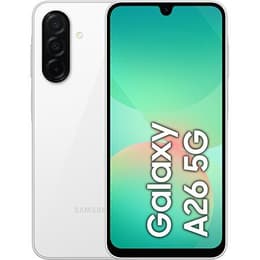
Galaxy A26
Galaxy A26
Starting at

Refurbished price:£152.00

Versus £419.55 new

See options
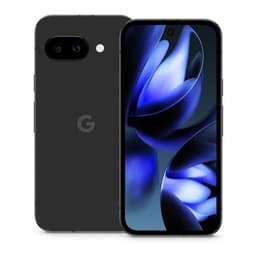
Google Pixel 9a
Google Pixel 9a
Starting at

Refurbished price:£319.00

Versus £499.00 new

See options

Ratings

The Samsung Galaxy A26 and the Google Pixel 9A are both contemporary Android smartphones, released in early 2025, targeting users seeking a blend of modern features and practical functionality. While both devices operate on the Android 15 platform, they offer distinct approaches to design, performance, and camera capabilities. The Galaxy A26 emphasizes a larger display and expandable storage, whereas the Pixel 9A focuses on advanced computational photography and a longer software support commitment.

Scores

Durability

When considering the long-term usability of these devices, both the Galaxy A26 and the Pixel 9A offer substantial software support, though with some differences in duration and update frequency.

  • Software Longevity: The Samsung Galaxy A26 is designed to receive six years of software and security updates from its release in March 2025. In contrast, the Google Pixel 9A offers an extended commitment of seven years of software and security updates from its April 2025 launch. This means the Pixel 9A will likely receive major Android version upgrades for a longer period.
  • Physical Durability: The Galaxy A26 features Corning Gorilla Glass Victus+ on both the front and back, encased in a plastic frame, and boasts an IP67 rating for dust and water resistance. The Pixel 9A, while also offering an IP68 dust and water resistance rating, utilizes Corning Gorilla Glass 3 for its display protection. The Pixel 9A's IP68 rating indicates a slightly higher level of protection against water immersion compared to the A26's IP67.
  • Practical Lifespan: Both phones are built to last several years, with their respective software support policies ensuring they remain secure and functional for an extended period. Users prioritizing the absolute longest software support will find the Pixel 9A's seven-year commitment advantageous, while the Galaxy A26 still provides a robust six years of updates.

Year of Release

2024

2025

Compatible with latest Update

Yes

Yes

OS

Android

Android

Foldable

No

No

Performance

The performance of the Galaxy A26 and Pixel 9A is tailored to provide smooth daily operation, though they achieve this through different internal components, impacting how they handle demanding tasks.

  • Everyday Responsiveness: The Samsung Galaxy A26 is powered by an Exynos 1380 or 1280 processor, depending on the region, paired with 6GB or 8GB of RAM. This configuration allows for efficient handling of common applications, web browsing, and general multitasking. The Pixel 9A, featuring Google's Tensor G4 processor and 8GB of RAM, offers a responsive experience, particularly with Google's integrated AI features.
  • Demanding Applications: For more intensive use, such as graphic-heavy gaming or running multiple complex applications simultaneously, the Pixel 9A's Tensor G4 processor is designed to manage these tasks with efficiency, leveraging its integration with Google's software optimizations. The Galaxy A26's processor is capable for most users but may show some limitations during extended periods of high-performance gaming or very heavy multitasking.
  • Storage and Battery: The Galaxy A26 offers 128GB or 256GB of internal storage, with the added flexibility of a microSD card slot for expansion. It is equipped with a 5000mAh battery, supporting 25W wired charging. The Pixel 9A comes with 128GB or 256GB of storage and 8GB of RAM, but without expandable storage. It features a slightly larger 5100mAh battery, with charging speeds of 23W. Both devices provide ample battery life for a full day of typical use.

Memory (GB)

8 GB

8 GB

Screen quality

Both smartphones offer vibrant displays suitable for media consumption and daily interactions, but they differ in technology, size, and peak brightness capabilities.

  • Display Technology and Size: The Samsung Galaxy A26 features a 6.7-inch Super AMOLED Infinity-U Display with a resolution of 1080 x 2340 pixels, providing deep blacks and rich colors. The Google Pixel 9A comes with a slightly smaller 6.3-inch pOLED Actua display, offering a resolution of 1080 x 2424 pixels, known for its vivid and punchy colors.
  • Brightness and Smoothness: The Galaxy A26's Super AMOLED display supports a 120Hz refresh rate for smooth scrolling and animations, with a peak brightness of 1000 nits. The Pixel 9A's Actua display also features a 120Hz adaptive refresh rate and boasts a significantly higher peak brightness of 2700 nits, making it particularly well-suited for outdoor visibility.
  • Viewing Experience: The larger screen of the Galaxy A26 may appeal to users who prioritize immersive viewing for videos and games. The Pixel 9A's display, while smaller, offers exceptional brightness and clarity, enhancing readability in various lighting conditions.

Resolution

1080 x 2340

2424 x 1080

Audiovisual

The camera systems on the Galaxy A26 and Pixel 9A are designed to capture quality images, each with its own strengths in sensor configuration and computational photography.

  • Rear Camera Systems: The Samsung Galaxy A26 features a triple-camera setup on the rear, consisting of a 50MP main sensor with Optical Image Stabilization (OIS), an 8MP ultrawide lens, and a 2MP macro camera. The Pixel 9A employs a dual-camera system, with a 48MP primary sensor (f/1.7 aperture, OIS) and a 13MP ultrawide lens.
  • Photography Performance: The Galaxy A26's main camera delivers decent results in good lighting, with the ultrawide and macro lenses offering versatility. Users report that colors can appear somewhat muted, and low-light performance has room for improvement. The Pixel 9A, leveraging Google's computational photography, is noted for delivering impressive photos in various conditions, including good exposure and attractive color reproduction, even with fewer sensors. It also introduces Macro Focus for detailed close-up shots.
  • Video and Front Camera: Both devices offer a 13MP front-facing camera for selfies and video calls. The Pixel 9A supports 4K video recording at 30/60fps, with gyro-EIS and OIS for stabilization. The Galaxy A26's front camera supports 1080p video recording at 30fps.

Front camera

13 megapixels

13 megapixels

Miscellaneous

Beyond core specifications, several practical elements contribute to the overall user experience, from connectivity to physical design.

  • Connectivity and Ports: Both the Galaxy A26 and Pixel 9A support 5G connectivity, Wi-Fi 802.11 a/b/g/n/ac, and Bluetooth 5.3. The Galaxy A26 includes NFC and a USB Type-C 2.0 port, along with a microSD card slot for expandable storage. The Pixel 9A also features a USB Type-C port and NFC.
  • Sensors and Biometrics: The Galaxy A26 incorporates a side-mounted fingerprint sensor for secure unlocking, along with an accelerometer, gyroscope, and compass. The Pixel 9A also offers secure authentication, likely through an in-display fingerprint sensor, and includes a similar suite of sensors.
  • Design and Handling: The Galaxy A26 measures 164 x 77.5 x 7.7 mm and weighs 200g, featuring a design with a Gorilla Glass Victus+ front and back and a plastic frame. The Pixel 9A has a more compact design, measuring 6.1 x 2.9 x 0.4 inches (approximately 155 x 74 x 10 mm) and weighing around 188g, with a squared-up body and flat rails. The Pixel 9A's design is noted for being compact and handy.

Weight

197 g

186 g

Screen size (in)

6.5

6.3

Mobile network

5G

5G

SIM card

Dual Physical SIM

Physical SIM + eSIM

Carrier compatibility

Unlocked

Unlocked

Connector

USB-C

USB-C

The Samsung Galaxy A26 and Google Pixel 9A both present compelling options in the contemporary smartphone market, each catering to slightly different user priorities. Users often praise the Galaxy A26 for its large, vibrant Super AMOLED display and the flexibility of expandable storage. Some common criticisms, however, point to its camera performance in low light and the presence of a single bottom-firing speaker. The Pixel 9A, on the other hand, frequently receives acclaim for its exceptional camera capabilities, particularly its computational photography, and its extended software support. Users also appreciate its bright Actua display and robust battery life. A common concern for the Pixel 9A can be its charging speed, which is slower compared to some rivals, and the absence of a charger in the box.

Users prioritizing a larger screen for media consumption and the option to expand storage will find the Samsung Galaxy A26 well-suited to their needs. Its six years of software updates also provide a solid foundation for long-term use. Conversely, users who place a high value on advanced photography features, a compact design, and the longest possible software support will likely lean towards the Google Pixel 9A. Its Tensor G4 processor also offers a smooth experience with integrated AI features. Both devices represent quality-assured options, and considering a refurbished model can be an eco-friendly alternative for those looking to make a sustainable choice.


See all articles

Our recent comparisons