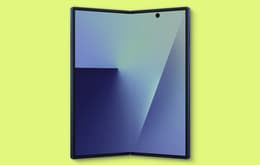
Galaxy A26 Vs Galaxy Z Fold4

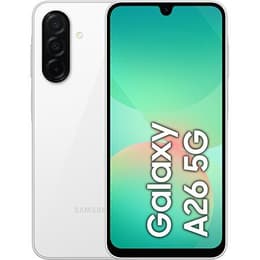
Galaxy A26
Galaxy A26
Starting at

Refurbished price:£152.00

Versus £419.55 new

See options
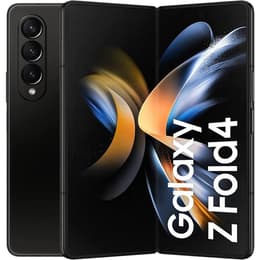
Galaxy Z Fold4
Galaxy Z Fold4
Starting at

Refurbished price:£352.00

Versus £1,889.00 new

See options

Ratings

The Samsung Galaxy A26 (released in March 2025) and the Samsung Galaxy Z Fold4 (released in August 2022) represent distinct approaches to smartphone design and functionality. While the Galaxy A26 offers a traditional smartphone experience with modern mid-range features, the Galaxy Z Fold4 provides a unique foldable form factor, transforming from a conventional phone into a tablet-like device. These differences cater to varying user needs, from those seeking a reliable everyday handset to those desiring enhanced multitasking capabilities and a larger display.

Scores

Durability

The expected lifespan and software support differ significantly between these two devices, primarily due to their release timelines and market positioning.

  • Software Longevity: The Galaxy A26, being a newer device, is promised 6 Android OS upgrades and 6 years of security updates, extending its software support well into the future. In contrast, the Galaxy Z Fold4, released in 2022, was promised 4 Android OS upgrades and 5 years of security updates, with support expected to conclude around 2027.
  • Physical Durability: The Galaxy A26 features an IP67 rating for water and dust resistance, along with Corning Gorilla Glass Victus+ on its front and back, offering robust protection for a traditional smartphone. The Galaxy Z Fold4 boasts an IPX8 water resistance rating, meaning it can withstand submersion in water, but it lacks official dust resistance. Its folding mechanism and inner screen are points of consideration for long-term physical durability, with some users reporting issues like inner screen protector peeling or hinge problems over time.
  • Repairability: While specific repairability scores are not provided, the traditional slab design of the Galaxy A26 generally suggests a more straightforward repair process compared to the complex foldable design of the Galaxy Z Fold4, which involves multiple screens and a sophisticated hinge mechanism.

Year of Release

2024

2022

Compatible with latest Update

Yes

Yes

OS

Android

Android

Foldable

No

Yes

Performance

Performance capabilities vary between the two devices, reflecting their different target audiences and release generations.

  • Processing Power: The Galaxy A26 is equipped with a current-generation mid-range processor (Exynos 1380 or 1280 depending on region), which handles daily tasks, app loading, and moderate multitasking smoothly. The Galaxy Z Fold4, featuring a flagship-tier processor from its release year (Qualcomm Snapdragon 8+ Gen 1), offers robust performance for demanding applications, intensive gaming, and seamless transitions between multiple apps on its larger display.
  • Multitasking and Responsiveness: The Galaxy A26 comes with 6GB or 8GB of RAM, providing a responsive experience for typical smartphone usage. The Galaxy Z Fold4, with its 12GB of RAM, is designed for advanced multitasking, allowing users to run several applications simultaneously across its expansive inner screen without noticeable slowdowns.
  • Storage Options: The Galaxy A26 offers 128GB or 256GB of internal storage, with the added flexibility of microSD card expansion. The Galaxy Z Fold4 provides larger internal storage options, ranging from 256GB to 1TB, but it does not support expandable storage.

Memory (GB)

8 GB

12 GB

Screen quality

The display experience is a primary distinguishing factor, with the Galaxy Z Fold4 offering a unique dual-screen setup compared to the Galaxy A26's single, traditional display.

  • Display Technology and Clarity: Both devices feature Super AMOLED display technology, known for vibrant colors and deep blacks. The Galaxy A26 has a 6.7-inch FHD+ (1080 x 2340 pixels) Super AMOLED display with a 120Hz refresh rate. The Galaxy Z Fold4 boasts two Dynamic AMOLED 2X displays: a 6.2-inch cover screen and a 7.6-inch foldable inner screen, both with adaptive 120Hz refresh rates. The inner screen offers a higher resolution (2176 x 1812 pixels) for a more detailed viewing experience.
  • Brightness and Outdoor Visibility: The Galaxy A26's display offers good visibility indoors, though some users note it can struggle in bright outdoor conditions. The Galaxy Z Fold4's Dynamic AMOLED 2X displays generally provide excellent brightness levels, ensuring good readability even in direct sunlight.
  • Viewing Experience: The Galaxy A26 provides a large, immersive viewing area for media consumption and everyday use. The Galaxy Z Fold4's main 7.6-inch foldable display offers a tablet-like experience, ideal for productivity, split-screen multitasking, and immersive media viewing, while the cover screen functions as a standard smartphone display for quick interactions.

Resolution

1080 x 2340

1812 x 2176

Audiovisual

Both smartphones offer capable camera systems, though the Galaxy Z Fold4, as a former flagship, provides more advanced features and versatility.

  • Rear Camera System: The Galaxy A26 features a triple-camera setup with a 50 MP main sensor (with OIS), an 8 MP ultrawide lens, and a 2 MP macro lens. The Galaxy Z Fold4 also has a triple-camera system, comprising a 50 MP wide-angle camera (with OIS), a 12 MP ultrawide camera, and a 10 MP telephoto camera with 3x optical zoom and OIS, offering greater flexibility for different shooting scenarios.
  • Photography Performance: The Galaxy A26 delivers decent everyday photography with good dynamic range, though colours may appear muted and low-light performance can be improved. The Galaxy Z Fold4's camera system, with its larger sensors and advanced processing, generally produces higher-quality images with better detail, colour accuracy, and improved low-light capabilities.
  • Video Recording and Front Cameras: The Galaxy A26 supports 4K video recording at 30fps and has a 13 MP front camera. The Galaxy Z Fold4 can record video up to 8K at 24fps and features a 10 MP front camera on the cover display, alongside a 4 MP under-display camera on the inner screen.
  • Audio Experience: The Galaxy A26 has a single bottom-firing speaker. The Galaxy Z Fold4 offers stereo speakers with Dolby Atmos support, providing a more immersive audio experience for media consumption.

Front camera

13 megapixels

4 megapixels

Miscellaneous

Beyond core specifications, several practical elements contribute to the overall user experience of each device.

  • Connectivity and Ports: Both devices support 5G connectivity. The Galaxy A26 includes Wi-Fi 802.11 a/b/g/n/ac, Bluetooth 5.3, NFC, and a USB-C 2.0 port. The Galaxy Z Fold4 features more advanced Wi-Fi 6E, Bluetooth 5.2, NFC, and a faster USB-C 3.2 port. The Galaxy A26 notably lacks a 3.5mm headphone jack.
  • Biometric Security: The Galaxy A26 incorporates a side-mounted fingerprint sensor for secure unlocking. The Galaxy Z Fold4 also uses a side-mounted fingerprint sensor.
  • Design and Handling: The Galaxy A26 has a slim profile (7.7 mm thick) and weighs 200g, offering a comfortable grip for a traditional smartphone. The Galaxy Z Fold4, due to its foldable nature, is thicker and heavier when folded (14.2-15.8 mm thick, 263g), but unfolds into a much thinner tablet-like device (6.3 mm thick). The Galaxy Z Fold4 also supports the S Pen Fold Edition for enhanced productivity.

Weight

197 g

263 g

Screen size (in)

6.5

7.6

Mobile network

5G

5G

SIM card

Dual Physical SIM

Dual Physical SIM + eSIM

Carrier compatibility

Unlocked

Unlocked

Choosing between the Samsung Galaxy A26 and the Galaxy Z Fold4 depends heavily on individual priorities and usage patterns. User feedback for the Galaxy Z Fold4 often praises its innovative foldable display, which significantly enhances multitasking and media consumption, effectively offering a phone and a small tablet in one device. However, common criticisms include concerns about the long-term durability of the folding screen and hinge, with some users reporting issues like screen protector peeling or hinge malfunctions after extended use. The battery life, while adequate for many, can be a point of concern for heavy users due to the power demands of the large internal display.

For the Galaxy A26, being a newer mid-range device, user sentiment generally highlights its strong software support commitment, offering 6 years of OS and security updates, which is a significant advantage for longevity. Its traditional form factor is often seen as more robust and less prone to the specific durability concerns associated with foldables. While its performance is solid for everyday tasks, it may not satisfy users seeking top-tier processing power for intensive applications or gaming. The display quality is generally well-received for its vibrancy, though outdoor visibility can sometimes be a limitation.

Users prioritizing a cutting-edge, versatile device for productivity and immersive media viewing, and who are comfortable with the unique considerations of a foldable design, may find the Galaxy Z Fold4 well-suited to their needs. Conversely, users who value long-term software support, a more traditional and robust design, and a reliable everyday smartphone experience without the complexities of a foldable, may lean toward the Galaxy A26. Both devices, particularly the Galaxy Z Fold4, are available as quality-assured refurbished options, providing an eco-friendly alternative for consumers.

See all articles

Our recent comparisons