

Compare models
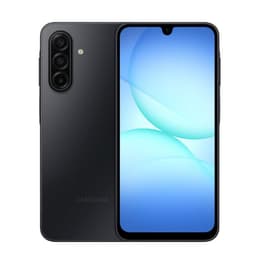
Galaxy A17 Vs Google Pixel 8 Pro
- 1-year minimum warranty
- Free delivery on all items
- Free 30-day returns
Differences at a glance
The Samsung Galaxy A17 (2025) and the Google Pixel 8 Pro (2023) represent two distinct approaches to modern smartphone engineering, catering to different user priorities and budgets. While the Galaxy A17 focuses on practical everyday reliability and extended software longevity, the Pixel 8 Pro positions itself as a feature-rich flagship loaded with advanced computational capabilities. Both devices run on the Android operating system, yet they deliver uniquely tailored user experiences for everyday communication, media consumption, and mobile productivity.
Available Models
Colour
Storage (GB)
Scores
Durability
When evaluating durability and long-term utility, both devices offer robust software support lifespans, though they stem from different release years.
- Software Support Timeline: The Google Pixel 8 Pro benefits from an extensive multi-year update commitment from its manufacturer, while the Galaxy A17 also matches this longevity trend by providing extended major operating system upgrades to keep the software secure and up to date over the years.
- Build and Protection: The Pixel 8 Pro utilizes heavy-duty glass and aluminum construction alongside top-tier dust and water resistance ratings, whereas the Galaxy A17 employs practical materials designed to handle standard daily handling with moderate environmental protection.
- Expected Lifespan: Both smartphones are built to function reliably across several years of ownership, though users prioritizing physical ruggedness will find heavier flagship build elements on the Google device.
Year of Release
2025
2023
Foldable
No
No
Performance
Underneath the exterior, these devices manage daily tasks, multitasking, and resource-heavy applications through distinctly capable internal hardware configurations.
- Multitasking and Responsiveness: The Pixel 8 Pro handles demanding applications, complex gaming, and intensive background tasks smoothly thanks to its high-tier processing architecture and generous RAM, while the Galaxy A17 comfortably manages standard daily workflows like web browsing, messaging, and video streaming.
- Storage and Memory: Users can select from multiple storage configurations on the Pixel line, whereas the Galaxy A17 offers efficient baseline storage capacities suited for everyday media libraries and document storage.
- Battery Behavior: Both devices feature large battery capacities designed to last through a standard day of mixed use, though intense usage like continuous navigation or gaming will prompt more frequent recharging on either model.
Screen quality
Visual output and display responsiveness play a major role in everyday interaction, offering distinct viewing characteristics on each device.
- Display Technology: The Pixel 8 Pro features a high-resolution OLED panel with deep contrast levels and fluid motion handling, while the Galaxy A17 incorporates a vibrant AMOLED screen that delivers clear text and punchy colors for media consumption.
- Brightness and Outdoor Legibility: The Pixel 8 Pro achieves high peak brightness levels for comfortable outdoor viewing under direct sunlight, whereas the Galaxy A17 offers adequate illumination for standard outdoor visibility.
- Refresh Rate: Both screens support fluid refresh rates, ensuring smooth scrolling through web pages, social media feeds, and system menus.
Resolution
1080x2340
1344 x 2992
Screen type
Super AMOLED
LTPO OLED
Audiovisual
Imaging hardware and computational software shape how each smartphone captures daily moments, records video, and handles media output.
- Camera Systems: The Pixel 8 Pro equips a versatile multi-lens rear array including dedicated wide, ultra-wide, and telephoto options backed by advanced computational photography, while the Galaxy A17 provides a dependable multi-lens setup focused on clear everyday snapshots.
- Low-Light and Video: The Google device excels at pulling detail out of challenging lighting conditions and recording stable video, whereas the Samsung alternative performs reliably for casual point-and-shoot scenarios.
- Audio and Media Output: Stereo speakers on both units deliver clear sound for hands-free calls and casual video viewing, supported by responsive microphone arrays for voice recording.
Main camera
50 megapixels
50 megapixels
Miscellaneous
Practical everyday features, physical dimensions, and connectivity standards dictate how comfortably each device integrates into a traveler's or professional's routine.
- Connectivity Standards: Both models support rapid 5G cellular networks, modern Wi-Fi protocols, and Bluetooth for accessories, ensuring stable connections on the go.
- Security Sensors: The Pixel 8 Pro offers advanced facial recognition and secure fingerprint scanning, while the Galaxy A17 relies on a convenient side-mounted fingerprint sensor for quick unlocking.
- Handling and Form Factor: The Galaxy A17 offers a relatively lightweight profile that sits comfortably in one hand, whereas the Pixel 8 Pro feels slightly heavier due to its larger screen size and heavier-duty internal components.
Weight
192 g
213 g
Screen size (in)
6.7
6.7
Mobile network
5G
5G
SIM card
Physical SIM
Physical SIM + eSIM
Carrier compatibility
Unlocked
Unlocked
What the community thinks
Choosing between the Samsung Galaxy A17 and the Google Pixel 8 Pro depends entirely on individual daily habits and preferences. Users prioritizing professional-grade photography, advanced computational tools, and high-end processing power will find the Google Pixel 8 Pro well-suited to their needs. Conversely, users seeking a reliable, straightforward everyday device with dependable battery life and modern software support will lean toward the Samsung Galaxy A17.
Reviewers and community members frequently praise the Pixel 8 Pro for its versatile camera package and sharp display, though some note its heavier weight during prolonged one-handed use. On the other hand, everyday users highlight the Galaxy A17 for its straightforward interface and balanced everyday reliability, while noting that intensive gaming pushes its processing limits. For those looking to make an eco-friendly purchase, exploring a quality-assured refurbished option provides a sustainable choice that extends device lifecycles without compromising on performance. Ultimately, both smartphones offer distinct advantages depending on whether your priority rests on flagship versatility or practical simplicity.