
Compare models
Galaxy A16 Vs iPhone 15 Pro
- 1-year minimum warranty
- Free delivery on all items
- Free 30-day returns
Differences at a glance
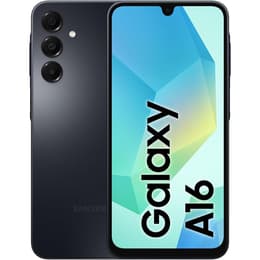
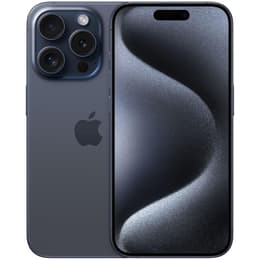
The Samsung Galaxy A16, released in late 2024, and the Apple iPhone 15 Pro, launched in late 2023, represent distinct approaches to smartphone design and functionality. While the Galaxy A16 operates on the Android platform, offering a user experience typical of Samsung's A-series, the iPhone 15 Pro runs on Apple's iOS, known for its integrated ecosystem. The primary differentiators lie in their core performance capabilities, camera systems, and build materials, catering to different user priorities.
Available Models
Colour
Storage (GB)
Scores
Durability
When considering the longevity of these devices, both offer substantial software support, though with different timelines and expectations.
- Release Timeline: The iPhone 15 Pro was released in September 2023, making it a slightly older model compared to the Galaxy A16, which launched in October 2024 in Europe and January 2025 in the US.
- OS Support Duration: The Galaxy A16 is notable for its commitment to six OS upgrades and six years of security updates, extending its support until October 2030. The iPhone 15 Pro, typical of Apple devices, is expected to receive major iOS updates for approximately five to seven years from its release.
- Build and Repairability: The iPhone 15 Pro features a titanium frame and Ceramic Shield front, contributing to its robust feel, alongside an IP68 rating for water and dust resistance. Early assessments indicated that while the display is highly scratch-resistant, the back glass might be more prone to cracking under certain impacts, though its modular design can simplify repairs. Information regarding the Galaxy A16's specific durability features like IP rating or glass type is less detailed, but Samsung's A-series typically employs durable plastic or glass-plastic constructions.
Year of Release
2024
2023
Compatible with latest Update
Yes
Yes
OS
Android
iOS
Foldable
No
No
Performance
The performance capabilities of the Galaxy A16 and iPhone 15 Pro cater to different usage intensities, driven by their respective internal components.
- Processor Capabilities: The iPhone 15 Pro is equipped with a high-performance processor, designed to handle demanding applications, complex multitasking, and graphics-intensive gaming with fluidity. The Galaxy A16, featuring an Exynos 1330 processor, is built to provide a smooth experience for everyday tasks, social media, and moderate gaming.
- System Responsiveness: Users of the iPhone 15 Pro generally report a highly responsive and fluid user interface, even under heavy load. The Galaxy A16 offers reliable performance for typical smartphone activities, ensuring applications launch and run without significant delays for its class.
- Storage and RAM: The iPhone 15 Pro offers a range of storage options from 128GB up to 1TB, paired with 8GB of RAM, supporting extensive media libraries and application installations. The Galaxy A16 comes with 128GB or 256GB of internal storage and 4GB, 6GB, or 8GB of RAM, with the added flexibility of expandable storage via a microSD card up to 1.5TB.
Screen quality
The visual experience on both devices is distinct, primarily due to differences in display technology and features.
- Display Technology and Clarity: The iPhone 15 Pro features a 6.1-inch Super Retina XDR OLED display, offering deep blacks, vibrant colors, and a high resolution of 2556x1179 pixels, resulting in sharp visuals. The Galaxy A16 sports a larger 6.7-inch Super AMOLED display with Full HD+ resolution, providing vivid colors and good clarity for media consumption and daily use.
- Brightness and Refresh Rate: The iPhone 15 Pro's display can reach up to 1000 nits typical brightness and 2000 nits peak brightness outdoors, ensuring excellent visibility in various lighting conditions. It also features ProMotion technology, offering an adaptive refresh rate up to 120Hz for smooth scrolling and animations. The Galaxy A16 has a 90Hz refresh rate, contributing to a smoother visual experience compared to standard 60Hz displays.
- Additional Display Features: The iPhone 15 Pro includes the Dynamic Island, an interactive area around the front camera, and an Always-On display feature.
Resolution
1080 x 2340
1179 x 2556
Screen type
Super AMOLED
LTPO Super Retina XDR OLED
Audiovisual
The camera systems on the Galaxy A16 and iPhone 15 Pro are designed for different levels of photographic and videographic needs.
- Rear Camera System: The iPhone 15 Pro boasts a versatile triple-camera system, including a 48MP main sensor with sensor-shift optical image stabilization, a 12MP ultra-wide lens, and a 12MP 3x telephoto lens with optical image stabilization. This setup is praised for its advanced computational photography, excellent low-light performance, and ability to capture detailed images. The Galaxy A16 features a triple-camera array with a 50MP main sensor, a 5MP ultrawide, and a 2MP macro lens, providing a capable system for everyday photography.
- Video Recording Capabilities: The iPhone 15 Pro supports 4K video recording at up to 60 frames per second, along with advanced features like ProRes video recording and Cinematic mode, appealing to users with higher videography demands. The Galaxy A16 records video at up to 1080p at 30 frames per second.
- Front Camera: Both devices include capable front-facing cameras for selfies and video calls, with the iPhone 15 Pro featuring a 12MP TrueDepth camera with autofocus. The Galaxy A16 has a 13MP front camera.
Main camera
50 megapixels
48 megapixels
Front camera
13 megapixels
12 megapixels
Miscellaneous
Beyond core specifications, several practical elements differentiate the user experience of these two smartphones.
- Connectivity: Both devices support 5G cellular networks. The iPhone 15 Pro features Wi-Fi 6E and Bluetooth 5.3, offering fast and stable wireless connections. The Galaxy A16 supports Wi-Fi (likely Wi-Fi 5, similar to its predecessor) and Bluetooth 5.3.
- Ports and Biometrics: The iPhone 15 Pro has transitioned to a USB-C port, supporting faster data transfer speeds (USB 3.2 Gen 2). It relies on Face ID for secure authentication. The Galaxy A16 also uses a USB-C port and, unlike its predecessor, has removed the 3.5mm headphone jack. It typically features a side-mounted fingerprint sensor for security.
- Design and Handling: The iPhone 15 Pro features a lightweight titanium frame, contributing to a premium feel and reduced weight (187 grams). It also includes a customizable Action Button. The Galaxy A16 has a slim design at 7.9mm.
Weight
200 g
187 g
Screen size (in)
6.7
6.1
Mobile network
4G
5G
SIM card
Dual Physical SIM
Physical SIM + eSIM
Carrier compatibility
Unlocked
Unlocked
Connector
USB-C
USB-C
What the community thinks
The choice between the Samsung Galaxy A16 and the iPhone 15 Pro depends significantly on individual user needs and priorities. Users frequently praise the iPhone 15 Pro for its exceptional camera capabilities, particularly its advanced video features and RAW formats, and its powerful performance for demanding tasks. However, some users have noted concerns regarding its battery life, with heavy users sometimes needing more frequent charging, and initial reports of heating issues, though software updates have addressed some of these.
The Galaxy A16 is often lauded for its extended software support, offering six years of updates, which is a significant advantage for users seeking long-term usability from an Android device. Its larger display and substantial battery capacity are also frequently highlighted as positive aspects. Criticisms, typical for its segment, might revolve around its camera performance in challenging conditions compared to premium devices, or its overall processing power for very intensive applications.
Users prioritizing a top-tier camera system, especially for advanced photography and videography, and those who value a highly responsive and powerful device for intensive applications, may find the iPhone 15 Pro well-suited to their needs. Conversely, users who prioritize long-term software support, a larger display for media consumption, and reliable performance for everyday tasks will find the Galaxy A16 to be a compelling option. Both devices offer a quality experience, and considering a quality-assured refurbished option for either model can be an eco-friendly alternative.