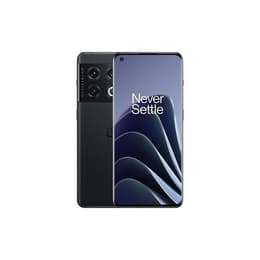

Galaxy A16 5G Vs OnePlus 10 Pro

Galaxy A16 5G
Galaxy A16 5G
Starting at

Refurbished price:£103.00

Versus £205.87 new

See options
OnePlus 10 Pro
OnePlus 10 Pro
Starting at

Refurbished price:£391.00

Versus £769.39 new

See options

Ratings

The Samsung Galaxy A16 5G, released in October 2024, and the OnePlus 10 Pro, launched globally in March 2022, represent different segments of the smartphone market. While both devices operate on the Android platform, they offer distinct experiences in terms of performance, camera capabilities, and long-term software support. The Galaxy A16 5G focuses on extended software longevity and essential features, whereas the OnePlus 10 Pro emphasizes high-end performance and advanced display technology.

Scores

Durability

The expected practical lifespan of a smartphone is influenced by its release timeline, software support, and physical durability. These two devices offer different propositions in these areas.

  • Software Longevity: The Samsung Galaxy A16 5G stands out with an impressive commitment to software updates, promising six major Android OS upgrades and six years of security updates, extending its support until October 2030. This ensures a prolonged period of up-to-date features and security. The OnePlus 10 Pro, being an earlier flagship, typically receives fewer major OS updates and security patches compared to newer devices, generally around three OS updates and four years of security updates.
  • Physical Durability: The Galaxy A16 5G features an IP54 rating for dust and splash resistance, and its construction includes a plastic frame and a material Samsung calls "Glastic" on the front and back, designed to mimic glass. The OnePlus 10 Pro incorporates Gorilla Glass Victus for screen protection and a glass back with a metal frame. However, the OnePlus 10 Pro faced notable concerns regarding its structural integrity, with some durability tests showing the device snapping under pressure.
  • Repairability: While specific repairability scores can vary, the plastic build of the Galaxy A16 5G might offer a different repair experience compared to the glass and metal construction of the OnePlus 10 Pro.

Year of Release

2024

2022

Compatible with latest Update

Yes

Yes

OS

Android

Android

Foldable

No

No

Performance

Performance is a key differentiator, with the OnePlus 10 Pro designed for high-demand tasks and the Galaxy A16 5G optimized for everyday usage.

  • Processing Power: The OnePlus 10 Pro is equipped with a processor designed for demanding applications and intensive multitasking, allowing for smooth operation even with graphically rich games and complex software. The Samsung Galaxy A16 5G, powered by a mid-range processor, handles daily tasks such as social media, web browsing, and light multitasking effectively. While it provides a responsive experience for general use, it may exhibit slower performance or stuttering with very demanding applications or extensive background processes, particularly in variants with less RAM.
  • Multitasking and Storage: The OnePlus 10 Pro offers configurations with higher RAM options, contributing to a more fluid multitasking experience where multiple applications can remain active without needing to reload frequently. It also features fast internal storage for quick app loading. The Galaxy A16 5G comes with varying RAM options, and users have reported that models with lower RAM may experience more noticeable slowdowns when switching between several applications.
  • Battery Behavior: Both devices feature a 5000mAh battery capacity. The OnePlus 10 Pro generally provides a full day of use, with some users reporting up to two days with moderate usage, despite its powerful components and high-refresh-rate display. The Galaxy A16 5G also offers solid battery life, often lasting over a day with typical usage.

Memory (GB)

4 GB

8 GB

Screen quality

The visual experience on these devices varies significantly due to differences in display technology and specifications.

  • Display Technology and Resolution: The OnePlus 10 Pro features a 6.7-inch Fluid AMOLED LTPO display with a high resolution of 3216 x 1440 pixels (QHD+), resulting in sharp and detailed visuals. The Samsung Galaxy A16 5G also has a 6.7-inch Super AMOLED display, offering vibrant colors and deep blacks, but with a resolution of 2340 x 1080 pixels (FHD+).
  • Refresh Rate and Brightness: The OnePlus 10 Pro's display boasts an adaptive refresh rate of 1Hz to 120Hz, providing very smooth scrolling and animations while optimizing power consumption. It can reach a peak brightness of 1300 nits, ensuring good visibility even in bright outdoor conditions. The Galaxy A16 5G offers a 90Hz refresh rate, which provides a smoother experience than standard 60Hz displays, and a peak brightness of 800 nits in high brightness mode, which is suitable for indoor use but may struggle in direct sunlight.
  • Viewing Experience: The OnePlus 10 Pro's higher resolution and adaptive refresh rate contribute to a more immersive and fluid viewing experience, particularly for high-definition content and gaming. The Galaxy A16 5G's display is noted for its vibrant colors and clarity, making it suitable for media consumption and everyday tasks.

Resolution

1080 x 2340

1440 x 3216

Screen type

Super AMOLED

LTPO2 Fluid AMOLED

Audiovisual

Both smartphones offer multi-camera setups, but their capabilities and performance differ, especially in challenging conditions.

  • Rear Camera System: The OnePlus 10 Pro features a versatile triple-camera system co-developed with Hasselblad, including a 48MP main sensor, a 50MP ultrawide sensor with a wide field of view options (110-degree and 150-degree), and an 8MP telephoto lens capable of 3.3x optical zoom. The Samsung Galaxy A16 5G comes with a 50MP main camera, a 5MP ultrawide camera, and a 2MP macro camera.
  • Photography Performance: The OnePlus 10 Pro generally produces photos with vibrant colors and good detail, performing well in various lighting conditions, though its low-light performance is considered good but not always on par with top-tier rivals. Its ultrawide camera can be inconsistent. The Galaxy A16 5G's 50MP main camera captures decent images in good lighting with adequate exposure and dynamic range. However, its low-light performance quickly diminishes, and the 5MP ultrawide and 2MP macro cameras are often described as subpar or less detailed.
  • Video Recording and Front Camera: The OnePlus 10 Pro supports video recording up to 8K at 24fps and 4K at 30fps, with solid stabilization. Its front camera is a 32MP sensor. The Galaxy A16 5G can record 4K video and offers a 13MP front-facing camera.

Main camera

50 megapixels

48 megapixels

Front camera

13 megapixels

32 megapixels

Miscellaneous

Beyond core features, several practical elements contribute to the overall user experience of these devices.

  • Connectivity and Ports: Both phones support 5G connectivity. The OnePlus 10 Pro includes Wi-Fi 6 and Bluetooth 5.2, while the Galaxy A16 5G supports Wi-Fi 802.11 a/b/g/n/ac and Bluetooth 5.3. Both utilize a USB-C port for charging and data transfer. The Galaxy A16 5G does not feature a headphone jack.
  • Biometrics and Sensors: The OnePlus 10 Pro features an in-display fingerprint sensor and retains the signature OnePlus Alert Slider for quick sound profile changes. The Galaxy A16 5G incorporates a side-mounted fingerprint sensor and uses virtual proximity sensing.
  • Design and Handling: The OnePlus 10 Pro has a premium build with glass on both the front and back, and a metal frame, weighing around 200.5g. The Galaxy A16 5G has a plastic frame and a "Glastic" finish, weighing 200g. Both are large phones, with the Galaxy A16 5G measuring 164.4 x 77.9 x 7.9 mm.

Weight

200 g

201 g

Screen size (in)

6.7

6.7

Mobile network

5G

5G

SIM card

Dual Physical SIM

Physical SIM

Carrier compatibility

Unlocked

Unlocked

Connector

USB-C

USB-C

User feedback for the Samsung Galaxy A16 5G frequently praises its extended software support, vibrant Super AMOLED display, and reliable battery life for everyday use. However, common criticisms point to performance limitations, particularly with the 4GB RAM variant, and the subpar quality of its ultrawide and macro cameras. Some users have expressed disappointment with overall responsiveness and camera performance in challenging conditions.

The OnePlus 10 Pro is often lauded for its stunning QHD+ 120Hz AMOLED display, powerful performance suitable for gaming and demanding applications, and very fast wired and wireless charging capabilities. Its main camera is generally well-regarded, though the ultrawide can be inconsistent, and low-light photography, while good, may not match the absolute best. A significant concern raised by users and reviewers was its durability, specifically its susceptibility to bending in stress tests.

Users prioritizing long-term software support, a vibrant display for media, and dependable battery life for general daily tasks may find the Samsung Galaxy A16 5G well-suited to their needs. It represents a practical choice for those seeking an eco-friendly alternative through refurbished options, ensuring a device that remains current for an extended period. Conversely, individuals who prioritize high-end performance for gaming and intensive applications, a superior display resolution and refresh rate, and rapid charging speeds will likely lean towards the OnePlus 10 Pro. This device caters to users who value a premium experience and advanced camera features, understanding that its software support window may be shorter. Both devices, when considered as quality-assured refurbished options, offer a sustainable choice for consumers.


See all articles

Our recent comparisons