
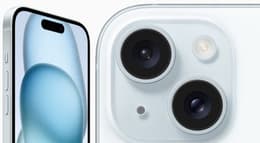
iPhones
Compare models
Differences at a glance
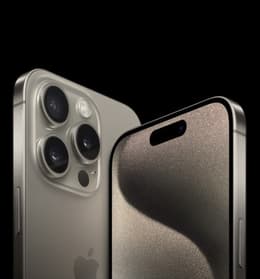
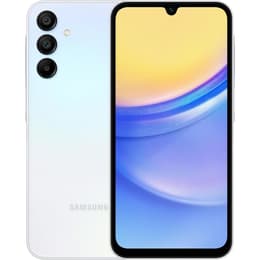
The Samsung Galaxy A15, released in December 2023, and the iPhone 15 Plus, launched in September 2023, represent distinct approaches to smartphone design and functionality. While both devices offer a comprehensive mobile experience, they cater to different user expectations through their operating systems and core features. The Galaxy A15 runs on Android with Samsung's One UI, providing extensive customization, whereas the iPhone 15 Plus operates on Apple's iOS, known for its integrated ecosystem and streamlined user experience. Key differentiators include display technology, camera capabilities, and overall performance, reflecting their respective market positions.
Colour
Storage (GB)
When considering the long-term usability of these devices, their release timelines and software support policies are significant. The Samsung Galaxy A15, launched in late 2023, is expected to receive four major Android OS upgrades and five years of security updates, extending its software longevity until approximately 2029. The iPhone 15 Plus, released slightly earlier in September 2023, typically benefits from Apple's commitment to around five years of iOS updates, ensuring compatibility with future software versions and features. Both devices offer a substantial period of software support, contributing to their practical lifespan.
Year of Release
Compatible with latest Update
OS
Foldable
The performance of the Galaxy A15 and iPhone 15 Plus varies significantly due to their underlying hardware and software optimization. The iPhone 15 Plus is equipped with a powerful current-generation chip, enabling smooth operation across demanding applications and multitasking. The Galaxy A15, on the other hand, utilizes a processor designed for efficient everyday tasks, offering a reliable experience for general use.
The visual experience on both devices is shaped by their display technologies and specifications. The iPhone 15 Plus features a larger, more advanced display, while the Galaxy A15 offers a vibrant screen suitable for its category.
Resolution
Screen type
The camera systems on the Galaxy A15 and iPhone 15 Plus are designed for different photographic needs, with the iPhone emphasizing advanced computational photography and the Galaxy offering a versatile setup for everyday moments.
Main camera
Front camera
Beyond core features, several practical elements differentiate the user experience of the Galaxy A15 and iPhone 15 Plus, from connectivity to physical design.
Weight
Screen size (in)
Mobile network
SIM card
Carrier compatibility
Connector
User feedback for the iPhone 15 Plus frequently highlights its exceptional battery life and large, vibrant display as significant advantages. Many appreciate the inclusion of the Dynamic Island and the improved 48MP main camera, which delivers detailed photos and strong low-light performance. Common criticisms sometimes point to the 60Hz refresh rate, which some users find less fluid compared to higher refresh rate displays on other devices. Early reports of overheating were also noted, though Apple later addressed these concerns.
The Samsung Galaxy A15 is often praised for its impressive battery longevity, capable of lasting up to two days on a single charge, and its commitment to long-term software updates. Users also value its bright Super AMOLED display and the inclusion of a 3.5mm headphone jack and expandable storage. However, some users have noted that its camera performance is average, particularly in challenging lighting conditions, and that the overall system responsiveness can exhibit occasional stutters with heavier use.
Users prioritizing extended battery life, a large and bright OLED display, and a highly integrated software ecosystem with strong camera capabilities, particularly for video, may find the iPhone 15 Plus well-suited to their needs. Conversely, individuals who value maximum battery endurance, expandable storage, a smoother scrolling experience from a 90Hz display, and a longer software update commitment for an Android device might lean towards the Samsung Galaxy A15. Both devices offer compelling features for different user profiles, and considering a quality-assured refurbished option can be an eco-friendly alternative for either model.