
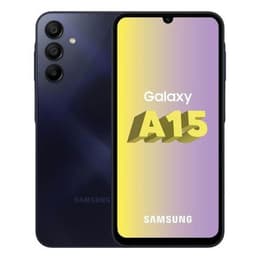


Galaxy A15 Vs Google Pixel 7A

Galaxy A15
Galaxy A15
Starting at

Refurbished price:£88.00

Versus £169.00 new

See options
Google Pixel 7A
Google Pixel 7A
Starting at

Refurbished price:£128.00

Versus £649.99 new

See options

Ratings

The Samsung Galaxy A15 and the Google Pixel 7a are both Android-based smartphones, released in late 2023 and mid-2023 respectively, offering distinct approaches to the mobile experience. While the Galaxy A15 emphasizes a larger display and expandable storage, the Pixel 7a focuses on advanced computational photography and a more powerful processing unit. Both devices operate on the Android platform, providing access to a wide ecosystem of applications and services.

Scores

Durability

The practical lifespan of a smartphone is often influenced by its release timeline, software support, and physical resilience. These two devices present different profiles in these areas.

  • Release Timeline: The Google Pixel 7a was released in May 2023, preceding the Samsung Galaxy A15, which saw its 4G version released in December 2023 and its 5G variant in January 2024. This difference in launch dates means the Pixel 7a has been on the market for a longer period.
  • Software Longevity: Samsung has committed to providing the Galaxy A15 with four generations of Android OS upgrades and five years of security updates. The Pixel 7a, on the other hand, is guaranteed five years of OS and security updates from its release date, extending to at least May 2028. This indicates that while the Galaxy A15 may receive more major OS versions, the Pixel 7a offers a slightly longer overall period of security support.
  • Physical Durability: The Galaxy A15 features a plastic frame and back, with Dragontrail Pro glass protecting its display. It does not carry an official IP rating for dust and water resistance. In contrast, the Pixel 7a is built with an aluminum frame, a plastic back, and Corning Gorilla Glass 3 on the front, and it boasts an IP67 rating for dust and water resistance, offering protection against immersion in water up to 1 meter for 30 minutes.

Year of Release

2023

2023

Compatible with latest Update

Yes

Yes

OS

Android

Android

Foldable

No

No

Performance

The performance of a smartphone is determined by its internal components, influencing how smoothly applications run, how efficiently it multitasks, and its battery endurance.

  • Processing Capabilities: The Galaxy A15 is powered by an octa-core processor, either the MediaTek Dimensity 6100+ for the 5G model or the Helio G99 for the 4G model. This hardware configuration allows it to handle everyday tasks such as web browsing, email, and media playback effectively, though some users might observe minor delays when switching between multiple applications. The Pixel 7a incorporates a more advanced processor, which enables it to manage demanding applications and multitasking with notable fluidity, often delivering a responsive user experience.
  • Memory and Storage: The Galaxy A15 is available with 4GB, 6GB, or 8GB of RAM, and offers 128GB or 256GB of internal storage, which can be expanded up to 1TB using a microSD card. The Pixel 7a comes with 8GB of RAM and 128GB of internal storage, but it does not support expandable storage.
  • Battery Behavior: The Galaxy A15 is equipped with a 5000 mAh battery, providing substantial power for extended use. The Pixel 7a features a 4385 mAh battery, which, despite being smaller, is optimized for efficient power consumption, with user reports indicating it can last through a full day of typical usage.

Memory (GB)

4 GB

8 GB

Screen quality

The display is a primary interface for smartphone interaction, and both devices offer vibrant viewing experiences with distinct characteristics.

  • Display Technology and Size: The Samsung Galaxy A15 features a 6.5-inch Super AMOLED display. This technology is known for producing deep blacks and vibrant colors. The Google Pixel 7a comes with a 6.1-inch OLED display, which also delivers rich colors and high contrast.
  • Resolution and Refresh Rate: Both phones offer a Full HD+ resolution, with the Galaxy A15 at 1080 x 2340 pixels and the Pixel 7a at 1080 x 2400 pixels. Both displays also support a 90Hz refresh rate, contributing to smoother scrolling and a more fluid visual experience.
  • Brightness and Clarity: The Galaxy A15's display can reach up to 800 nits in High Brightness Mode (HBM), offering good visibility in various lighting conditions. The Pixel 7a's OLED display supports HDR content, enhancing the dynamic range of visuals.

Resolution

1080 x 2340

1080 x 2400

Screen type

Super AMOLED

OLED

Audiovisual

The camera systems on these smartphones cater to different photography preferences, with varying sensor configurations and software optimizations.

  • Rear Camera System: The Galaxy A15 is equipped with a triple rear camera setup, including a 50MP main sensor with an f/1.8 aperture, a 5MP ultrawide lens with an f/2.2 aperture, and a 2MP macro lens with an f/2.4 aperture. The Pixel 7a features a dual rear camera system, comprising a 64MP main sensor with an f/1.9 aperture, optical image stabilization (OIS), and phase-detection autofocus (PDAF), alongside a 13MP ultrawide lens with an f/2.2 aperture.
  • Photography Performance: The Galaxy A15's main camera is capable of producing good quality photos in well-lit environments. The Pixel 7a is recognized for its advanced computational photography, which contributes to excellent image processing and the ability to capture detailed and vibrant pictures across various lighting conditions, including challenging low-light scenarios.
  • Video Recording and Front Camera: For video, the Galaxy A15 records at up to 1080p resolution at 30 frames per second. Its front-facing camera is a 13MP sensor with an f/2.0 aperture. The Pixel 7a offers more versatile video capabilities, recording up to 4K resolution at 60 frames per second with its main camera and 4K at 30 frames per second with its 13MP front camera. The Pixel 7a also features stereo speakers for media consumption, while the Galaxy A15 has a mono speaker.

Main camera

50 megapixels

64 megapixels

Front camera

13 megapixels

13 megapixels

Miscellaneous

Beyond core specifications, several practical features and design elements contribute to the overall user experience and daily usability of these devices.

  • Connectivity and Ports: Both devices support 5G connectivity (on the 5G model for the A15) and Bluetooth 5.3. The Galaxy A15 includes Wi-Fi 5 (802.11ac), while the Pixel 7a supports the newer Wi-Fi 6E standard. The Galaxy A15 features a USB-C 2.0 port and retains a 3.5mm headphone jack. The Pixel 7a uses a faster USB-C 3.2 port but omits the traditional headphone jack.
  • Security and Convenience Features: The Galaxy A15 incorporates a side-mounted fingerprint sensor for secure unlocking. The Pixel 7a offers both an under-display fingerprint sensor and Face Unlock for biometric authentication. Additionally, the Pixel 7a supports wireless charging, a feature not present on the Galaxy A15.
  • Physical Attributes: The Galaxy A15 measures 160.1 x 76.8 x 8.4 mm and weighs 200g. The Pixel 7a is slightly more compact and lighter, with dimensions of 152 x 72.9 x 9 mm and a weight of 193.5g. These differences can influence handling and pocketability.

Weight

200 g

193 g

Screen size (in)

6.5

6.1

Mobile network

4G

5G

SIM card

Dual Physical SIM

Physical SIM + eSIM

Carrier compatibility

Unlocked

Unlocked

When evaluating the Samsung Galaxy A15 and the Google Pixel 7a, user feedback highlights distinct strengths for each device. The Galaxy A15 is frequently praised for its extended battery life, vibrant Super AMOLED display, and the practical inclusion of expandable storage, which is a significant advantage for users who manage large media libraries or numerous files. Its software update policy is also considered generous within its segment.

Conversely, the Google Pixel 7a receives consistent acclaim for its exceptional camera performance, driven by advanced computational photography that delivers high-quality images across various conditions. Users also appreciate its powerful processor, which ensures a smooth and responsive experience for demanding applications and multitasking. The Pixel 7a's longer software support for OS updates and the convenience of wireless charging are also frequently noted as positive attributes.

However, both devices have areas that users sometimes raise concerns about. For the Galaxy A15, the plastic build materials and the absence of an official IP rating are sometimes mentioned, along with occasional reports of minor lag during intensive use. For the Pixel 7a, common points of discussion include its comparatively smaller battery capacity, the lack of expandable storage, and charging speeds that may not be as fast as some alternatives.

Ultimately, the choice between these two devices depends on individual priorities. Users who prioritize a large, vibrant display, extended battery life, and the flexibility of expandable storage, perhaps for media consumption or extensive file management, may find the Galaxy A15 to be a well-suited option. Its inclusion of a traditional headphone jack also caters to specific user preferences. On the other hand, users who place a premium on advanced camera capabilities, a highly responsive and powerful user experience for demanding tasks, and a more compact form factor will likely find the Pixel 7a aligns better with their needs. The Pixel 7a's longer OS update support and the convenience of wireless charging are also key decision factors for those seeking a device with these features. Both models are available as quality-assured refurbished options, providing an eco-friendly alternative for consumers.


See all articles

Our recent comparisons





