
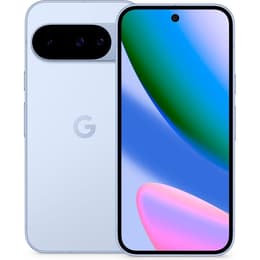

Compare models
Galaxy A15 Vs Google Pixel 10
- 1-year minimum warranty
- Free delivery on all items
- Free 30-day returns
Differences at a glance
The Samsung Galaxy A15 (2023) and the Google Pixel 10 (2025) represent entirely different tiers of the smartphone market, catering to distinct user expectations and everyday needs. While both devices run on the Android operating system with manufacturer-specific interfaces, they approach hardware capability, computing power, and software features from contrasting angles. Understanding their core design philosophies helps clarify which device fits specific daily routines.
Available Models
Colour
Storage (GB)
Scores
Durability
Device longevity and software support frameworks differ significantly between these two models due to their release timelines and hardware classes.
- Software Support Timeline: The Google Pixel 10 benefits from an extended multi-year update schedule providing up to seven major operating system upgrades, whereas the Galaxy A15 offers a shorter multi-year update window that aligns with its launch tier.
- Hardware Durability: The Google Pixel 10 features robust IP68 water and dust resistance alongside modern build materials, while the Galaxy A15 utilizes a simpler plastic frame and back construction with standard everyday durability ratings.
Year of Release
2023
2025
Compatible with latest Update
Yes
Yes
OS
Android
Android
Foldable
No
No
Performance
Processing capabilities and multitasking behavior vary noticeably, influencing how each phone handles daily applications, switching tasks, and resource-heavy software.
- Multitasking and System Responsiveness: The Google Pixel 10 includes abundant RAM and a powerful current-generation processor that handles demanding apps and rapid multitasking smoothly, while the Galaxy A15 relies on entry-level hardware suited best for basic messaging, web browsing, and casual media streaming.
- Storage and Memory Configurations: The Google Pixel 10 offers high-capacity baseline internal storage with no expandable slot, whereas the Galaxy A15 provides moderate built-in storage paired with a dedicated microSD card slot for expanding media capacity.
Screen quality
Display technologies on both models deliver clear visuals, though they differ in smoothness, peak brightness, and overall viewing immersion.
- Display Technology and Refresh Rate: The Google Pixel 10 features a vibrant OLED screen with a high 120 Hz refresh rate for fluid scrolling, while the Galaxy A15 utilizes a 90 Hz Super AMOLED panel that offers deep contrast and punchy colors for everyday viewing.
- Outdoor Visibility: Both devices reach sufficient brightness levels for comfortable outdoor legibility under direct sunlight, though high-end panel calibrations on the Google Pixel 10 maintain sharper clarity and color accuracy in bright conditions.
Resolution
1080 x 2340
1080x2424
Screen type
Super AMOLED
OLED
Audiovisual
Imaging hardware and computational photography capabilities diverge to accommodate everything from casual snapshots to detailed multi-lens setups.
- Camera System Versatility: The Google Pixel 10 equips a sophisticated triple rear camera array featuring advanced telephoto zoom and powerful computational processing for low-light scenes, compared to the Galaxy A15's straightforward main, ultrawide, and macro configuration suited for standard daylight photography.
- Audio and Media Output: Media consumption on the Google Pixel 10 benefits from balanced stereo speakers, while the Galaxy A15 retains a traditional 3.5mm headphone jack for users preferring wired audio accessories alongside its single loudspeaker output.
Front camera
13 megapixels
42 megapixels
Miscellaneous
Physical dimensions, connectivity standards, and daily handling characteristics determine how comfortably each device integrates into a traveler's or professional's pocket.
- Connectivity and Ports: The Google Pixel 10 supports advanced Wi-Fi standards and high-speed 5G bands paired with a USB-C port, while the Galaxy A15 offers dependable 4G or 5G connectivity depending on the specific regional variant chosen.
- Physical Handling: The Google Pixel 10 features a slightly heavier and more rigid frame construction, whereas the Galaxy A15 adopts a lighter plastic-centric build that feels comfortable during prolonged one-handed text input.
Weight
200 g
204 g
Screen size (in)
6.5
6.3
Mobile network
4G
5G
SIM card
Dual Physical SIM
eSIM
Carrier compatibility
Unlocked
Unlocked
Connector
USB-C
USB-C
What the community thinks
User feedback from online forums highlights distinct preferences for each smartphone. Owners of the Google Pixel 10 frequently praise its advanced photo processing capabilities, fluid display responsiveness, and long-term software commitment. Common discussions point out that its higher weight and lack of expandable storage require consideration. Conversely, users of the Galaxy A15 appreciate its dependable battery longevity, expandable memory support, and accessible nature, though reviewers note occasional slowdowns during intensive multitasking sessions.
Users prioritizing high-end computational photography, fluid screen transitions, and extended software lifespans will find the Google Pixel 10 well-suited to their needs. Meanwhile, users focusing on essential daily communication, expandable media storage, and straightforward functionality may lean toward the Galaxy A15. For those looking for a quality-assured refurbished option, exploring sustainable choices on Back Market provides an eco-friendly alternative to purchasing brand-new devices without compromising on reliability.