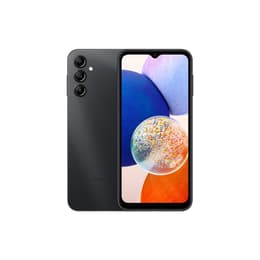
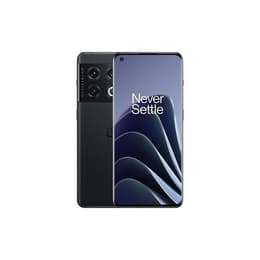

Galaxy A14 Vs OnePlus 10 Pro

Galaxy A14
Galaxy A14
Starting at

Refurbished price:£81.00

Versus £269.00 new

See options
OnePlus 10 Pro
OnePlus 10 Pro
Starting at

Refurbished price:£391.00

Versus £769.39 new

See options

Ratings

The Samsung Galaxy A14 and the OnePlus 10 Pro are Android smartphones that cater to different user expectations and market segments. The Galaxy A14, released in early 2023, is positioned as a device offering essential smartphone functionalities. In contrast, the OnePlus 10 Pro, launched in early 2022, was designed with a focus on high-end performance and advanced features. Both devices run on the Android operating system, but they differ significantly in their hardware capabilities and overall user experience.

Scores

Durability

The practical lifespan of a smartphone is influenced by its initial release date, software support, and physical durability.

  • Release Timeline: The OnePlus 10 Pro was released in January 2022, making it an older device compared to the Samsung Galaxy A14, which launched in January 2023 (5G model) and February 2023 (4G LTE model). This difference in release year impacts their respective software support cycles.
  • Software Longevity: The Samsung Galaxy A14 launched with Android 13 and was promised two major OS upgrades, reaching Android 15, and four years of security updates, extending until early 2027. The OnePlus 10 Pro, initially released with Android 12, has received four major OS upgrades, including Android 16, and is expected to receive security patches until 2027. This means both devices are nearing the end of their major OS update cycles, but the OnePlus 10 Pro unexpectedly received an additional OS update, extending its functional life.
  • Repairability and Durability: The Samsung Galaxy A14 has a notable repairability score of 8 out of 10, partly due to its user-friendly design and the use of adhesive pull tabs for easier battery replacement. The OnePlus 10 Pro's repairability scores vary, with some assessments giving it a 6 out of 10, indicating it is not as easily repairable, while others rate it at 8 out of 10. Concerns have also been raised about the OnePlus 10 Pro's structural integrity, as it reportedly snapped in half during some bend tests.

Year of Release

2023

2022

Compatible with latest Update

No

Yes

OS

Android

Android

Foldable

No

No

Performance

Performance in smartphones is determined by the internal components and how they handle various tasks, from everyday browsing to demanding applications.

  • Processing Power: The OnePlus 10 Pro features a high-performance processor designed for demanding tasks, offering smooth operation for heavy apps, multitasking, and graphically intensive games. The Samsung Galaxy A14 is equipped with a processor that handles daily tasks adequately, suitable for general use like web browsing, social media, and light gaming.
  • Multitasking and Responsiveness: Users of the OnePlus 10 Pro can expect a highly responsive experience, with applications loading quickly and seamless transitions between multiple open apps, supported by its generous RAM configurations. The Galaxy A14, while capable of multitasking, may exhibit slower app loading times and less fluid transitions when many applications are running simultaneously, particularly with its lower RAM options.
  • Storage and Battery Behavior: The OnePlus 10 Pro offers larger internal storage options without expandability, providing ample space for apps and media. The Galaxy A14 provides expandable storage via a microSD card, which is beneficial for users who need more space for photos and videos. Both devices feature a 5000 mAh battery capacity. The OnePlus 10 Pro supports fast wired and wireless charging, allowing for quicker power replenishment. However, some users have reported battery degradation over time and issues with charging speed on the OnePlus 10 Pro.

Memory (GB)

4 GB

8 GB

Screen quality

The display is a primary interface for smartphone interaction, and its quality significantly impacts the user experience.

  • Display Technology and Resolution: The OnePlus 10 Pro features a 6.7-inch Fluid AMOLED display with a high resolution of 3216x1440 pixels, providing deep blacks, vibrant colors, and excellent contrast. The Samsung Galaxy A14 comes with a 6.6-inch PLS LCD display with a resolution of 1080x2408 pixels, offering clear visuals suitable for everyday content consumption.
  • Refresh Rate and Smoothness: The OnePlus 10 Pro boasts a 120Hz adaptive refresh rate, which contributes to a smoother scrolling experience and more fluid animations, especially noticeable in gaming and fast-paced content. The 5G variant of the Galaxy A14 offers a 90Hz refresh rate, providing a smoother experience than standard 60Hz displays, while the 4G model retains a 60Hz refresh rate.
  • Brightness and Viewing Experience: The AMOLED panel on the OnePlus 10 Pro generally offers higher peak brightness, making it more comfortable to view content outdoors or in brightly lit environments. The curved display design also contributes to an immersive viewing experience. The PLS LCD of the Galaxy A14 provides good brightness for indoor use, but may struggle more with visibility under direct sunlight compared to an AMOLED screen.

Resolution

1080 x 2408

1440 x 3216

Screen type

PLS LCD

LTPO2 Fluid AMOLED

Audiovisual

Camera capabilities are a key consideration for many smartphone users, influencing how they capture and share moments.

  • Rear Camera System: The OnePlus 10 Pro features a versatile triple-camera setup co-developed with Hasselblad, including a 48MP main sensor, a 50MP ultrawide lens, and an 8MP telephoto lens with 3.3x optical zoom, designed for detailed and color-accurate photography across various scenarios. The Samsung Galaxy A14 also has a triple rear camera system, consisting of a 50MP main camera, a 2MP macro lens, and a 2MP depth sensor, suitable for general photography.
  • Photography Performance: The OnePlus 10 Pro generally excels in daytime photography, producing sharp images with good dynamic range. Its telephoto lens allows for optical zoom, providing clearer zoomed-in shots. However, some users have noted that its low-light performance and night mode can be inconsistent, sometimes resulting in mushy details or unnatural processing. The Galaxy A14's main camera performs well in good lighting conditions for everyday photos, but its secondary macro and depth sensors offer limited utility. It lacks optical image stabilization (OIS), which can affect clarity in challenging conditions.
  • Video and Audio Quality: The OnePlus 10 Pro offers advanced video recording features and generally good microphone quality for calls and recordings. The Galaxy A14 provides standard video recording capabilities, but some users have reported issues with audio quality in video recordings. For media consumption, the OnePlus 10 Pro's speakers typically offer a richer audio experience compared to the Galaxy A14.

Main camera

50 megapixels

48 megapixels

Front camera

13 megapixels

32 megapixels

Miscellaneous

Beyond core features, several practical elements contribute to the overall usability and convenience of a smartphone.

  • Connectivity and Ports: Both devices support 5G connectivity (for the 5G variant of A14), Wi-Fi, and Bluetooth. The OnePlus 10 Pro supports newer Wi-Fi 6 standards, offering potentially faster and more stable wireless connections. Both utilize a USB Type-C port for charging and data transfer. The Galaxy A14 notably retains a 3.5mm headphone jack, which is absent on the OnePlus 10 Pro.
  • Biometric Security and Sensors: The OnePlus 10 Pro features an in-display optical fingerprint sensor for secure and convenient unlocking. The Samsung Galaxy A14 typically integrates a side-mounted fingerprint sensor. Both devices include standard sensors like accelerometers, gyroscopes, and proximity sensors.
  • Physical Design and Handling: The OnePlus 10 Pro has a more premium build with Gorilla Glass Victus on the front and Gorilla Glass 5 on the back, giving it a refined feel. It weighs around 200.5g and has dimensions of 163 x 73.9 x 8.9 mm. The Samsung Galaxy A14 features a plastic build, which can be more resistant to minor drops but may feel less premium. It weighs around 201-202g and measures 167.7 x 78 x 9.1 mm, making it slightly thicker and wider. Some users have described the A14 as feeling thick with noticeable bezels.

Weight

201 g

201 g

Screen size (in)

6.6

6.7

Mobile network

4G

5G

SIM card

Dual Physical SIM

Physical SIM

Carrier compatibility

Unlocked

Unlocked

The Samsung Galaxy A14 and the OnePlus 10 Pro cater to distinct user needs, reflecting their different market positions. User feedback for the Galaxy A14 often highlights its robust repairability and the inclusion of expandable storage and a headphone jack as practical advantages. However, common criticisms include reports of buggy performance, slow loading times, occasional overheating, and inconsistent camera performance, particularly in challenging conditions.

For the OnePlus 10 Pro, users frequently praise its vibrant AMOLED display, high-performance capabilities for demanding applications, and fast charging speeds. The extended software support, including an unexpected Android 16 update, has also been a positive point. Conversely, some users have expressed concerns about battery degradation over time, camera lag in low light, and issues with notifications and Android Auto. Its durability in extreme stress tests has also been a point of discussion.

Users prioritizing a highly responsive experience, a superior display for media consumption, and advanced camera features for daytime photography may find the OnePlus 10 Pro well-suited to their needs. Its high-end processing power makes it ideal for mobile gaming and heavy multitasking. On the other hand, individuals seeking a more budget-conscious device with practical features like expandable storage, a headphone jack, and high repairability will likely lean towards the Samsung Galaxy A14. It serves well for essential smartphone functions and general daily use.

Both devices, whether new or as quality-assured refurbished options, offer different pathways to smartphone ownership. Choosing between them depends on whether a user prioritizes cutting-edge performance and display technology or a more utilitarian device with strong repairability and essential features.


See all articles

Our recent comparisons