
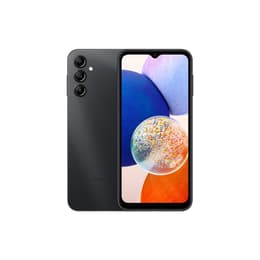


Galaxy A14 Vs Google Pixel 7 Pro

Galaxy A14
Galaxy A14
Starting at

Refurbished price:£81.00

Versus £269.00 new

See options
Google Pixel 7 Pro
Google Pixel 7 Pro
Starting at

Refurbished price:£169.75

Versus £899.99 new

See options

Ratings

The Samsung Galaxy A14 (released January 2023) and the Google Pixel 7 Pro (released October 2022) represent distinct segments of the smartphone market. While both operate on the Android platform, the Galaxy A14 is designed for essential functionality, offering a straightforward user experience, whereas the Pixel 7 Pro focuses on advanced computational photography, a premium display, and a more powerful processing experience.

Scores

Durability

The longevity of a smartphone is influenced by its release timeline, software support, and ease of repair.

  • Release and Software Support: The Google Pixel 7 Pro, launched in October 2022, is guaranteed to receive three major Android OS updates and five years of security updates, extending its software support until 2027. The Samsung Galaxy A14, released in January 2023, launched with Android 13 and is upgradable to Android 15, though its overall software support timeline is generally shorter than Google's flagship Pixel line.
  • Repairability: The Samsung Galaxy A14 has a notable repairability score of 8 out of 10, featuring an internal design that allows for relatively easy disassembly and battery replacement with pull tabs. In contrast, the Google Pixel 7 Pro typically receives a repairability score around 5.5 to 7 out of 10, with battery replacement being more challenging due to strong adhesives and the charging port often being soldered to the motherboard.
  • Practical Lifespan: Users prioritizing extended software updates and cutting-edge features will find the Pixel 7 Pro's longer support beneficial. However, for those who value easier and potentially less costly physical repairs, the Galaxy A14 presents a more accessible option for maintaining the device over time.

Year of Release

2023

2022

Compatible with latest Update

No

Yes

OS

Android

Android

Foldable

No

No

Performance

Performance differences between these two devices are evident in their handling of applications, multitasking, and battery usage.

  • Processing Power: The Google Pixel 7 Pro features a processor designed for advanced AI tasks and smooth operation, enabling it to handle demanding applications, complex multitasking, and graphic-intensive games with fluidity. The Galaxy A14's processor is suitable for everyday tasks like browsing, social media, and light applications, though some users may notice occasional delays when switching between apps or loading heavier content.
  • Multitasking and Storage: The Pixel 7 Pro comes with 12GB of RAM, facilitating seamless multitasking and keeping numerous applications active in the background without slowdowns. It offers storage options up to 512GB, but without expandable storage. The Galaxy A14 typically offers 4GB, 6GB, or 8GB of RAM, which is sufficient for general use, and includes a microSD card slot for storage expansion up to 1TB, providing flexibility for users with large media libraries.
  • Battery Behavior: Both devices are equipped with a 5000mAh battery. The Galaxy A14 generally offers robust battery life, with some tests indicating over 13 hours of usage on a single charge, making it reliable for extended use. The Pixel 7 Pro's battery performance can vary; while it can last through a full day for moderate users, heavy use, especially with high screen brightness or 5G connectivity, may require more frequent charging.

Memory (GB)

4 GB

12 GB

Screen quality

The visual experience differs significantly between the two phones, primarily due to their display technologies and specifications.

  • Display Technology and Resolution: The Google Pixel 7 Pro features a 6.7-inch QHD+ LTPO OLED display with a resolution of 3120x1440 pixels, offering sharp details, deep blacks, and vibrant colors. The Samsung Galaxy A14 has a 6.6-inch PLS LCD display with a 1080x2408 pixel (FHD+) resolution, providing a clear picture suitable for general viewing.
  • Refresh Rate and Brightness: The Pixel 7 Pro boasts a 120Hz variable refresh rate, contributing to smoother scrolling and more responsive interactions. Its display can reach high peak brightness levels, enhancing visibility in bright outdoor conditions, though this can impact battery consumption. The Galaxy A14 offers a 90Hz refresh rate for a smoother experience than standard 60Hz panels, but its peak brightness of around 480-500 nits can make outdoor viewing challenging in direct sunlight.
  • Viewing Experience: Users prioritizing a premium, immersive visual experience with superior contrast and fluidity, particularly for media consumption and gaming, will find the Pixel 7 Pro's display more appealing. The Galaxy A14 provides a functional and adequately sharp display for everyday tasks, though it lacks the vibrancy and high brightness of its counterpart.

Resolution

1080 x 2408

1440 x 3120

Screen type

PLS LCD

LTPO AMOLED

Audiovisual

The camera systems of these two smartphones cater to different user expectations, with distinct capabilities for photography and videography.

  • Rear Camera System: The Google Pixel 7 Pro features a versatile triple-camera setup, including a 50MP main sensor, a 12MP ultrawide lens with autofocus that also enables macro photography, and a 48MP telephoto lens offering 5x optical zoom and up to 30x Super Res Zoom. This system excels in computational photography, producing detailed stills, strong low-light performance, and advanced zoom capabilities. The Samsung Galaxy A14 comes with a triple-camera array, typically a 50MP main sensor, a 2MP macro lens, and a 2MP depth sensor, designed for competent everyday photography.
  • Video and Front Camera: The Pixel 7 Pro offers advanced video recording features, including 4K at 30 or 60 frames per second, cinematic blur, and enhanced stabilization, though some users note occasional inconsistencies in video exposure and zoom transitions. Its front camera is a 10.8MP ultrawide lens. The Galaxy A14 records video at 1080p at 30 frames per second and features a 13MP front camera, suitable for video calls and casual selfies.
  • Photography Focus: For users who prioritize advanced photographic features, exceptional detail in stills, and versatile zoom options, the Pixel 7 Pro offers a more comprehensive and sophisticated camera experience. The Galaxy A14 provides a reliable camera for capturing everyday moments without extensive advanced features.

Main camera

50 megapixels

50 megapixels

Front camera

13 megapixels

10.8 megapixels

Miscellaneous

Beyond core performance and display, several practical elements differentiate the user experience of these devices.

  • Connectivity and Ports: Both devices support 5G connectivity, along with modern Wi-Fi standards and Bluetooth. The Pixel 7 Pro exclusively uses a USB-C port for charging and data transfer, lacking a traditional headphone jack. The Galaxy A14 includes both a USB-C port and a 3.5mm headphone jack, offering more flexibility for audio accessories.
  • Security and Biometrics: The Pixel 7 Pro features an under-display optical fingerprint sensor and face unlock, complemented by the Titan M2 security module for enhanced data protection. While the fingerprint sensor is generally fast, some users report occasional inconsistencies. The Galaxy A14 utilizes a side-mounted fingerprint sensor for secure unlocking.
  • Design and Build: The Pixel 7 Pro has a premium build with Gorilla Glass Victus on the front and back, and a polished aluminum frame, giving it a substantial feel at 212g. The Galaxy A14 features a plastic chassis, which contributes to its lighter feel at 204g and potentially greater resistance to shattering from drops, though it lacks an official IP rating for water and dust resistance.

Weight

201 g

212 g

Screen size (in)

6.6

6.7

Mobile network

4G

5G

SIM card

Dual Physical SIM

Physical SIM + eSIM

Carrier compatibility

Unlocked

Unlocked

The Samsung Galaxy A14 and Google Pixel 7 Pro cater to different user needs and priorities. The Pixel 7 Pro is frequently praised for its exceptional camera capabilities, particularly for still photography and advanced zoom, as well as its smooth software experience and vibrant, high-resolution OLED display. Users often highlight its intelligent features and consistent performance for demanding tasks. However, some common concerns include its battery life under heavy usage, especially with high screen brightness, and its repairability score, which indicates a more challenging repair process compared to some other devices.

The Galaxy A14 is generally lauded for its reliable battery life, expandable storage, and the inclusion of a headphone jack, making it a practical choice for everyday communication and media consumption. Its higher repairability score is also a significant advantage for users who prefer to extend the life of their devices through maintenance. Criticisms sometimes point to its less powerful processor, which can lead to slower performance with intensive applications, and its LCD display, which may struggle with visibility in bright sunlight.

Users prioritizing a top-tier camera, a premium display, and a highly optimized software experience for advanced tasks will likely find the Google Pixel 7 Pro better suited to their needs. Conversely, individuals seeking a dependable device for essential functions, with excellent battery endurance, expandable storage, and easier repairability, may lean towards the Samsung Galaxy A14. Both devices are available as quality-assured refurbished options, offering an eco-friendly alternative for consumers looking to make a sustainable choice.


See all articles

Our recent comparisons







