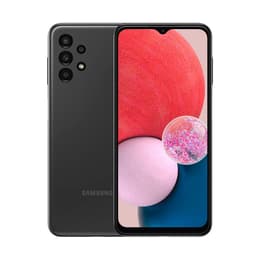
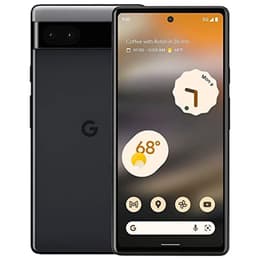

Galaxy A13 Vs Google Pixel 6A

Galaxy A13
Galaxy A13
Starting at

Refurbished price:£73.00

Versus £249.00 new

See options
Google Pixel 6A
Google Pixel 6A
Starting at

Refurbished price:£107.00

Versus £459.00 new

See options

Ratings

The Samsung Galaxy A13 (released March 2022) and the Google Pixel 6a (released July 2022) are both smartphones designed for users seeking capable devices without premium costs. While both run on the Android operating system, the Pixel 6a distinguishes itself with a focus on advanced processing and camera capabilities, whereas the Galaxy A13 offers a larger display and expandable storage.

Scores

Durability

When considering the practical lifespan of these devices, both offer a reasonable duration of software support and physical durability features.

  • Software Support: The Google Pixel 6a is expected to receive operating system updates until at least July 2025 and security updates until at least July 2027, providing a longer period of guaranteed software longevity. [40] The Samsung Galaxy A13 is slated for two major Android OS upgrades and four years of security updates from its release. [2, 42]
  • Physical Durability: The Galaxy A13 features Corning Gorilla Glass 5 on its display, offering a good level of scratch and drop resistance. [2, 12, 41] The Pixel 6a uses Corning Gorilla Glass 3 for screen protection and includes an IP67 rating for dust and water resistance, meaning it can withstand immersion in water up to 1 meter for 30 minutes. [1, 26, 27]
  • Repairability: The Pixel 6a has received a repairability score of 7 out of 10, indicating that components like the battery and display are relatively accessible for servicing. [16, 17, 21, 29, 36] Information regarding the repairability score for the Galaxy A13 is less readily available, but its construction is generally considered standard for its category.

Year of Release

2022

2022

Compatible with latest Update

No

Yes

OS

Android

Android

Foldable

No

No

Performance

The performance of these two smartphones varies significantly, impacting how smoothly they handle daily tasks and more demanding applications.

  • Processing Power: The Google Pixel 6a incorporates a processor designed for flagship-level performance, enabling it to handle demanding applications, multitasking, and complex computational tasks with notable responsiveness. [28, 32] In contrast, the Samsung Galaxy A13 is equipped with a processor that delivers adequate performance for everyday use, such as browsing and social media, but may exhibit noticeable lag with more intensive apps or gaming. [7, 38]
  • Multitasking and Storage: The Pixel 6a comes with 6GB of RAM and 128GB of internal storage, which is not expandable. [1, 22, 27] This configuration supports smooth multitasking for most users. The Galaxy A13 offers various RAM options, including 3GB, 4GB, and 6GB, alongside storage options of 32GB, 64GB, or 128GB, with the added flexibility of expandable storage via a microSD card up to 1TB. [6, 7, 12, 18]
  • Battery Behavior: The Pixel 6a, with its 4410 mAh battery, is optimized for efficient power consumption, often lasting a full day with heavy use and up to a day and a half with moderate usage. [4, 22, 24, 33] The Galaxy A13 features a larger 5000 mAh battery, which can also provide extended usage, potentially lasting over a day with typical use. [3, 9, 19]

Memory (GB)

4 GB

6 GB

Screen quality

The visual experience on these devices differs due to their display technologies and specifications.

  • Display Technology and Clarity: The Google Pixel 6a features a 6.1-inch OLED display, which provides deep blacks, vibrant colors, and good contrast. [1, 26] The Samsung Galaxy A13 has a larger 6.6-inch PLS TFT LCD screen, offering clear visuals suitable for general media consumption. [2, 3, 8, 11]
  • Resolution and Brightness: Both phones offer Full HD+ resolution (2400 x 1080 pixels for Pixel 6a, 2408 x 1080 pixels for Galaxy A13), resulting in sharp images and text. [1, 2, 3, 25, 27] The Pixel 6a's OLED panel generally provides better brightness and outdoor visibility compared to the Galaxy A13's LCD. [26]
  • Refresh Rate: The Pixel 6a has a standard 60Hz refresh rate, which is common for many smartphones. [27, 28] The Galaxy A13 also operates at a 60Hz refresh rate. [3] This means both devices offer a consistent visual experience, though not the smoothest available on some higher-end displays.

Resolution

1080 x 2408

1080 x 2400

Screen type

PLS LCD

OLED

Audiovisual

Both smartphones offer camera systems capable of capturing everyday moments, but with distinct strengths and features.

  • Rear Camera System: The Google Pixel 6a features a dual-camera setup on the rear, including a 12.2MP main sensor with optical image stabilization (OIS) and a 12MP ultrawide lens. [1, 27, 30] This system is known for its computational photography, delivering detailed images with good color accuracy, especially in various lighting conditions, and includes features like Night Sight and Magic Eraser. [27, 32] The Samsung Galaxy A13 comes with a quad-camera array, featuring a 50MP main sensor, a 5MP ultrawide, a 2MP macro, and a 2MP depth sensor. [2, 3, 7, 13] The 50MP main camera performs well in good lighting, capturing clear photos. [3, 37]
  • Video Recording: The Pixel 6a supports 4K video recording at 30 or 60 frames per second (fps) with its rear camera, and 1080p at 30fps for the front camera. [1, 27] The Galaxy A13 records video at 1080p resolution at 30fps for both its rear and front cameras, without 4K support. [2, 3, 39]
  • Front Camera: Both devices feature an 8MP front-facing camera for selfies and video calls. [1, 2, 27] The Pixel 6a's front camera benefits from Google's image processing, while the Galaxy A13's front camera provides basic functionality. [37]

Main camera

50 megapixels

12.2 megapixels

Front camera

8 megapixels

8 megapixels

Miscellaneous

Beyond core features, several practical elements contribute to the overall user experience of these devices.

  • Connectivity and Ports: The Google Pixel 6a supports 5G connectivity, including both mmWave and Sub 6GHz bands, along with Wi-Fi 6E and Bluetooth 5.2. [27, 32] It features a USB-C 3.1 port but lacks a 3.5mm headphone jack. [1, 30] The Samsung Galaxy A13 is a 4G LTE device, offering Wi-Fi 5 and Bluetooth 5.0. [9, 11, 41] It includes a USB-C 2.0 port and retains a 3.5mm headphone jack. [7, 11]
  • Biometric Security: The Pixel 6a utilizes an under-display optical fingerprint sensor for secure unlocking. [1, 29] The Galaxy A13 features a side-mounted fingerprint sensor integrated into the power button. [13, 18, 41]
  • Design and Handling: The Pixel 6a has a compact design, weighing 178g and measuring 152.2 x 71.8 x 8.9 mm, making it comfortable for one-handed use. [27, 32] It has a plastic back. [16] The Galaxy A13 is slightly larger and heavier at 195g and 165.1 x 76.4 x 8.8 mm, with a plastic build. [6, 7, 13]

Weight

195 g

250 g

Screen size (in)

6.6

6.1

Mobile network

4G

5G

SIM card

Dual Physical SIM

Physical SIM + eSIM

Carrier compatibility

Unlocked

Unlocked

The Samsung Galaxy A13 and Google Pixel 6a cater to different user priorities within the smartphone market. The Pixel 6a is often praised for its robust processing power, which ensures smooth performance across applications, and its advanced camera system, which leverages computational photography for high-quality images. [28, 32] Users frequently highlight its consistent software experience and timely updates as significant advantages. [20, 25] Some common criticisms of the Pixel 6a include its 60Hz display, which some users find less fluid than higher refresh rate screens on competing devices, and the absence of a headphone jack. [22, 28]

Conversely, the Galaxy A13 is often noted for its large display, which provides an expansive viewing area, and its long-lasting battery, capable of supporting extended usage. [3, 9] Its expandable storage is also a frequent praise point, offering flexibility for users who need more space for media and apps. [7, 18] However, users sometimes express concerns about its processing speed, which can lead to slower performance with demanding tasks, and the overall quality of its ultrawide camera. [7, 37]

Users prioritizing a highly responsive device with a strong camera for photography and a longer software support window may find the Google Pixel 6a well-suited to their needs. Those who value a larger screen, extended battery life, and the option for expandable storage, and whose usage primarily involves everyday tasks, might lean toward the Samsung Galaxy A13. Both models are available as quality-assured refurbished options, providing an eco-friendly alternative for consumers.

See all articles

Our recent comparisons