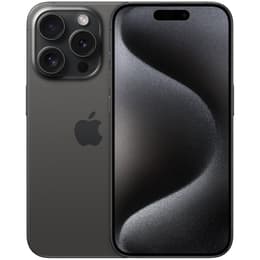

Galaxy A06 Vs iPhone 15 Pro

Galaxy A06
Galaxy A06
Starting at

Refurbished price:£70.00

Versus £158.08 new

See options
iPhone 15 Pro
iPhone 15 Pro
Starting at

Refurbished price:£427.00

Versus £999.00 new

See options

Ratings

The Samsung Galaxy A06 (2024) and the Apple iPhone 15 Pro (2023) are both smartphones, yet they cater to distinct user needs and expectations. While the Galaxy A06 is positioned as an accessible device running Android, the iPhone 15 Pro represents Apple's premium offering with its advanced iOS ecosystem. The primary differentiators lie in their core hardware capabilities, display technology, and camera systems, reflecting their respective market segments.

Scores

Durability

The longevity of a smartphone is influenced by its release timeline, software support, and physical durability.

  • Release Timeline and Software Support: The Galaxy A06, released in August 2024, typically receives a shorter period of major Android OS upgrades, with expectations of two OS updates and four years of security updates, extending support until around 2028 for the LTE version. In contrast, the iPhone 15 Pro, launched in September 2023, benefits from Apple's extended software support, often receiving major iOS updates for five years or more, ensuring compatibility with new features and security patches well beyond 2028.
  • Physical Durability: The Galaxy A06 features a construction primarily of plastic for its back and frame, with a glass front. The iPhone 15 Pro incorporates a more robust design, utilizing a titanium frame, a Ceramic Shield front cover, and a textured matte glass back, contributing to enhanced resistance against drops and scratches. The iPhone 15 Pro also carries an IP68 rating for water and dust resistance, allowing submersion in up to 6 meters of water for 30 minutes, a feature not typically found on devices in the A06's category.
  • Practical Lifespan: Users seeking a device with a longer practical lifespan, particularly in terms of software updates and physical resilience, may find the iPhone 15 Pro to be a more suitable option. The Galaxy A06 offers a functional lifespan for everyday tasks within its expected support window.

Year of Release

2024

2023

Compatible with latest Update

Yes

Yes

OS

Android

iOS

Foldable

No

No

Performance

Performance aspects, including processing power, battery behavior, and system responsiveness, vary significantly between these two devices.

  • Processing Capabilities: The Galaxy A06 is equipped with a processor designed for efficient handling of daily tasks such as web browsing, social media, and light applications. Users generally report smooth operation for these basic functions, though performance can be affected when numerous applications are running simultaneously. The iPhone 15 Pro, powered by a current-generation chip, delivers substantial processing power, enabling seamless multitasking, demanding gaming, and rapid application loading.
  • Battery Behavior: The Galaxy A06 includes a large 5000 mAh battery, which typically provides a full day of use for most users under moderate conditions. The iPhone 15 Pro, with its integrated battery, offers up to 23 hours of video playback, and users generally experience robust battery performance throughout a day of varied usage. Both devices support fast charging, with the iPhone 15 Pro capable of reaching 50% charge in approximately 30 minutes with a compatible adapter.
  • System Responsiveness: The iPhone 15 Pro offers a highly responsive user experience, characterized by fluid animations and quick transitions between applications, supported by its advanced processor and optimized operating system. The Galaxy A06 provides a responsive experience for its intended use, though it may exhibit more noticeable delays when handling intensive tasks or switching between many open applications.

Memory (GB)

4 GB

8 GB

Screen quality

The visual experience on a smartphone is largely defined by its display technology, resolution, and refresh rate.

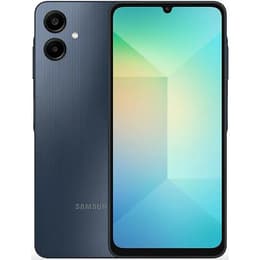
  • Display Technology and Clarity: The Galaxy A06 features a 6.7-inch PLS LCD display with HD+ resolution (720x1600 pixels). This provides adequate clarity for general content consumption and daily interactions. The iPhone 15 Pro boasts a 6.1-inch Super Retina XDR OLED display with a higher resolution of 2556x1179 pixels, resulting in sharper images, deeper blacks, and more vibrant colors.
  • Brightness and Refresh Rate: The Galaxy A06's display operates at a standard 60Hz refresh rate, offering a smooth experience for typical scrolling and video playback. The iPhone 15 Pro features ProMotion technology, providing an adaptive refresh rate that can scale up to 120Hz for exceptionally fluid scrolling and responsive interactions, while also offering a high peak brightness of 2000 nits for clear visibility in bright outdoor conditions.
  • Viewing Experience: The larger screen of the Galaxy A06 may appeal to users who prioritize screen size for media consumption. However, the iPhone 15 Pro's OLED technology, higher resolution, and adaptive refresh rate deliver a more premium and immersive visual experience, particularly for detailed content, HDR media, and fast-paced visuals.

Resolution

720 x 1600

1179 x 2556

Screen type

PLS LCD

LTPO Super Retina XDR OLED

Audiovisual

Camera capabilities are a significant factor for many users, encompassing still photography, video recording, and front-facing camera performance.

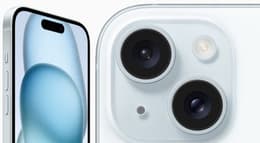
  • Rear Camera System: The Galaxy A06 is equipped with a dual-camera setup, featuring a 50-megapixel main sensor and a 2-megapixel macro lens. It is capable of capturing decent photos in well-lit conditions, with video recording up to FHD at 60 frames per second. The iPhone 15 Pro features a versatile triple-camera system, including a 48-megapixel main sensor with optical image stabilization, a 12-megapixel ultra-wide lens, and a 12-megapixel telephoto lens offering 3x optical zoom.
  • Photography and Video Quality: The iPhone 15 Pro excels in various lighting conditions, producing detailed images with natural color reproduction and strong dynamic range. Its advanced features include Cinematic mode for video, Action mode for stabilized footage, and the ability to record ProRes and Log video, catering to more professional use cases. The Galaxy A06 provides functional photography for everyday moments, but its performance in challenging lighting or for advanced video features is more limited.
  • Front Camera and Audio: The Galaxy A06 has an 8-megapixel front camera suitable for video calls and selfies. The iPhone 15 Pro includes a 12-megapixel TrueDepth front camera with autofocus, offering high-quality selfies, advanced portrait modes, and secure facial recognition. For audio, the iPhone 15 Pro provides a rich media consumption experience with its speaker output and enhanced microphone quality for calls and recordings.

Main camera

50 megapixels

48 megapixels

Front camera

8 megapixels

12 megapixels

Miscellaneous

Beyond core features, practical elements like connectivity, ports, and physical design contribute to the overall user experience.

  • Connectivity and Ports: The Galaxy A06 supports 4G LTE networks, Wi-Fi 5 (802.11ac), and Bluetooth 5.3, along with a USB Type-C 2.0 port and a 3.5mm headphone jack. The iPhone 15 Pro offers more advanced connectivity, including 5G capabilities, Wi-Fi 6E, and Bluetooth 5.3. It features a USB-C port that supports USB 3.2 Gen 2x1 speeds, allowing for significantly faster data transfers and external display output, but it omits the traditional headphone jack.
  • Sensors and Biometrics: The Galaxy A06 includes a side-mounted fingerprint sensor for secure unlocking. The iPhone 15 Pro utilizes Face ID for secure facial recognition and also incorporates a LiDAR scanner for enhanced augmented reality experiences and improved low-light focusing. It also introduces a customizable Action button, replacing the traditional mute switch, which can be programmed for various functions.
  • Design and Handling: The Galaxy A06 has dimensions of 167.3 x 77.3 x 8.0 mm and weighs 189g, offering a larger form factor. The iPhone 15 Pro is more compact and lighter at 146.6 x 70.6 x 8.25 mm and 187g, featuring a titanium build that contributes to its lighter weight and premium feel.

Weight

189 g

187 g

Screen size (in)

6.7

6.1

Mobile network

4G

5G

SIM card

Dual Physical SIM

Physical SIM + eSIM

Carrier compatibility

Unlocked

Unlocked

Connector

USB-C + Jack 3.5mm

USB-C

The Samsung Galaxy A06 and iPhone 15 Pro serve different segments of the smartphone market, each excelling in its intended purpose. User feedback for the Galaxy A06 often highlights its solid battery life and large display as key advantages for everyday use, particularly for those who prioritize screen size for media consumption. However, some users note that its performance can be limited with demanding applications, and its camera system, while functional, does not offer the advanced capabilities found in higher-tier devices.

Conversely, the iPhone 15 Pro receives consistent praise for its powerful processor, delivering exceptional performance for gaming, multitasking, and professional applications. Its advanced camera system is frequently lauded for its versatility, image quality, and video capabilities, making it a strong choice for photography and videography enthusiasts. The premium build quality, vibrant OLED display with high refresh rates, and extended software support are also commonly cited as significant benefits. Some initial user concerns regarding heating were largely addressed through software updates.

Users prioritizing a large screen and long battery life for essential communication and media consumption, without the need for intensive processing power or advanced camera features, may find the Galaxy A06 to be a practical choice. For individuals who require top-tier performance, a sophisticated camera system, a premium and durable design, and long-term software support, the iPhone 15 Pro is well-suited. Both devices are available as quality-assured refurbished options, providing an eco-friendly alternative for consumers.

See all articles

Our recent comparisons