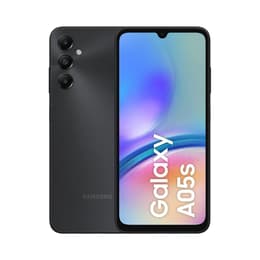


Galaxy A05s Vs Xiaomi Redmi Note 11 Pro 5G

Galaxy A05s
Galaxy A05s
Starting at

Refurbished price:£89.00

Versus £129.00 new

See options
Xiaomi Redmi Note 11 Pro 5G
Starting at

Refurbished price:£102.00

Versus £599.00 new

See options

Ratings

The Samsung Galaxy A05S and the Xiaomi Redmi Note 11 Pro 5G are both smartphones designed to offer a balanced user experience. The Galaxy A05S, released in October 2023, features a large display and a focus on essential functionalities. The Xiaomi Redmi Note 11 Pro 5G, launched earlier in January 2022, distinguishes itself with a vibrant display and faster charging capabilities. Both devices operate on the Android platform, providing access to a wide ecosystem of applications and services, though they launched with different Android versions.

Scores

Durability

The practical lifespan of a smartphone is influenced by its release timeline, software support, and physical resilience. These two devices offer different profiles in terms of their long-term usability.

  • Release Timeline and Software Support: The Samsung Galaxy A05S, released in October 2023, benefits from a more recent launch, typically translating to a longer period of official software updates. Samsung generally provides two major Android OS upgrades and four years of security updates for its A-series devices, meaning the A05S, which launched with Android 13, is expected to receive updates up to Android 15 and security patches until late 2027. [4, 8, 9, 16, 32] The Xiaomi Redmi Note 11 Pro 5G, released in January 2022, launched with Android 11 and MIUI 13. [3, 12, 14, 21] While Xiaomi also provides software support, the Redmi Note 11 Pro 5G is further into its update cycle, potentially reaching fewer future Android versions compared to the A05S.
  • Repairability: The Samsung Galaxy A05S has an average repairability score, with some components like the battery being accessible, though the use of adhesive for the back cover can complicate repairs. [6, 31] Information regarding the specific repairability score for the Xiaomi Redmi Note 11 Pro 5G is less readily available, but general user sentiment suggests a similar level of repair complexity for devices in this category.
  • Physical Durability: The Xiaomi Redmi Note 11 Pro 5G features Corning Gorilla Glass 5 for screen protection and an IP53 rating for dust and splash resistance, offering a degree of protection against everyday elements. [2, 21, 29] The Samsung Galaxy A05S does not specify a particular glass protection or an official IP rating, suggesting a more standard level of durability.

Year of Release

2023

2022

Compatible with latest Update

No

No

OS

Android

Android

Foldable

No

No

Performance

Performance in smartphones is about how smoothly tasks are handled, from daily navigation to more demanding applications. Both devices are equipped with octa-core processors, but they offer different experiences.

  • Processor Capabilities: The Samsung Galaxy A05S is powered by a processor that handles everyday tasks and moderate multitasking efficiently. Users can expect smooth navigation through apps and social media. [1, 27] The Xiaomi Redmi Note 11 Pro 5G features a processor that provides a more responsive experience, particularly noticeable in app loading times and during more intensive usage like gaming. [2, 12, 24]
  • Multitasking and Storage: The Galaxy A05S is available with 4GB or 6GB of RAM and 64GB or 128GB of internal storage, which is expandable via microSD. [1, 4, 7] This configuration supports typical daily usage and app switching. The Redmi Note 11 Pro 5G offers 6GB or 8GB of RAM and 64GB or 128GB of storage, also expandable up to 1TB. [2, 3, 14] The higher RAM options on the Redmi Note 11 Pro 5G can contribute to smoother multitasking with a larger number of applications open simultaneously.
  • Battery Behavior: Both phones are equipped with a 5000mAh battery, designed to provide extended usage. The Galaxy A05S offers up to 25W fast charging, allowing it to regain power relatively quickly. [1, 9, 17] The Redmi Note 11 Pro 5G supports significantly faster 67W turbo charging, which can charge the battery to 50% in about 15 minutes and fully in around 42 minutes, a notable advantage for users needing quick power boosts. [2, 19, 23]

Memory (GB)

4 GB

6 GB

Screen quality

The display is a primary interface for smartphone interaction, and the quality of the screen significantly impacts the user experience. These two models offer distinct display technologies and features.

  • Display Technology and Clarity: The Samsung Galaxy A05S features a 6.7-inch PLS LCD display with a Full HD+ resolution (1080 x 2400 pixels). [1, 7, 9] This provides clear visuals for general content consumption. The Xiaomi Redmi Note 11 Pro 5G boasts a 6.67-inch Full HD+ AMOLED DotDisplay (1080 x 2400 pixels). [2, 3, 21] AMOLED technology typically offers deeper blacks and more vibrant colors compared to LCD panels, enhancing the viewing experience for media.
  • Brightness and Refresh Rate: The Galaxy A05S has a 90Hz refresh rate, contributing to smoother scrolling and animations. Its typical brightness reaches around 520 nits, with a peak of 720 nits, which is adequate for indoor use but can be challenging in bright outdoor conditions. [7, 20] The Redmi Note 11 Pro 5G features a higher 120Hz refresh rate for even smoother visuals. It also offers superior brightness, with a typical HBM (High Brightness Mode) of 700 nits and a peak brightness of 1200 nits, making it more comfortable to view under direct sunlight. [2, 22, 29]
  • Viewing Experience: Both devices offer large screens suitable for media consumption and browsing. The Redmi Note 11 Pro 5G's AMOLED panel and higher peak brightness provide a more immersive and adaptable viewing experience across various lighting conditions. [22, 29]

Resolution

1080 x 2400

1080 x 2400

Audiovisual

Camera capabilities are a key consideration for many users, and both smartphones offer multi-lens setups for capturing photos and videos.

  • Rear Camera System: The Samsung Galaxy A05S is equipped with a triple rear camera system, featuring a 50MP main sensor, a 2MP macro lens, and a 2MP depth sensor. [4, 9, 15] This setup is designed for capturing detailed everyday photos and close-up shots. The Xiaomi Redmi Note 11 Pro 5G features a more versatile triple camera array, including a 108MP wide-angle main sensor, an 8MP ultra-wide-angle lens, and a 2MP macro sensor. [2, 3, 14] The higher megapixel count on the main sensor and the inclusion of an ultra-wide lens on the Redmi Note 11 Pro 5G offer more flexibility for different photographic scenarios.
  • Photography Performance: In well-lit conditions, both phones can produce clear images. The Redmi Note 11 Pro 5G's 108MP sensor, utilizing pixel-binning technology, can capture detailed photos, and its ultra-wide lens is useful for landscapes or group shots. [25, 28] However, some user reviews indicate that the Redmi Note 11 Pro 5G's low-light performance can be inconsistent, and its secondary cameras may not match the quality of the main sensor. [24, 28] The Galaxy A05S's 50MP main camera performs adequately in good lighting, though detail can diminish in lower light. [27]
  • Video Recording and Front Camera: The Galaxy A05S supports video recording at Full HD (1920x1080) at 60 frames per second with its rear camera, and 1080p at 30fps with its 13MP front camera. [1, 15] The Redmi Note 11 Pro 5G records video at a maximum of 1080p at 30fps for both its rear and 16MP front cameras, notably lacking 4K video recording capabilities. [2, 14, 24, 25]

Front camera

13 megapixels

16 megapixels

Miscellaneous

Beyond core features, several practical elements contribute to the overall user experience, including connectivity, physical design, and additional functionalities.

  • Connectivity and Ports: The Samsung Galaxy A05S supports 4G LTE networks, Wi-Fi 5 (802.11ac), and Bluetooth 5.1. It includes a USB Type-C port and a 3.5mm headphone jack. [4, 7, 15] The Xiaomi Redmi Note 11 Pro 5G offers 5G connectivity, Wi-Fi 5 (802.11ac), and Bluetooth 5.1 or 5.2. It also features a USB Type-C port, a 3.5mm headphone jack, and an IR blaster for controlling home appliances. [2, 14, 21, 23] The inclusion of 5G on the Redmi Note 11 Pro 5G provides access to faster mobile data speeds where available.
  • Security and Sensors: Both devices incorporate a side-mounted fingerprint sensor for secure unlocking and support AI Face Unlock. [1, 2, 7, 14] The Redmi Note 11 Pro 5G also includes an array of sensors such as a proximity sensor, ambient light sensor, accelerometer, electronic compass, and gyroscope. [2, 14]
  • Design and Handling: The Galaxy A05S measures 168 x 77.8 x 8.8 mm and weighs 194g. [4, 10] The Redmi Note 11 Pro 5G is slightly more compact at 164.19 x 76.1 x 8.12 mm and weighs 202g. [2, 14] The Redmi Note 11 Pro 5G features a glass back and Corning Gorilla Glass 5 on the front, contributing to a more premium feel and offering some scratch resistance. [21, 29] It also has an IP53 rating for dust and splash resistance. [21, 29]

Weight

194 g

202 g

Screen size (in)

6.7

6.67

Mobile network

4G

5G

SIM card

Physical SIM

Dual Physical SIM

Carrier compatibility

Unlocked

Unlocked

When considering the Samsung Galaxy A05S and the Xiaomi Redmi Note 11 Pro 5G, user feedback highlights distinct strengths for each device. Users often praise the Galaxy A05S for its large display and reliable performance for everyday tasks, noting its extended software support timeline as a significant advantage for long-term use. [9, 16] Some common concerns for the A05S include its LCD display technology, which may not offer the same visual vibrancy as AMOLED, and its charging speed, which is slower compared to some competitors. [20, 34]

The Xiaomi Redmi Note 11 Pro 5G is frequently lauded for its vibrant AMOLED display with a high refresh rate, providing a smooth and engaging visual experience. [22, 29] Its fast charging capability is also a strong point, allowing for quick power-ups. [19, 23] However, users have sometimes noted that its camera performance, particularly in low light and for video recording (lacking 4K), can be a limitation. [24, 25, 28] The fact that it launched with an older Android version compared to its release date is also a point of consideration for software longevity. [12]

Users prioritizing a more recent device with a longer expected software update cycle and a focus on core functionality may find the Samsung Galaxy A05S well-suited to their needs. Conversely, users who value a superior display experience, faster charging, and 5G connectivity might lean towards the Xiaomi Redmi Note 11 Pro 5G. Both devices offer a practical choice for consumers, and opting for a quality-assured refurbished option can be an eco-friendly alternative to extend the life cycle of these products.


See all articles

Our recent comparisons