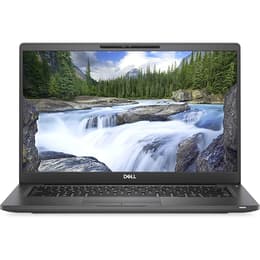
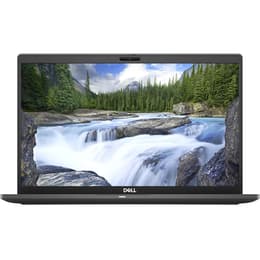

Dell Latitude 7400 14" Vs Dell Latitude 7410 14"

Dell Latitude 7400 14"
Starting at

Refurbished price:£150.00

Versus £699.00 new

See options
Dell Latitude 7410 14"
Starting at

Refurbished price:£187.00

Versus £671.28 new

See options

Ratings

The Dell Latitude 7400 14 (released in 2019) and the Dell Latitude 7410 14 (released in 2020) are business-oriented laptops designed for productivity and reliability. While both models share a similar professional aesthetic and focus on security, the 7410 introduces updated internal components, enhanced display options, and revised port configurations. Both devices run on the Windows operating system, offering a consistent software experience.

Scores

Durability

When considering the practical lifespan of these laptops, several factors come into play, primarily their release timelines and potential for ongoing support and repair.

  • Release Timeline: The Latitude 7400 was introduced in 2019, while the 7410 followed in 2020. This one-year difference means the 7410 generally benefits from a slightly longer period of official software updates and security patches from Dell and Microsoft, extending its functional life.
  • Software Longevity: Both models are designed for business environments, implying robust software support. The newer 7410, with its 10th generation processors, may receive operating system updates for a marginally longer duration compared to the 7400, which features 8th generation processors.
  • Repairability: Both the Latitude 7400 and 7410 are noted for their user-friendly disassembly, making common repairs and component replacements relatively straightforward. The 7400, for instance, uses Phillips-head screws that remain attached to the bottom plate, simplifying access to internal components like the battery and M.2 NVMe slot. The 7410 also offers accessible internal components for maintenance.

Year of Release

2019

2020

Last Os Compatibility

Yes

Yes

OS

Windows 11

Windows 11

Performance

The performance of these Latitude models is tailored for business productivity, with differences stemming from their respective processor generations and memory configurations.

  • Processor Capabilities: The Latitude 7400 is equipped with 8th generation processors, which capably handle everyday office applications, multitasking, and general web browsing. The Latitude 7410, featuring 10th generation processors, offers a modest improvement in processing power, leading to slightly faster execution of demanding applications and more efficient multitasking. This translates to a smoother experience for users who frequently work with complex spreadsheets, multiple browser tabs, or light content creation tasks.
  • Memory and Storage: Both laptops support fast NVMe PCIe solid-state drives, providing quick boot times and rapid application loading. The Latitude 7400 typically offers two memory slots, allowing for upgrades up to 32GB of DDR4 RAM. In contrast, some configurations of the Latitude 7410 may have soldered RAM, which can limit future memory upgrades.
  • Battery Behavior: Both models are recognized for their strong battery performance. The Latitude 7400, particularly its 2-in-1 variant, has been noted for extended battery life, with some reports indicating over 13 hours of use. The Latitude 7410 also delivers good battery longevity, often achieving around 11 to 13.5 hours, even with higher-resolution display options.

Memory (GB)

8 GB

8 GB

Processor

Core i5 - Gen 8 (U)

Core i5 - Gen 10 (U)

Graphic card

Integrated Graphics

Integrated Graphics

Screen quality

The visual experience on these laptops varies, particularly with the display options available on the newer model.

  • Display Technology and Resolution: The Latitude 7400 primarily features 14-inch Full HD (1920x1080) IPS displays, offering clear visuals and good viewing angles suitable for general business tasks. The Latitude 7410 retains the Full HD option but also introduces an optional 4K UHD (3840x2160) display. This 4K panel provides significantly sharper images and finer detail, beneficial for tasks requiring high visual precision.
  • Brightness and Clarity: The 7400's Full HD panels typically offer around 300 nits of brightness, which is adequate for indoor use. The 7410's 4K display option is noted for a brighter backlight and faster response times compared to the 7400's 1080p panels. Some 7410 displays also incorporate a low blue light feature, designed to reduce eye strain during prolonged use.
  • Design and Viewing Experience: The Latitude 7410 features narrower bezels around the display, contributing to a more modern appearance and a slightly more immersive viewing experience within a compact chassis.

Resolution

1920 x 1080

1920 x 1080

Screen type

IPS

LCD

Camera

Audiovisual

For communication and media consumption, both laptops offer integrated solutions, with the 7410 bringing some refinements.

  • Camera System: Both the Latitude 7400 and 7410 include an integrated HD 720p webcam, suitable for video conferencing and online meetings. The 7410 often includes a physical privacy shutter for the webcam, enhancing user privacy. Additionally, the 7410 may offer an optional IR camera for facial recognition and a proximity sensor for automatic login/logout, features not typically found on the 7400.
  • Audio Quality: The Latitude 7400's speakers have been described as sometimes thin and not particularly loud. The Latitude 7410 generally offers improved audio output, with users reporting distinct sound and good stereo separation, making it more suitable for media consumption and clearer conference calls. Both models typically include dual microphones for voice input.
  • Video Recording: Video recording quality on both devices is standard for integrated laptop webcams, sufficient for basic communication but not intended for high-fidelity content creation.

Miscellaneous

Beyond core performance, several practical elements differentiate these two business laptops, impacting daily usability and connectivity.

  • Connectivity Options: The Latitude 7400 typically supports Wi-Fi 5 (802.11ac) and Bluetooth 5.0. The Latitude 7410 upgrades to Wi-Fi 6 (802.11ax) and Bluetooth 5.1, offering faster wireless speeds and improved performance in congested network environments. Both models may include optional LTE mobile broadband for connectivity on the go.
  • Port Types: The 7400 features one Thunderbolt 3 port, two USB-A 3.1 Gen 1 ports, an HDMI 1.4a port, and a traditional barrel-style charging port. The 7410 evolves its port selection by replacing the barrel charger with a second Thunderbolt 3 (USB-C) port, meaning it charges via USB-C. It also includes two USB-A 3.2 Gen 1 ports and an HDMI 2.0 port, offering more modern display output capabilities.
  • Physical Attributes: The 7400 has dimensions of approximately 18.9 mm thickness and weighs between 1.35 kg and 1.535 kg. The 7410 is slightly thicker at around 19.3 mm and can be marginally heavier in some configurations, but its overall footprint is more compact due to narrower display bezels. Both models feature durable aluminum or carbon fiber builds.

Weight

1630 g

1330 g

Screen size

14

14

User feedback for both the Dell Latitude 7400 and 7410 generally highlights their robust build quality and suitability for professional use. The Latitude 7400 is often praised for its excellent battery life and solid performance for everyday business tasks. Some users noted its display brightness could be higher in certain configurations and that its speakers were not particularly strong. The 7410, as a successor, receives commendation for its optional 4K display, which offers impressive clarity and color, and its improved audio experience. Its more modern connectivity, including Wi-Fi 6 and USB-C charging, is also a frequent positive point.

Users prioritizing maximum software longevity and the latest connectivity standards, along with the option for a high-resolution 4K display, may find the Latitude 7410 better suited to their needs. Its enhanced webcam features, such as a privacy shutter and optional facial recognition, also appeal to those focused on security and convenience. Conversely, users who value a slightly lighter device, still robust performance for general office work, and a traditional charging port might lean towards the Latitude 7400. Both devices are reliable workhorses, and choosing between them often comes down to the importance of the incremental upgrades offered by the 7410. For those seeking a dependable and eco-friendly alternative, considering a quality-assured refurbished option for either model can provide excellent value and extend the life cycle of these capable business laptops.

See all articles

Our recent comparisons