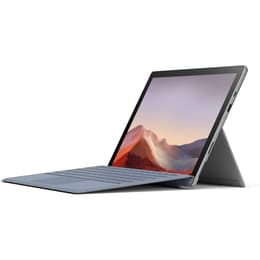

Lenovo ThinkPad T14 G1 14" Vs Microsoft Surface Pro 7 12"

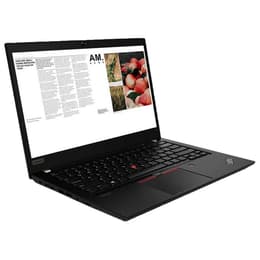
Lenovo ThinkPad T14 G1 14"
Starting at

Refurbished price:£204.00

Versus £534.21 new

See options
Microsoft Surface Pro 7 12"
Starting at

Refurbished price:£182.00

Versus £1,509.25 new

See options

Ratings

The Lenovo ThinkPad T14 Gen 1, released in 2020, is a traditional business-oriented laptop, while the Microsoft Surface Pro 7, launched in late 2019, is a 2-in-1 detachable tablet. Both devices run on the Windows operating system, offering a familiar software environment. The primary distinction lies in their form factor and intended use cases, with the ThinkPad T14 focusing on a conventional laptop experience and the Surface Pro 7 emphasizing versatility as both a tablet and a laptop.

Scores

Durability

When considering the practical lifespan of these devices, several factors come into play, including their release timelines, operating system support, and physical design.

  • Release Timeline: The Microsoft Surface Pro 7 was released in October 2019, making it slightly older than the Lenovo ThinkPad T14 Gen 1, which debuted in 2020. This difference means the ThinkPad T14 Gen 1 may receive software updates for a slightly longer period.
  • OS Support: Both devices run Windows 10 (and are generally upgradeable to Windows 11), ensuring continued software support from Microsoft for several years. The longevity of software updates is more tied to Microsoft's general Windows lifecycle than to specific hardware models.
  • Physical Durability: The ThinkPad T14 Gen 1 is known for its robust build, having undergone MIL-STD-810G military testing, suggesting a high level of resistance to physical stress. The Surface Pro 7 features a magnesium alloy casing, contributing to its solid feel. The traditional laptop design of the ThinkPad may offer inherent structural advantages over a detachable tablet for certain types of wear and tear.

Year of Release

2019

2019

OS

Windows 11

Windows 11

Performance

The performance of both the ThinkPad T14 Gen 1 and the Surface Pro 7 is driven by their internal components, impacting how smoothly they handle daily tasks and more demanding applications.

  • Processor Capabilities: Both devices are equipped with 10th-generation Intel Core processors, with the ThinkPad T14 Gen 1 also offering AMD Ryzen 4000 series processor options. These processors enable smooth multitasking and efficient handling of productivity software, web browsing, and media consumption. The AMD Ryzen variants in the ThinkPad T14 Gen 1 are noted for strong multi-core performance.
  • Memory and Storage: The ThinkPad T14 Gen 1 supports up to 48GB of DDR4 RAM, with a portion soldered and an expandable SO-DIMM slot, and offers up to 2TB of NVMe PCIe SSD storage. The Surface Pro 7 comes with up to 16GB of LPDDR4x RAM and up to 1TB of SSD storage. The ThinkPad's higher potential RAM capacity can be beneficial for users running numerous applications simultaneously or working with large datasets.
  • Battery Behavior: The ThinkPad T14 Gen 1 typically features a 45Wh or 50Wh battery, with reported real-world usage ranging from 4 to 9 hours depending on configuration and tasks. The Surface Pro 7 has a 43.2Wh battery, and while advertised for up to 10.5 hours, user experiences often report 3-8 hours of battery life, with some noting a decrease compared to its predecessor.

Memory (GB)

16 GB

8 GB

Processor

Core i5 - Gen 10 (U)

Core i5 - Gen 10 (G4)

Graphic card

Intel HD Graphics

Integrated Graphics

Screen quality

The visual experience on these devices is shaped by their display technology, resolution, and overall screen characteristics.

  • Display Technology and Resolution: The Lenovo ThinkPad T14 Gen 1 offers a 14-inch display with various options, including Full HD (1920x1080) IPS panels and a 4K UHD (3840x2160) IPS option with Dolby Vision HDR. The Microsoft Surface Pro 7 features a 12.3-inch PixelSense touchscreen with a resolution of 2736 x 1824 pixels and a 3:2 aspect ratio. The Surface Pro 7's higher pixel density on a smaller screen results in a very sharp image.
  • Brightness and Clarity: The ThinkPad T14 Gen 1's Full HD IPS panels can reach up to 500 nits of brightness, with some variants offering PrivacyGuard technology. The Surface Pro 7's display also offers good brightness, reaching around 395 nits, and is noted for its vividness and detail.
  • Touch and Aspect Ratio: The Surface Pro 7 is inherently a touchscreen device, designed for touch and pen input, and its 3:2 aspect ratio provides more vertical screen real estate, which can be beneficial for document work. While some configurations of the ThinkPad T14 Gen 1 include a touchscreen, the standard models are non-touch, and it typically features a 16:9 aspect ratio, common for traditional laptops.

Resolution

1920 x 1080

2736 x 1824

Audiovisual

The camera and audio capabilities differ between these two devices, reflecting their distinct design philosophies.

  • Camera System: The Lenovo ThinkPad T14 Gen 1 is equipped with a 720p HD webcam, often featuring a ThinkShutter privacy cover, and some configurations include an optional IR camera for Windows Hello facial recognition. The Microsoft Surface Pro 7 includes a 5MP front-facing camera that supports Windows Hello facial authentication and records 1080p full HD video, along with an 8MP rear-facing autofocus camera also capable of 1080p full HD video. The Surface Pro 7 offers higher resolution cameras, particularly for the rear-facing option.
  • Microphone Quality: Both devices feature dual-array microphones. The ThinkPad T14 Gen 1 includes dual-array far-field microphones, while the Surface Pro 7 has dual far-field Studio Mics. Both are designed to provide clear audio for calls and recordings.
  • Speaker Output: The ThinkPad T14 Gen 1 has stereo speakers with Dolby Audio. The Surface Pro 7 also features 1.6W stereo speakers with Dolby Audio Premium, providing clear sound for media consumption.

Miscellaneous

Beyond core performance and display, practical elements like connectivity, ports, and physical design contribute to the overall user experience.

  • Connectivity Options: Both devices support Wi-Fi 6 (802.11ax) and Bluetooth 5.0 or 5.1, ensuring modern wireless connectivity. The ThinkPad T14 Gen 1 also offers optional WWAN (4G LTE) for mobile internet access.
  • Port Selection: The ThinkPad T14 Gen 1 provides a comprehensive selection of ports, including multiple USB-A ports, USB-C ports (with Thunderbolt 3 on Intel models), HDMI, Ethernet (RJ-45), and a microSD card reader. The Surface Pro 7 includes one USB-C port (not Thunderbolt 3), one USB-A port, a Surface Connect port, and a microSD card reader. The ThinkPad offers a wider array of built-in ports, particularly a dedicated Ethernet port and Thunderbolt 3 on Intel models.
  • Weight and Dimensions: The ThinkPad T14 Gen 1 is a 14-inch laptop starting at approximately 1.46 kg (3.23 lbs). The Surface Pro 7 is a more compact 12.3-inch device, weighing around 0.77 kg (1.7 lbs) without its detachable keyboard. The Surface Pro 7 is significantly lighter and more portable in tablet mode.

Weight

2500 g

775 g

Screen size

14

12

The Lenovo ThinkPad T14 Gen 1 and the Microsoft Surface Pro 7 cater to different user preferences, each excelling in distinct areas. Users often praise the ThinkPad T14 Gen 1 for its robust build quality, comfortable keyboard, and extensive port selection, making it a reliable workhorse for productivity. Its upgradeable RAM and storage are also frequently highlighted as advantages for long-term use. Some criticisms include that certain display options may not be as bright or vibrant as competitors, and battery life can vary significantly depending on the configuration and workload.

The Surface Pro 7 is generally lauded for its versatile 2-in-1 design, allowing it to function as both a tablet and a laptop, and its high-resolution PixelSense display is often praised for its sharpness and vividness. The inclusion of a USB-C port was a welcome update, though the absence of Thunderbolt 3 was a point of contention for some. A common concern among users is the real-world battery life, which often falls short of advertised figures, and the fact that essential accessories like the Type Cover keyboard are sold separately.

Users prioritizing a traditional, durable laptop experience with a wide range of connectivity options and potential for internal upgrades may find the Lenovo ThinkPad T14 Gen 1 well-suited to their needs. Conversely, individuals seeking a highly portable and versatile device that seamlessly transitions between tablet and laptop modes, with a focus on a high-quality touch display, may lean toward the Microsoft Surface Pro 7. Both devices offer a quality-assured refurbished option, providing an eco-friendly alternative for consumers.


See all articles

Our recent comparisons