iPhone 12 Pro Max Vs iPhone 8

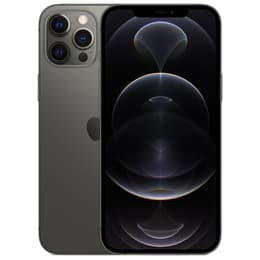
iPhone 12 Pro Max
iPhone 12 Pro Max
Starting at

Refurbished price:£236.00

Versus £979.00 new

See options
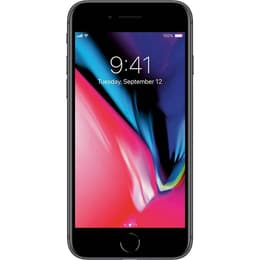
iPhone 8
iPhone 8
Starting at

Refurbished price:£69.00

Versus £249.00 new

See options

Ratings

The iPhone 12 Pro Max, released in October 2020, and the iPhone 8, launched in September 2017, represent distinct generations of Apple's smartphone evolution. While both devices operate on iOS, the 12 Pro Max introduces a larger, more advanced display, a significantly upgraded camera system, and enhanced performance capabilities compared to the iPhone 8.

Scores

Durability

The expected practical lifespan of a smartphone is influenced by its release timeline, software support, and physical durability. These two iPhones, separated by three years, offer different longevity prospects.

  • Release Timeline & OS Support: The iPhone 12 Pro Max, released in late 2020, launched with iOS 14 and is expected to receive major iOS updates for several more years, potentially until iOS 19 or 20. In contrast, the iPhone 8, released in 2017 with iOS 11, received its last major OS update with iOS 16, meaning it no longer benefits from the latest software features and security enhancements.
  • Repairability & Durability: Both models feature glass backs, making them susceptible to damage from drops. The iPhone 12 Pro Max introduced a Ceramic Shield front cover, designed to offer improved drop performance compared to previous models. The iPhone 8 has an IP67 rating for dust and water resistance, while the 12 Pro Max has an IP68 rating, indicating slightly better protection against submersion.
  • Expected Practical Lifespan: Users prioritizing the latest software and security updates will find the iPhone 12 Pro Max offers a longer practical lifespan. The iPhone 8, while still functional for basic tasks, will gradually see app compatibility issues and a lack of new features due to its older software.

Year of Release

2020

2017

Compatible with latest Update

Yes

No

OS

iOS

iOS

Foldable

No

No

Performance

Performance differences between these two models are substantial, reflecting several years of technological advancements in mobile processing and memory management.

  • Processor Capabilities: The iPhone 12 Pro Max features a more advanced processor, enabling smoother operation for demanding applications, faster app loading times, and more efficient multitasking. This translates to a more responsive user experience, especially with graphically intensive games or complex productivity tools. The iPhone 8, with its older processor, handles everyday tasks adequately but may show slowdowns with newer, more resource-intensive applications.
  • RAM & Multitasking: The iPhone 12 Pro Max is equipped with 6GB of RAM, providing ample capacity for running multiple applications simultaneously without significant performance degradation or app reloading. The iPhone 8, with 2GB of RAM, offers a more constrained multitasking experience, where apps in the background may need to reload more frequently when switched back to.
  • Storage Options: The iPhone 12 Pro Max offers storage configurations starting from 128GB, with options up to 512GB, providing generous space for apps, photos, and videos. The iPhone 8 typically came with 64GB or 128GB options, which might be limiting for users with extensive media libraries or numerous applications.

Memory (GB)

6 GB

2 GB

Screen quality

The display technology and viewing experience differ significantly between the iPhone 12 Pro Max and the iPhone 8, primarily due to advancements in screen panels and size.

  • Display Technology & Resolution: The iPhone 12 Pro Max features a 6.7-inch Super Retina XDR OLED display, offering deep blacks, vibrant colors, and a high contrast ratio. It has a resolution of 2778 x 1284 pixels at 458 pixels per inch (ppi). The iPhone 8 uses a 4.7-inch Retina HD LCD display with a resolution of 1334 x 750 pixels at 326 ppi, providing clear visuals but with less contrast and color depth than OLED.
  • Brightness & HDR: The 12 Pro Max can reach a peak brightness of 1200 nits for HDR content, making it suitable for outdoor viewing and offering an enhanced experience for HDR videos. The iPhone 8 has a typical maximum brightness of 625 nits. The 12 Pro Max also supports Dolby Vision and HDR10, providing a more immersive visual experience.
  • Screen Size & Viewing Experience: The 12 Pro Max offers a considerably larger screen, which is beneficial for media consumption, gaming, and productivity tasks. The edge-to-edge design of the 12 Pro Max maximizes screen real estate. The iPhone 8's smaller display and thicker bezels result in a more compact viewing area.

Resolution

1284 x 2778

750 x 1334

Screen type

Super Retina XDR OLED

Retina IPS LCD

Audiovisual

The camera systems on these two iPhones represent different eras of mobile photography, with the iPhone 12 Pro Max offering a more versatile and advanced setup.

  • Rear Camera System: The iPhone 12 Pro Max features a triple 12MP camera system, including Ultra Wide, Wide, and Telephoto lenses, along with a LiDAR Scanner. This setup enables 2.5x optical zoom in, 2x optical zoom out, and a 5x optical zoom range. It also supports advanced features like Night mode, Deep Fusion, Smart HDR 3, and Apple ProRAW. The iPhone 8 has a single 12MP Wide camera with optical image stabilization and digital zoom up to 5x.
  • Low-Light & Video Performance: The 12 Pro Max excels in low-light conditions due to its larger sensor, wider aperture, and Night mode capabilities, producing brighter and more detailed images. It also supports 4K video recording at up to 60 frames per second with Dolby Vision HDR. The iPhone 8 can record 4K video at up to 60 fps but lacks the advanced low-light performance and HDR video capabilities of the 12 Pro Max.
  • Front Camera & Features: The iPhone 12 Pro Max includes a 12MP TrueDepth front camera with Night mode and Deep Fusion. The iPhone 8 has a 7MP FaceTime HD front camera.

Main camera

12 megapixels

12 megapixels

Front camera

12 megapixels

7 megapixels

Miscellaneous

Beyond core performance and display, several practical elements differentiate the user experience between the iPhone 12 Pro Max and the iPhone 8.

  • Connectivity & Ports: The iPhone 12 Pro Max supports 5G cellular connectivity, Wi-Fi 6, and Bluetooth 5.0, offering faster data speeds and more robust wireless connections. The iPhone 8 supports 4G LTE Advanced, Wi-Fi 5 (802.11ac), and Bluetooth 5.0. Both devices use the Lightning port for charging and data transfer.
  • Biometrics & Security: The 12 Pro Max utilizes Face ID for secure authentication and unlocking, which involves facial recognition. The iPhone 8 features Touch ID, a fingerprint sensor integrated into the home button.
  • Design & Handling: The iPhone 12 Pro Max has a larger form factor, measuring 160.8 x 78.1 x 7.4 mm and weighing 228 grams, with a flat-edged design and stainless steel frame. The iPhone 8 is more compact at 138.4 x 67.3 x 7.3 mm and 148 grams, featuring a more rounded aluminum frame. The larger size of the 12 Pro Max offers a more expansive screen but can be more challenging for one-handed use.

Weight

226 g

148 g

Width

7,81 cm

6,73 cm

Height

16,08 cm

13,84 cm

Depth

0,74 cm

0,73 cm

Screen size (in)

6.7

4.7

Mobile network

5G

4G

SIM card

Physical SIM + eSIM

Physical SIM

Carrier compatibility

Unlocked

Unlocked

Connector

Lightning

Lightning

User sentiment for the iPhone 12 Pro Max often highlights its impressive camera system, particularly its low-light capabilities and the versatility of its multiple lenses. Users also frequently praise its large, vibrant OLED display and robust battery life, which often lasts a full day of heavy use. Some common criticisms revolve around its substantial size and weight, which can make it less comfortable for some users to handle or carry. The iPhone 8, on the other hand, is often lauded for its compact form factor and the reliability of Touch ID. Its performance for everyday tasks was well-regarded at its release, and its battery life was considered adequate for its time. However, a frequent concern for current users is its aging processor and the cessation of major iOS updates, which impacts its long-term usability and access to new features.

Users prioritizing a large, immersive display, advanced photography and videography features, and long-term software support will find the iPhone 12 Pro Max well-suited to their needs. Its powerful performance makes it ideal for demanding applications and multitasking. Conversely, users who prefer a more compact device, appreciate the familiarity of a physical home button with Touch ID, and primarily use their phone for essential communication and lighter tasks may lean toward the iPhone 8. For those considering an eco-friendly alternative, both models are available as quality-assured refurbished options, offering a sustainable choice for acquiring these devices.

See all articles

Our recent comparisons