
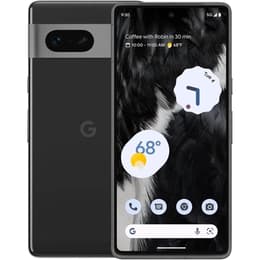
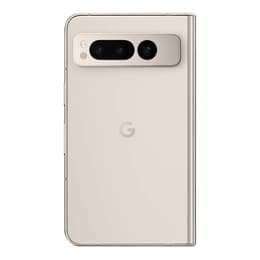

Google Pixel 7 Vs Google Pixel Fold

Google Pixel 7
Google Pixel 7
Starting at

Refurbished price:£134.00

Versus £729.00 new

See options
Google Pixel Fold
Google Pixel Fold
Starting at

Refurbished price:£371.00

Versus £1,499.00 new

See options

Ratings

The Google Pixel 7, released in October 2022, is a traditional slab-style smartphone, offering a familiar and streamlined user experience. In contrast, the Google Pixel Fold, launched in June 2023, introduces a foldable design, transforming from a compact smartphone into a larger tablet-like display. These devices cater to different user preferences, primarily distinguished by their form factor and the unique functionalities that arise from it.

Scores

Durability

The expected practical lifespan of a smartphone is significantly influenced by its release timeline, software support, and repairability.

  • Release Timeline and Age: The Google Pixel 7 was released in October 2022, making it an older model compared to the Google Pixel Fold, which launched in June 2023. This difference in release dates means the Pixel Fold benefits from a slightly newer hardware generation and a longer period before its software support concludes.
  • OS Support Duration: Both the Pixel 7 and Pixel Fold are part of Google's commitment to providing five years of OS and security updates from their respective release dates. This means the Pixel 7 will receive updates until October 2027, while the Pixel Fold will continue to receive updates until June 2028.
  • Repairability: Foldable devices, by their nature, often present more complex repair challenges due to their intricate hinge mechanisms and multiple display components. While specific repairability scores can vary, the traditional design of the Pixel 7 generally suggests a more straightforward repair process compared to the Pixel Fold's innovative, yet more complex, folding mechanism.

Year of Release

2022

2023

Compatible with latest Update

Yes

Yes

OS

Android

Android

Foldable

No

Yes

Performance

Both devices are equipped to handle daily tasks efficiently, but their different designs can influence performance in specific scenarios.

  • Processor Capabilities and Responsiveness: Both the Pixel 7 and Pixel Fold are powered by the same generation of Google's custom-designed processor, ensuring smooth operation for everyday applications and multitasking. Apps open quickly, and switching between them is fluid. While capable of handling demanding tasks like gaming, extended sessions might lead to noticeable warmth on both devices.
  • Storage and RAM: The Pixel 7 typically comes with 8GB of RAM and storage options of 128GB or 256GB. The Pixel Fold, designed for more intensive multitasking, features 12GB of RAM and offers 256GB or 512GB of storage. The increased RAM in the Pixel Fold can provide a smoother experience when running many applications simultaneously or handling more memory-intensive tasks.
  • Battery Behavior: The Pixel 7 has a 4355 mAh battery, while the Pixel Fold has a larger 4821 mAh battery. Despite the Pixel Fold's larger capacity, its dual-screen setup, especially the larger internal display, can consume more power. Users of the Pixel 7 generally report that it can last a full day with typical usage, though heavy use, particularly gaming, may require more frequent charging. The Pixel Fold's battery life can vary significantly depending on how often the larger internal display is used. Both devices support fast charging and wireless charging.

Memory (GB)

8 GB

12 GB

Screen quality

The display experience is a primary differentiator between these two Pixel devices, offering distinct advantages based on user needs.

  • Display Technology and Size: The Pixel 7 features a 6.3-inch OLED display, known for its vibrant colors and deep blacks, with a resolution of 1080 x 2400 pixels. The Pixel Fold, on the other hand, offers a dual-screen setup: a 5.8-inch OLED outer display and a 7.6-inch foldable OLED inner display when unfolded. The inner display has a resolution of 2208 x 1840 pixels. The Pixel Fold's larger internal screen provides an expansive canvas for content consumption and productivity.
  • Refresh Rate and Brightness: The Pixel 7 has a 90Hz refresh rate, providing a smooth scrolling experience. The Pixel Fold's displays both feature a 120Hz variable refresh rate, offering even smoother visuals. In terms of brightness, the Pixel 7 can reach up to 1400 nits peak brightness, while the Pixel Fold's outer display can reach 1550 nits peak brightness and its inner display 1450 nits. The higher refresh rate on the Pixel Fold contributes to a more fluid interaction, particularly noticeable in fast-paced content or general navigation.
  • Clarity and Viewing Experience: The Pixel 7's display offers sharp and clear visuals with a pixel density of 416 ppi. The Pixel Fold's outer display has 408 ppi, and its inner display has 380 ppi. While the Pixel 7 provides a consistently high-quality viewing experience on a single, flat screen, the Pixel Fold offers the versatility of a compact smartphone and an immersive, larger display for media, reading, and multitasking. The Pixel Fold's internal display has a plastic protective layer, which can feel different to the touch compared to traditional glass.

Resolution

1080 x 2400

1840 x 2208

Screen type

AMOLED

Foldable OLED

Audiovisual

Both Pixel devices leverage Google's computational photography strengths, delivering strong camera performance, though with some hardware differences.

  • Camera System Capabilities: The Pixel 7 features a dual-camera system with a 50MP main wide lens and a 12MP ultrawide lens. The Pixel Fold has a more versatile setup, including a 48MP main wide lens, a 10.8MP ultrawide lens, and a 10.8MP telephoto lens with 5x optical zoom. Both devices also have front-facing cameras, with the Pixel Fold featuring an additional inner camera for video calls when unfolded.
  • Photography Performance: The 50MP main camera on the Pixel 7 is highly regarded for capturing natural colors, sharp details, and excellent low-light performance. Its Night Sight mode is effective in near darkness. The Pixel Fold's main camera also produces balanced and pleasing images, benefiting from Google's image processing. The Pixel Fold's dedicated telephoto lens provides a significant advantage for zoomed-in shots, offering 5x optical zoom, which the Pixel 7 lacks. The ultrawide cameras on both perform well, though the Pixel 7's ultrawide has a slightly narrower field of view.
  • Video Recording Quality: Both devices are capable of recording video at up to 4K resolution at 60 frames per second. They offer good video stabilization and dynamic range. The Pixel Fold's inner camera is limited to 1080p at 30fps for video calls. Both include features like Cinematic Blur for video.
  • Audio Experience: Both the Pixel 7 and Pixel Fold feature stereo speakers, providing a good audio experience for media consumption. Microphone quality for calls and recording is generally clear on both devices.

Main camera

50 megapixels

48 megapixels

Front camera

10.8 megapixels

8 megapixels

Miscellaneous

Beyond core performance, several practical elements contribute to the overall user experience of these devices.

  • Connectivity Options: Both the Pixel 7 and Pixel Fold support 5G connectivity, along with modern Wi-Fi standards and Bluetooth 5.2. This ensures fast data speeds and reliable connections for wireless accessories.
  • Port Types and Sensors: Both devices utilize a USB-C port for charging and data transfer, and neither includes a traditional 3.5mm headphone jack. They both feature an under-display optical fingerprint scanner for secure unlocking, along with face recognition.
  • Weight and Dimensions: The Pixel 7 is a more compact device, weighing 197g and measuring 155.6 x 73.2 x 8.7 mm. The Pixel Fold is significantly heavier at 283g. When folded, it measures 139.7 x 79.5 x 12.1 mm, and when unfolded, it is 139.7 x 158.7 x 5.8 mm. The Pixel 7 offers a more traditional, single-handed use experience, while the Pixel Fold's weight and thickness when folded are notable, though it becomes very thin when unfolded.
  • Build Materials and Durability Features: Both devices feature Gorilla Glass Victus for display protection. The Pixel Fold is marketed as having a durable hinge and boasts an IPX8 water resistance rating, meaning it can withstand submersion in water. The Pixel 7 also has an IP68 rating for dust and water resistance.

Weight

197 g

283 g

Screen size (in)

6.3

7.6

Mobile network

5G

5G

SIM card

Physical SIM + eSIM

Physical SIM + eSIM

Carrier compatibility

Unlocked

Unlocked

Connector

USB-C + Jack 3.5mm

USB-C

User sentiment for the Google Pixel 7 often praises its exceptional camera performance, particularly its ability to capture high-quality photos in various conditions, and its overall smooth software experience. Common criticisms sometimes point to its battery life, which, while adequate for many, might not satisfy heavy users, and its 90Hz display refresh rate, which is good but not the highest available.

The Google Pixel Fold receives commendation for its innovative foldable design, offering a large, immersive screen for productivity and media consumption, and its robust camera system, especially the inclusion of a telephoto lens. However, users frequently note its considerable weight and thickness when folded, and some concerns have been raised about the durability of the inner display and the visibility of the crease.

Users prioritizing a traditional, compact smartphone experience with a highly capable camera and consistent performance will find the Google Pixel 7 well-suited to their needs. Its streamlined design and reliable software updates make it a practical choice for everyday use. Conversely, users who desire a versatile device that can transform from a standard smartphone into a larger tablet-like screen for enhanced multitasking, reading, or media viewing may prefer the Google Pixel Fold. Its unique form factor and additional camera capabilities cater to those seeking a more expansive digital canvas.

For those considering either device, exploring quality-assured refurbished options can provide an eco-friendly alternative, extending the life cycle of these products and offering a sustainable choice.

See all articles

Our recent comparisons






