Compare models
Google Pixel 10 Vs iPhone 17e
- 1-year minimum warranty
- Free delivery on all items
- Free 30-day returns
Differences at a glance
The Google Pixel 10 (2025) and the Apple iPhone 17e (2026) are modern mainstream smartphones designed to deliver reliable everyday performance within their respective ecosystems. While the Google Pixel 10 runs on Android with deep device intelligence integrations, the iPhone 17e operates on iOS with native access to Apple Intelligence features. Both models offer distinct approaches to mobile computing, balancing functionality and software support.
Available Models
Colour
Storage
Scores
Durability
Both devices are engineered for long-term daily usage, backed by multi-year manufacturer support commitments and robust internal components designed to handle future software developments.
- Software longevity: The Google Pixel 10 provides up to 7 major operating system updates, matching the long-term support window typical of modern Android flagships. The iPhone 17e receives Apple's standard multi-year iOS update lifecycle, ensuring prolonged access to security patches and system features.
- Build and repairability: Both smartphones feature sturdy aluminum frames and reinforced glass fronts with official dust and water resistance ratings (IP68), though user experiences suggest standard protection plans or quality-assured refurbished options help mitigate long-term accidental wear.
Year of Release
2025
2026
OS
Android
iOS
Foldable
No
No
Performance
System responsiveness and energy management differ based on internal hardware architecture, though both models handle everyday demands smoothly.
- Multitasking and app execution: The Google Pixel 10 pairs generous system memory (12GB RAM) with its custom processor to maintain fluid app switching and local task handling. The iPhone 17e utilizes an efficient current-generation processor paired with 8GB of RAM, delivering swift app loading and responsive gaming performance.
- Storage and battery behavior: Storage configurations start at generous baseline capacities for both models. The Google Pixel 10 features a 4,970mAh battery suitable for full-day moderate-to-heavy use, while the iPhone 17e manages power efficiently to support all-day media playback and routine communication tasks.
Screen quality
Display characteristics vary slightly in physical dimensions and panel tuning, but both offer high-clarity viewing experiences suitable for outdoor and indoor environments.
- Panel technology and resolution: The Google Pixel 10 features a 6.3-inch OLED display with an adaptive refresh rate scaling up to 120Hz for smooth scrolling. The iPhone 17e incorporates a slightly smaller 6.1-inch Super Retina XDR OLED display with sharp resolution and accurate color reproduction.
- Brightness and outdoor visibility: Both screens reach high peak brightness levels, ensuring readability under direct sunlight, while offering deep black levels and wide viewing angles for media consumption.
Resolution
1080x2424
2532 x 1170
Audiovisual
Imaging hardware and software processing pipelines differ between the two manufacturers, catering to varying preferences for photo and video capture.
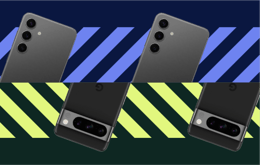
- Rear camera systems: The Google Pixel 10 features a versatile triple-lens rear setup including a primary wide lens, ultra-wide lens, and a dedicated telephoto zoom lens. The iPhone 17e employs a single high-resolution 48MP main fusion camera system that supports optical-quality 2x zoom and detailed low-light photography.
- Video and audio capabilities: Both devices support high-resolution video recording with advanced stabilization and spatial audio capture, alongside clear stereo speaker output for media playback and hands-free calls.
Front camera
42 megapixels
12 megapixels
Miscellaneous
Physical design factors and connectivity standards influence daily handling comfort and peripheral compatibility.
- Connectivity and ports: Both smartphones support modern 5G networks, Wi-Fi standards, and Bluetooth, utilizing reversible USB-C ports for charging and data transfer.
- Dimensions and security: The Google Pixel 10 weighs approximately 204 grams and utilizes facial recognition alongside fingerprint scanning, while the iPhone 17e offers a lighter 169-gram form factor relying securely on Face ID.
Weight
204 g
169 g
Screen size (in)
6.3
6.1
Mobile network
5G
5G
SIM card
Physical SIM + eSIM
Physical SIM + eSIM
Carrier compatibility
Unlocked
Unlocked
Connector
USB-C
USB-C (USB 2)
What the community thinks
User discussions across community forums highlight distinct preferences for each device based on software ecosystem loyalties. Owners of the Google Pixel 10 frequently praise its versatile triple-lens camera system, smooth adaptive display refresh rate, and deep integration of artificial intelligence features for daily organization. Conversely, iPhone 17e users often emphasize the reliability of iOS, fluid day-to-day processing speeds, and comfortable, lightweight handling as major highlights. Common criticisms for the Pixel 10 sometimes mention its slightly heavier build, while iPhone 17e users occasionally note the absence of an ultra-wide secondary lens as a limitation for landscape photography.
Users prioritizing camera versatility, a higher refresh rate screen, and deep Android customization will find the Google Pixel 10 well-suited to their needs. Meanwhile, users invested in the Apple ecosystem who value a lightweight frame, long battery efficiency, and iOS simplicity may lean toward the iPhone 17e. For those seeking a sustainable choice, a quality-assured refurbished option provides an eco-friendly alternative to purchasing brand-new hardware. Selecting between these two devices ultimately depends on individual platform preferences and specific mobile workflow priorities.