
Compare models
Google Pixel 10 Pro Fold Vs iPhone 17 Pro Max
- 1-year minimum warranty
- Free delivery on all items
- Free 30-day returns
Differences at a glance
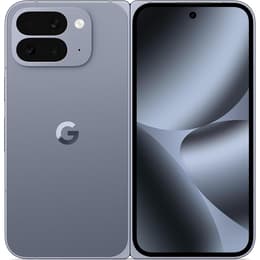
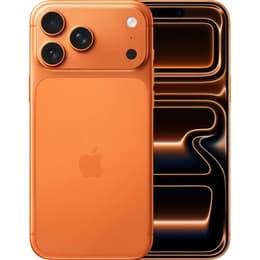
The Google Pixel 10 Pro Fold (2025) and the iPhone 17 Pro Max (2025) represent two distinct approaches to high-end mobile technology, contrasting a foldable dual-screen design with a conventional slab smartphone build. While both devices serve demanding daily workflows and media consumption, they cater to different physical preferences and operating ecosystems.
The primary differences lie in the form factor, where the Google Pixel 10 Pro Fold provides an expandable internal display for flexible multitasking, whereas the iPhone 17 Pro Max focuses on a rigid, large-format glass and titanium structure running iOS.
Available Models
Colour
Storage (GB)
Scores
Durability
Long-term usability depends on ongoing software updates, hardware durability, and structural maintenance over several years of active ownership.
- Software longevity: Both manufacturers provide long-term operating system support stretching across multiple years, ensuring access to security patches and feature updates well into the decade.
- Hardware resilience: The iPhone 17 Pro Max utilizes a rigid titanium frame and reinforced glass, while the Google Pixel 10 Pro Fold incorporates a complex hinge and flexible inner screen that requires careful handling during daily multi-screen use.
- Repair infrastructure: Professional repair options are widely available for both models through manufacturer channels and quality-assured refurbished options, which provide a sustainable choice for extending device lifespans without purchasing new hardware.
Year of Release
2025
2025
OS
Android
iOS
Foldable
Yes
No
Performance
System responsiveness and daily execution speeds differ based on internal hardware configuration and thermal management during intensive tasks.
- Multitasking efficiency: Both devices manage heavy application switching, demanding productivity software, and high-resolution media rendering smoothly without noticeable slowdowns.
- Battery behavior: The iPhone 17 Pro Max delivers consistent endurance through a full day of mixed use, whereas the Google Pixel 10 Pro Fold's power consumption varies significantly depending on whether the user relies on the smaller outer screen or the larger unfolded inner display.
- Storage configuration: Generous base storage tiers accommodate extensive media libraries, offline documents, and large applications without requiring immediate cloud management.
Screen quality
Visual immersion and panel characteristics differ fundamentally between the conventional single-display format and the foldable dual-screen architecture.
- Display technology: Both models feature bright, high-contrast OLED panels that render deep blacks and vivid colors, though the Pixel includes a foldable inner panel that creates an expanded workspace for reading and viewing media.
- Outdoor visibility: High peak brightness levels ensure legible text and clear imagery even under direct sunlight during outdoor navigation or photography.
- Refresh rate and fluidity: Adaptive refresh rate technology scales frame delivery dynamically to match on-screen motion, supporting smooth scrolling through web pages and fluid user interface animations.
Resolution
2076x2152
2868x1320
Audiovisual
Optics and media recording systems offer versatile capabilities for capturing everyday memories and professional content.
- Lens configurations: Both systems feature multi-lens setups incorporating wide, ultra-wide, and telephoto options to handle varied compositional needs from close-up macro shots to distant subjects.
- Low-light performance: Advanced computational processing brightens dark environments, reduces digital noise, and preserves fine textures during evening photography without requiring manual adjustments.
- Video and audio capture: Stable video stabilization options and clear multi-microphone arrays produce crisp audio and steady footage suitable for personal video creation and remote calling.
Miscellaneous
Physical dimensions, connectivity standards, and daily handling characteristics define how each device integrates into daily routines.
- Connectivity and ports: Both devices support modern 5G networks, high-speed Wi-Fi standards, and Bluetooth connections, utilizing reversible charging and data transfer connectors.
- Biometrics and sensors: Security authentication relies on responsive face recognition systems, complemented by secure fingerprint sensors integrated into the power button or display glass.
- Handling and weight: The iPhone 17 Pro Max offers a traditional, wide-body slab profile, while the Google Pixel 10 Pro Fold features a narrower outer screen when closed and a heavier overall chassis due to the internal hinge mechanism.
Weight
258 g
233 g
Screen size (in)
8
6.9
Mobile network
5G
5G
SIM card
Physical SIM + eSIM
Physical SIM + eSIM
Carrier compatibility
Unlocked
Unlocked
Connector
USB-C
USB-C
What the community thinks
User feedback from public forums indicates that buyers of the iPhone 17 Pro Max frequently praise its consistent battery longevity, sturdy build quality, and integrated software ecosystem. At the same time, some users note its large physical footprint can make one-handed use challenging. Conversely, owners of the Google Pixel 10 Pro Fold appreciate the expanded workspace provided by the inner screen and the clean software interface, though certain discussions highlight concerns regarding the weight and the visibility of the screen crease along the fold.
Users prioritizing a traditional, highly durable slab design with reliable all-day battery performance may prefer the iPhone 17 Pro Max. Meanwhile, users prioritizing an adaptable multi-screen workspace for reading, split-screen multitasking, and flexible media viewing will lean toward the Google Pixel 10 Pro Fold. For those seeking an eco-friendly alternative, choosing a quality-assured refurbished option from Back Market allows consumers to access these high-end features while supporting sustainable technology consumption.