
Galaxy Z Fold7 Vs iPhone 15 Pro

Galaxy Z Fold7
Galaxy Z Fold7
Starting at

Refurbished price:£916.00

Versus £1,799.00 new

See options
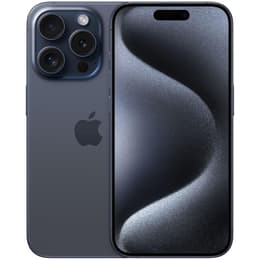
iPhone 15 Pro
iPhone 15 Pro
Starting at

Refurbished price:£427.00

Versus £999.00 new

See options

Ratings

The Samsung Galaxy Z Fold7, a foldable smartphone released in July 2025, and the Apple iPhone 15 Pro, a traditional slab-style smartphone launched in September 2023, represent distinct approaches to mobile technology. While both devices offer premium experiences, their fundamental form factors and operating systems cater to different user preferences. The Z Fold7 stands out with its expansive, adaptable display, ideal for multitasking, whereas the iPhone 15 Pro focuses on a streamlined, powerful experience within a conventional design. This comparison will explore their practical differences to help users make an informed decision.

Scores

Durability

When considering the long-term usability of a smartphone, factors like software support and physical resilience are key.

  • Software Longevity: The iPhone 15 Pro, released in September 2023, launched with iOS 17 and is compatible with iOS 26 as of September 2025, with Apple committing to a minimum of five years of major software updates, extending to at least 2028. The Galaxy Z Fold7, released in July 2025, is expected to run Android 16 with One UI 8.0 and typically receives around seven years of software updates, offering a comparable long-term software experience.
  • Physical Durability: The iPhone 15 Pro features a Ceramic Shield front and a titanium frame, contributing to its robust build. It carries an IP68 rating for dust and water resistance, allowing submersion up to 6 meters for 30 minutes. The Galaxy Z Fold7 is designed to be thinner and lighter than its predecessor, with expectations of a stronger foldable screen and a less prominent crease. It holds an IP48 rating, indicating certified dust protection and water resistance.
  • Repairability: The iPhone 15 Pro has seen improvements in repairability, with some assessments giving it a score of 7 out of 10, particularly noting easier back glass replacement. However, some independent repair assessments have given the Pro Max variant a lower score due to challenges with battery removal and part serialization. Information regarding the Z Fold7's repairability is less detailed, but foldable devices generally present more complex repair challenges due to their intricate hinge mechanisms and dual-screen design.

Year of Release

2025

2023

Compatible with latest Update

Yes

Yes

OS

Android

iOS

Foldable

Yes

No

Performance

Both devices offer high-level performance, but their underlying architectures and user experiences differ significantly.

  • Processing Power: The iPhone 15 Pro is equipped with a powerful current-generation processor, featuring a 6-core CPU, a 6-core GPU, and a 16-core Neural Engine. This configuration allows for smooth handling of demanding applications, intensive gaming, and efficient AI-driven tasks. The Galaxy Z Fold7 is powered by a high-performance processor specifically optimized for its ecosystem, featuring enhanced AI processing capabilities. This ensures fluid multitasking and responsive operation across its unique form factor.
  • Multitasking and Storage: The iPhone 15 Pro comes with 8GB of RAM and offers storage options ranging from 128GB to 1TB, providing ample space and memory for most users. The Galaxy Z Fold7 typically includes 12GB of RAM as standard, with a 16GB RAM option available for the 1TB storage variant, supporting its advanced multitasking capabilities across its large display. Both devices offer various storage configurations to suit different needs.
  • Battery Behavior: The iPhone 15 Pro features a battery capacity of 3274 mAh, providing up to 23 hours of video playback. It supports fast charging, reaching 50% in approximately 30 minutes with a compatible adapter. The Galaxy Z Fold7 is equipped with a 4400 mAh battery, supporting 25W wired fast charging and 15W wireless charging. The larger battery capacity in the Z Fold7 is designed to power its dual displays and more extensive multitasking features.

Memory (GB)

12 GB

8 GB

Screen quality

The display experience is a primary differentiator between these two devices, offering distinct visual and interactive possibilities.

  • Display Technology and Size: The iPhone 15 Pro features a 6.1-inch Super Retina XDR OLED display, known for its deep blacks and vibrant colors. The Galaxy Z Fold7 offers a dual-screen setup: a 6.5-inch OLED cover display and an expansive 8.0-inch foldable AMOLED main display. This larger internal screen provides a tablet-like experience when unfolded.
  • Resolution and Clarity: The iPhone 15 Pro's display has a resolution of 2556 x 1179 pixels, resulting in a pixel density of approximately 460 pixels per inch (ppi), offering sharp and detailed visuals. The Z Fold7's main display has a resolution of 1968 x 2184 pixels (around 368 ppi), while its cover screen offers 1080 x 2520 pixels (around 422 ppi). Both devices deliver clear images, with the iPhone having a slightly higher pixel density on its single screen.
  • Brightness and Refresh Rate: Both devices feature high brightness levels, with the iPhone 15 Pro reaching up to 1000 nits typical and 2000 nits peak outdoor brightness. The Galaxy Z Fold7's displays can achieve a peak brightness of 2600 nits, ensuring good visibility in various lighting conditions. Both phones also offer a 120Hz adaptive refresh rate, providing smooth scrolling and fluid animations. The iPhone 15 Pro also includes an Always-On display feature.

Resolution

1968 x 2184

1179 x 2556

Audiovisual

Both smartphones offer advanced camera systems, but with different strengths and capabilities tailored to their respective designs.

  • Rear Camera System: The iPhone 15 Pro features a versatile triple-camera system, including a 48MP main sensor with sensor-shift optical image stabilization (OIS), a 12MP ultra-wide lens, and a 12MP telephoto lens with 3x optical zoom. The Galaxy Z Fold7 boasts a significant upgrade with a 200MP main sensor, alongside a 12MP ultra-wide and a 10MP telephoto lens with 3x optical zoom. The Z Fold7's higher megapixel count on its main sensor can capture more detail.
  • Photography Features: The iPhone 15 Pro excels in computational photography, offering features like 48MP HEIF photos, advanced Portrait Mode with depth control, and ProRes video recording. It also allows users to switch between different focal lengths for the main camera. The Z Fold7 leverages its foldable form factor for unique shooting angles and is expected to integrate advanced AI-based image processing for improved photo quality in various conditions.
  • Front Cameras and Audio: The iPhone 15 Pro includes a 12MP front-facing camera with autofocus and advanced features for selfies and video calls. The Galaxy Z Fold7 features a 10MP cover screen selfie camera and a 4MP under-display camera on its main screen, used for video calls. Both devices offer stereo speakers for media consumption and high-quality microphone arrays for calls and recordings.

Miscellaneous

Beyond core specifications, several practical elements contribute to the overall user experience of these devices.

  • Connectivity and Ports: The iPhone 15 Pro features a USB-C port with USB 3.2 Gen 2 speeds, enabling faster data transfers and DisplayPort output. It supports Wi-Fi 6E, Bluetooth 5.3, and 5G connectivity. The Galaxy Z Fold7 also utilizes a USB Type-C port and supports Wi-Fi 802.11 (likely Wi-Fi 7 or 6E), Bluetooth 5.3, and 5G, ensuring modern connectivity standards.
  • Biometrics and Sensors: The iPhone 15 Pro relies on Face ID for secure facial recognition. It also includes a LiDAR scanner for enhanced augmented reality experiences and improved low-light focusing. The Galaxy Z Fold7 is expected to feature an under-display fingerprint sensor for convenient unlocking, alongside facial recognition. Both devices incorporate a range of sensors for navigation and user interaction.
  • Design and Handling: The iPhone 15 Pro has a compact design, measuring 146.6 x 70.6 x 8.25 mm and weighing 187 grams, with a premium titanium frame. The Galaxy Z Fold7, while significantly thinner and lighter than previous models (4.2mm unfolded, 8.9mm folded), is a larger device when unfolded, offering a different ergonomic experience. Its folded dimensions are approximately 158.4mm H x 70.6mm W x 8.9mm D.

Weight

187 g

187 g

Screen size (in)

8

6.1

Mobile network

5G

5G

SIM card

Dual Physical SIM + eSIM

Physical SIM + eSIM

Carrier compatibility

Unlocked

Unlocked

Connector

USB-C

USB-C

The iPhone 15 Pro and Galaxy Z Fold7 cater to distinct user needs, each excelling in different areas. Users often praise the iPhone 15 Pro for its consistent performance, exceptional camera system, and the seamless integration within its ecosystem. Common criticisms sometimes point to its traditional form factor limiting screen real estate for advanced multitasking. Conversely, the Galaxy Z Fold7 is frequently lauded for its innovative foldable display, offering unparalleled screen size for productivity and media consumption, effectively combining a smartphone and a small tablet. Some users, however, may express concerns about the long-term durability of the foldable screen or its overall bulk when folded.

Users prioritizing a compact, highly refined smartphone experience with a top-tier camera and robust software support will find the iPhone 15 Pro well-suited to their needs. It offers a powerful and reliable device for everyday use, photography, and gaming. On the other hand, users who require an expansive screen for multitasking, content creation, or immersive media viewing, and are drawn to cutting-edge form factors, may prefer the Galaxy Z Fold7. Its ability to transform from a standard smartphone to a tablet-like device provides unique versatility.

For those considering either of these advanced devices, exploring quality-assured refurbished options can be an eco-friendly alternative to acquiring premium technology. Ultimately, the choice between the iPhone 15 Pro and the Galaxy Z Fold7 depends on individual priorities regarding form factor, ecosystem preference, and how the device will be primarily used.


See all articles

Our recent comparisons