
Galaxy Z Fold6 Vs Google Pixel 7 Pro

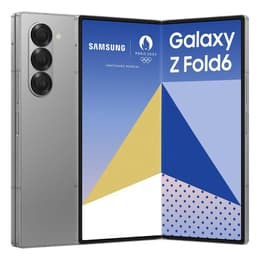
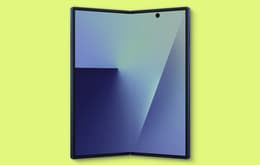
Galaxy Z Fold6
Galaxy Z Fold6
Starting at

Refurbished price:£524.00

Versus £1,685.59 new

See options
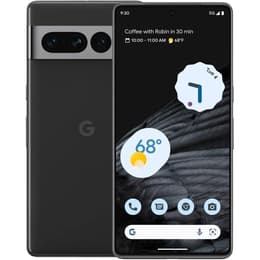
Google Pixel 7 Pro
Google Pixel 7 Pro
Starting at

Refurbished price:£169.75

Versus £899.99 new

See options

Ratings

The Samsung Galaxy Z Fold6, released in July 2024, and the Google Pixel 7 Pro, launched in October 2022, represent distinct approaches to the premium smartphone experience. While the Z Fold6 offers a unique foldable design that transforms a compact phone into a larger tablet-like display, the Pixel 7 Pro provides a traditional smartphone form factor with a strong emphasis on camera performance and a streamlined software experience. Both devices operate on the Android platform, but they offer different user interfaces and feature sets tailored to their respective designs and philosophies.

Scores

Durability

When considering the long-term usability of these devices, their release timelines and software support policies are key factors.

  • Release Timeline: The Galaxy Z Fold6, released in July 2024, is a newer device compared to the Google Pixel 7 Pro, which launched in October 2022. This difference in release date inherently provides the Z Fold6 with a longer potential lifespan for receiving the latest software features and security patches.
  • OS Support Duration: Samsung has committed to providing seven years of Android OS upgrades and security updates for the Galaxy Z Fold6. The Pixel 7 Pro, on the other hand, typically receives three major Android OS updates and five years of security updates from its release. This means the Z Fold6 is designed for a significantly extended period of software support.
  • Practical Lifespan: While both devices are built with durable materials, the Z Fold6's folding mechanism introduces additional mechanical considerations. However, advancements in foldable technology aim to enhance its resilience. The Pixel 7 Pro, with its conventional design, offers robust build quality with Gorilla Glass Victus on both front and back. Users prioritizing the longest possible software longevity will find the Z Fold6's update policy more appealing.

Year of Release

2024

2022

Compatible with latest Update

Yes

Yes

OS

Android

Android

Foldable

Yes

No

Performance

The performance of a smartphone is crucial for daily tasks, from browsing to demanding applications. Both devices offer capable hardware, but with different underlying architectures.

  • Processor Capabilities: The Galaxy Z Fold6 is equipped with a current-generation processor, enabling it to handle intensive applications, complex multitasking, and graphic-heavy gaming with smooth responsiveness. The Pixel 7 Pro features Google's custom-designed processor, which is optimized for artificial intelligence tasks and provides a fluid user experience for everyday operations and Google's unique software features.
  • Multitasking and Storage: Both devices come with 12 GB of RAM, facilitating efficient multitasking and quick app switching. Storage options for the Z Fold6 range from 256 GB to 1 TB, while the Pixel 7 Pro offers 128 GB, 256 GB, or 512 GB. Neither device supports expandable storage via microSD cards.
  • Battery Behavior: The Galaxy Z Fold6 houses a 4400 mAh battery, supporting wired, wireless, and reverse wireless charging. The Pixel 7 Pro has a larger 5000 mAh battery, also supporting fast wired, wireless, and reverse wireless charging. In typical usage, the Pixel 7 Pro generally offers a full day of power for most users.

Memory (GB)

12 GB

12 GB

Screen quality

The display is a primary interaction point, and these two phones offer distinct visual experiences.

  • Display Technology and Size: The Galaxy Z Fold6 features two Dynamic AMOLED 2X displays: a 7.6-inch main foldable screen and a 6.3-inch cover screen. This allows for a versatile viewing experience, switching between a traditional phone and a larger tablet-like canvas. The Pixel 7 Pro has a single 6.7-inch LTPO OLED display.
  • Resolution and Clarity: The Z Fold6's main display offers a resolution of 2160 x 1856 pixels, while its cover screen is 2376 x 968 pixels. The Pixel 7 Pro boasts a QHD+ resolution of 3120 x 1440 pixels, resulting in a high pixel density for sharp visuals.
  • Brightness and Smoothness: Both devices feature adaptive refresh rates up to 120Hz for smooth scrolling and responsiveness. The Z Fold6's displays can reach a peak brightness of up to 2,600 nits, providing excellent visibility even in bright outdoor conditions. The Pixel 7 Pro's display offers a peak brightness of up to 1500 nits, which is also suitable for outdoor use.

Resolution

1856 x 2160

1440 x 3120

Screen type

Foldable Dynamic LTPO AMOLED 2X

LTPO AMOLED

Audiovisual

Both smartphones offer advanced camera systems, but with different strengths and computational photography approaches.

  • Camera System Configuration: The Galaxy Z Fold6 features a triple rear camera setup: a 50 MP wide-angle lens, a 12 MP ultrawide lens, and a 10 MP telephoto lens with 3x optical zoom. It also has a 10 MP front camera on the cover screen and a 4 MP under-display camera on the main screen. The Pixel 7 Pro also has a triple rear camera system: a 50 MP wide-angle lens, a 12 MP ultrawide lens with autofocus and macro capabilities, and a 48 MP telephoto lens offering 5x optical zoom. Its front camera is 10.8 MP.
  • Photography Performance: The Z Fold6 utilizes Samsung's ProVisual Engine and AI-based image processing for enhanced photo quality across various lighting conditions, including Nightography and Pro mode. The Pixel 7 Pro excels in computational photography, leveraging its custom processor for features like Magic Eraser, Photo Unblur, and impressive Super Res Zoom up to 30x hybrid. Users often praise the Pixel's ability to produce consistent and natural-looking images.
  • Video Recording and Audio: Both devices are capable of high-quality video recording. The Z Fold6 offers various video modes, including Instant Slow-mo. The Pixel 7 Pro also provides strong video capabilities, with features like Cinematic Blur. Both phones offer stereo speakers for media consumption.

Main camera

50 megapixels

50 megapixels

Front camera

4 megapixels

10.8 megapixels

Miscellaneous

Beyond core features, several practical elements differentiate these two devices in daily use.

  • Connectivity and Ports: Both the Galaxy Z Fold6 and Pixel 7 Pro support 5G connectivity, modern Wi-Fi standards (Wi-Fi 6E for Z Fold6), and Bluetooth for wireless accessories. The Z Fold6 features a USB-C port, and the Pixel 7 Pro also uses USB-C for charging and data transfer. Neither device includes a traditional headphone jack.
  • Sensors and Security: The Z Fold6 incorporates a side-mounted fingerprint sensor, along with other sensors like accelerometer, gyro, proximity, and barometer. It also supports Ultra Wideband (UWB). The Pixel 7 Pro features an under-display optical fingerprint scanner and includes Google's Titan M2 security module for enhanced data protection. It also has UWB support.
  • Design and Handling: The Galaxy Z Fold6 has a unique foldable design, allowing it to be compact when folded (153.5 x 68.1 x 12.1 mm) and expansive when unfolded (153.5 x 132.6 x 5.6 mm), weighing 239 g. It supports S Pen input, though the stylus is not integrated. The Pixel 7 Pro is a traditional slab phone, measuring 162.9 x 76.6 x 8.9 mm and weighing 212 g. Its build includes Gorilla Glass Victus and an aluminum frame, with an IP68 rating for dust and water resistance. The Z Fold6 has an IP48 rating.

Weight

239 g

212 g

Screen size (in)

7.6

6.7

Mobile network

5G

5G

SIM card

Dual Physical SIM + eSIM

Physical SIM + eSIM

Carrier compatibility

Unlocked

Unlocked

The choice between the Samsung Galaxy Z Fold6 and the Google Pixel 7 Pro largely depends on individual priorities and desired user experience. The Galaxy Z Fold6 is often praised for its innovative foldable form factor, offering the versatility of a large screen in a portable package. Users appreciate the ability to multitask and consume media on its expansive inner display. Criticisms sometimes point to its weight and thickness when folded, and some users have noted that while its cameras are capable, they might not always match the absolute top-tier performance of some dedicated camera-focused flagships.

The Google Pixel 7 Pro, conversely, is frequently lauded for its exceptional camera system, particularly its computational photography capabilities that consistently produce high-quality images with minimal effort. Its clean Android experience and long-term software support are also strong points. Some users have mentioned the curved edges of its display as a minor drawback for usability, and while its processor is highly optimized for AI, it may not always benchmark as high as the latest chips in other premium devices for raw power.

Users prioritizing a cutting-edge, adaptable display for productivity and immersive content will find the Galaxy Z Fold6 well-suited to their needs. Its extended software support also makes it a compelling long-term investment. Conversely, users who value a traditional smartphone form factor with a focus on photographic excellence, a streamlined software experience, and robust build quality may lean towards the Google Pixel 7 Pro. Both devices offer a quality-assured refurbished option, providing a sustainable choice for consumers.

See all articles

Our recent comparisons