
Galaxy Z Fold4 Vs Google Pixel 7 Pro

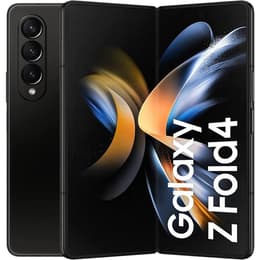
Galaxy Z Fold4
Galaxy Z Fold4
Starting at

Refurbished price:£352.00

Versus £1,889.00 new

See options
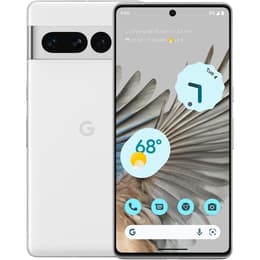
Google Pixel 7 Pro
Google Pixel 7 Pro
Starting at

Refurbished price:£169.75

Versus £899.99 new

See options

Ratings

The Samsung Galaxy Z Fold4 (released August 2022) and the Google Pixel 7 Pro (released October 2022) are both high-end Android smartphones, yet they offer distinct approaches to the mobile experience. The Galaxy Z Fold4 stands out with its innovative foldable design, transforming from a traditional smartphone into a larger tablet-like display, while the Pixel 7 Pro offers a more conventional, premium smartphone form factor with a strong emphasis on camera capabilities and a streamlined software experience. Both devices run on the Android operating system, though with different user interfaces and feature sets.

Scores

Durability

When considering the long-term usability of these devices, their release timelines and software support are key factors. Both phones were launched in late 2022, placing them at a similar point in their lifecycle.

  • Software Longevity: The Galaxy Z Fold4 is eligible for four major Android OS updates and five years of security updates, meaning it is expected to receive updates up to Android 16 and security patches until approximately August 2027. The Google Pixel 7 Pro typically receives three major Android OS updates and five years of security updates, also bringing its expected OS support to Android 16 and security updates until around October 2027.
  • Physical Durability: The Galaxy Z Fold4 features a unique foldable design with an Armor Aluminum frame and an IPX8 water resistance rating, though it lacks an official dust resistance rating. Its inner screen, being foldable, is more susceptible to scratches than a traditional glass display, showing marks at levels 2-3 on the Mohs hardness scale, while the outer screen with Gorilla Glass Victus+ scratches at levels 6-7. The Pixel 7 Pro utilizes Gorilla Glass Victus on both its front and back, offering scratch resistance at levels 6-7. However, durability tests have indicated that the Pixel 7 Pro's camera bar is prone to scratches, and the device showed significant flex in bend tests, which could potentially compromise its IP68 dust and water resistance over time.
  • Expected Lifespan: Both devices are designed for several years of use, with their software support extending to a similar timeframe. The Z Fold4's hinge mechanism has proven robust in stress tests, suggesting its folding design can withstand regular use. The Pixel 7 Pro's structural integrity, particularly its susceptibility to bending, suggests that users might benefit from a protective case to ensure its long-term physical condition.

Year of Release

2022

2022

Compatible with latest Update

Yes

Yes

OS

Android

Android

Foldable

Yes

No

Performance

The performance of both the Galaxy Z Fold4 and the Google Pixel 7 Pro is tailored to different user priorities, impacting how they handle daily tasks and demanding applications.

  • Processing Power: The Galaxy Z Fold4 is equipped with a processor that delivers smooth performance for everyday tasks, multitasking, and mobile gaming, showing improved power efficiency compared to its predecessor. The Pixel 7 Pro features a processor designed with a strong focus on machine learning and AI-powered features, which enhances tasks like real-time voice transcription and advanced photo processing. While it handles demanding applications and gaming, some users have noted potential battery drain during intensive use.
  • Multitasking and Storage: Both devices come with 12GB of RAM, providing ample capacity for running multiple applications simultaneously and switching between them efficiently. Storage options for both phones range from 128GB to 512GB, with the Z Fold4 also offering a 1TB option, catering to users with extensive storage needs for apps, media, and files.
  • Battery Behavior: The Galaxy Z Fold4, despite having a 4400 mAh battery, offers surprisingly good battery life for a foldable device, often lasting a full day for many users due to its efficient processor and display technology. The Pixel 7 Pro, with a 5000 mAh battery, generally provides a full day of use under typical conditions, with screen-on times averaging around 6 hours. However, heavy usage, particularly with the camera or in areas with poor cellular signal, can lead to faster battery depletion.

Memory (GB)

12 GB

12 GB

Screen quality

The display experience on the Galaxy Z Fold4 and the Pixel 7 Pro presents a fundamental difference in form factor and visual interaction.

  • Display Technology and Size: The Galaxy Z Fold4 features a dual-screen setup: a 7.6-inch Dynamic AMOLED 2X main foldable display and a 6.2-inch Dynamic AMOLED cover display. This allows for a versatile experience, offering a compact phone or an expansive tablet-like view. The Pixel 7 Pro has a single 6.7-inch LTPO OLED display, providing a large, traditional smartphone screen.
  • Resolution and Clarity: The Z Fold4's main display offers a resolution of 2176x1812 pixels, while its cover screen is 904x2316 pixels. The Pixel 7 Pro boasts a QHD+ resolution of 3120x1440 pixels, resulting in a high pixel density that delivers sharp and clear visuals.
  • Brightness and Smoothness: Both devices feature adaptive refresh rates up to 120Hz, ensuring smooth scrolling and responsive interactions. The Pixel 7 Pro's display is known for its high brightness and vibrant colors, performing well in various lighting conditions, including bright sunlight. The Z Fold4's displays also offer good brightness and color reproduction, with the main screen providing an immersive viewing experience. A notable characteristic of the Z Fold4's main display is the visible crease, which can be felt when interacting with the screen.

Resolution

1812 x 2176

1440 x 3120

Screen type

Foldable Dynamic AMOLED 2X

LTPO AMOLED

Audiovisual

Both smartphones offer advanced camera systems, but they excel in different aspects of photography and videography.

  • Rear Camera Systems: The Galaxy Z Fold4 features a triple rear camera setup, including a 50MP wide-angle lens with optical image stabilization (OIS), a 12MP ultrawide lens, and a 10MP telephoto lens capable of 3x optical zoom. This system is noted for producing vibrant, detailed photos and improved low-light performance compared to its predecessor. The Pixel 7 Pro also has a triple rear camera system, comprising a 50MP wide-angle lens with OIS, a 12MP ultrawide lens with autofocus, and a 48MP telephoto lens offering 5x optical zoom. It is highly praised for its computational photography, delivering excellent detail, dynamic range, and accurate skin tones, particularly in challenging lighting.
  • Front-Facing Cameras and Video: For selfies, the Z Fold4 has a 10MP camera on its cover display and a 4MP under-display camera on the main screen, with the cover camera offering better quality for general use. The Pixel 7 Pro features a 10.8MP ultrawide front camera. Both phones are capable of recording high-quality video, with the Z Fold4 supporting up to 8K at 24fps on its rear cameras and 4K at 60fps on its cover selfie camera. The Pixel 7 Pro records video up to 4K at 60fps, featuring cinematic stabilization and enhanced control over video settings.
  • Audio Experience: Both devices offer a good media consumption experience with stereo speakers. The Pixel 7 Pro's microphone quality is generally considered strong for calls and recordings.

Main camera

50 megapixels

50 megapixels

Front camera

4 megapixels

10.8 megapixels

Miscellaneous

Beyond core performance, several practical elements differentiate these two smartphones in daily use.

  • Connectivity and Ports: Both the Galaxy Z Fold4 and the Google Pixel 7 Pro support 5G connectivity, along with modern Wi-Fi standards and Bluetooth for wireless accessories. Both devices feature a USB-C port for charging and data transfer, but neither includes a traditional 3.5mm headphone jack.
  • Biometric Security: The Galaxy Z Fold4 incorporates a side-mounted fingerprint scanner for secure unlocking. The Pixel 7 Pro uses an under-display fingerprint scanner and also offers 2D image-based face recognition, which provides convenient unlocking in well-lit conditions.
  • Physical Attributes: The Galaxy Z Fold4 is a heavier device at 263 grams due to its folding mechanism and dual-screen design. When folded, its dimensions are 155.1 x 67.1 x 14.2-15.8 mm, and unfolded it measures 155.1 x 130.1 x 6.3 mm. The Pixel 7 Pro is lighter at 212 grams and has dimensions of 162.9 x 76.6 x 8.9 mm, offering a more conventional smartphone feel in hand. The Z Fold4's build materials include Armor Aluminum for its frame, contributing to its structural integrity.

Weight

263 g

212 g

Screen size (in)

7.6

6.7

Mobile network

5G

5G

SIM card

Dual Physical SIM + eSIM

Physical SIM + eSIM

Carrier compatibility

Unlocked

Unlocked

The Samsung Galaxy Z Fold4 and the Google Pixel 7 Pro cater to different user needs, each bringing distinct advantages to the smartphone market. User feedback for the Galaxy Z Fold4 often praises its innovative foldable form factor, which provides a large, immersive screen for productivity and media consumption, effectively combining a phone and a tablet. Many users appreciate the improved battery life and camera performance over previous foldable generations, finding it a compelling device for those who value screen real estate and multitasking capabilities. However, some users note the visible crease on the inner display and the device's heavier, thicker profile when folded as points of consideration.

The Google Pixel 7 Pro is frequently lauded for its exceptional camera system, particularly its computational photography features that deliver consistent, high-quality photos across various conditions, including impressive zoom capabilities and accurate skin tones. Users also value its clean Android experience and the integration of AI-powered features. Common criticisms include the camera bar's susceptibility to scratches and concerns about the device's structural rigidity in extreme bend tests, suggesting that a protective case is a practical accessory. Battery life is generally considered good for typical use, but heavy camera usage can lead to faster drain.

Users prioritizing a versatile device that can transform from a compact phone to a large-screen tablet for productivity and immersive media will find the Galaxy Z Fold4 well-suited to their needs. Its robust hinge and extended software support make it a strong contender for those seeking a cutting-edge, long-lasting foldable experience. Conversely, users who prioritize an outstanding camera, a streamlined software experience with advanced AI features, and a more traditional smartphone form factor will likely lean towards the Google Pixel 7 Pro. Both devices offer quality-assured refurbished options, providing an eco-friendly alternative for consumers looking to make informed and sustainable choices.
See all articles

Our recent comparisons