Compare models
Galaxy Z Flip7 Vs Google Pixel 9 Pro
- 1-year minimum warranty
- Free delivery on all items
- Free 30-day returns
Differences at a glance
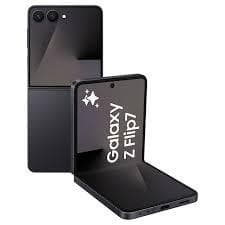
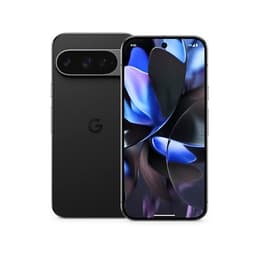
The Samsung Galaxy Z Flip7 and the Google Pixel 9 Pro represent two distinct smartphone philosophies released in 2025. While the Galaxy Z Flip7 offers a compact, foldable design that fits easily into small pockets, the Google Pixel 9 Pro delivers a traditional, rigid form factor focused on advanced computational photography and a streamlined software experience. Both devices operate on the Android ecosystem, yet they cater to entirely different user preferences regarding daily handling and form factor utility.
Available Models
Colour
Storage
Scores
Durability
Both devices are designed to last for several years, though their distinct physical structures introduce different considerations for long-term ownership and support timelines.
- Software Support: Both manufacturers provide extensive operating system update commitments, ensuring years of security updates and feature additions for long-term usability.
- Physical Durability: The Google Pixel 9 Pro features a traditional rigid glass and metal build with high water resistance ratings, whereas the Galaxy Z Flip7 incorporates a folding screen mechanism that requires careful handling over years of repeated bending.
- Repairability: Standard bar-type phones like the Pixel 9 Pro generally present simpler maintenance procedures compared to modern foldable devices, which require specialized screen replacements.
Year of Release
2025
2024
Compatible with latest Update
Yes
Yes
OS
Android
Android
Foldable
Yes
No
Performance
Under everyday conditions, both smartphones handle multitasking, streaming, and demanding applications smoothly, though they differ slightly in memory configuration and sustained thermal behavior.
- App Multitasking: Generous random access memory allocations on both models allow users to switch between dozens of open browser tabs and resource-heavy applications without stuttering or unexpected reloads.
- Storage and Battery: Users can select from multiple internal storage tiers to match their media habits, while battery capacities are tailored to support a full day of mixed usage under typical cellular and Wi-Fi conditions.
- System Responsiveness: Advanced mobile processors inside both devices ensure rapid app loading times and fluid navigation throughout the user interface.
Screen quality
Visual experiences differ significantly between the two models due to their contrasting display architectures, screen sizes, and folding capabilities.
- Display Technology: Both utilize vibrant organic light-emitting diode panels that deliver deep contrast levels and rich colors, with the Pixel 9 Pro offering a traditional flat glass layout and the Flip7 providing a flexible main screen alongside a useful exterior cover display.
- Outdoor Visibility: High peak brightness levels on both screens ensure content remains legible under direct sunlight, reducing glare during outdoor navigation or reading.
- Refresh Rate: Adaptive high refresh rates on both devices enable smooth scrolling through web pages and fluid animations during gaming or system navigation.
Resolution
1080x2520
1280 x 2856
Audiovisual
Photography and media capture capabilities reflect the distinct engineering goals of each manufacturer, balancing versatile hardware with software processing.
- Camera Systems: The Google Pixel 9 Pro features a dedicated multi-lens setup including a powerful telephoto zoom lens, while the Galaxy Z Flip7 relies on a dual-camera configuration optimized for everyday snapshots and flexible angles enabled by its folding hinge.
- Low-Light and Video: Advanced computational imaging on both devices produces clear images in dim environments and stable video recordings with detailed audio capture from built-in microphones.
- Media Consumption: Stereo speakers on both models deliver clear sound output for casual video watching and hands-free calls, though neither includes a traditional headphone jack.
Main camera
50 megapixels
50 megapixels
Front camera
10 megapixels
42 megapixels
Miscellaneous
Practical daily usability elements such as connectivity standards, physical dimensions, and security authentication shape how each device fits into a user's routine.
- Connectivity and Ports: Both models support current wireless standards including fifth-generation cellular networks and fast Wi-Fi, utilizing a modern reversible USB Type-C port for charging and data transfer.
- Security Sensors: Biometric authentication is handled via secure facial recognition and fingerprint scanners, positioned either under the display or integrated into the power button depending on the model.
- Physical Dimensions: The Galaxy Z Flip7 folds down into a square profile that prioritizes pocket space, whereas the Google Pixel 9 Pro maintains a standard slab footprint that provides a larger continuous viewing area when unfolded.
Weight
188 g
280 g
Screen size (in)
6.9
6.8
Mobile network
5G
5G
SIM card
Physical SIM + eSIM
Physical SIM + eSIM
Carrier compatibility
Unlocked
Unlocked
Connector
USB-C
USB-C
What the community thinks
Community discussions and user feedback highlight distinct patterns of appreciation for both smartphones. Users frequently praise the Google Pixel 9 Pro for its reliable camera versatility, clean software interface, and robust feel. Meanwhile, Galaxy Z Flip7 owners frequently highlight the convenience of the compact folding design, noting how easily it slips into small bags or pockets while offering a unique cover screen for quick notifications. Frequent criticisms for the foldable model often center around the visible crease on the main screen and shorter battery endurance under heavy use, while Pixel users occasionally note the larger physical footprint in hand.
Users prioritizing a compact, pocket-friendly footprint and a novel folding experience will find the Galaxy Z Flip7 well-suited to their needs, while users prioritizing advanced zoom photography and a traditional display layout may lean toward the Google Pixel 9 Pro. For those seeking a quality-assured refurbished option, exploring eco-friendly alternatives on Back Market can make obtaining either device a sustainable choice.