Compare models

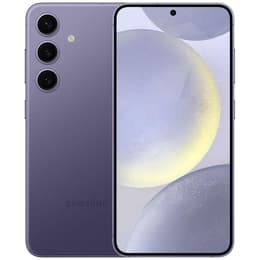
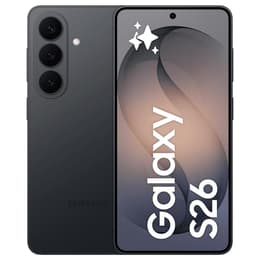
Galaxy S24 Vs Galaxy S26

  • 1-year minimum warranty
  • Free delivery on all items
  • Free 30-day returns
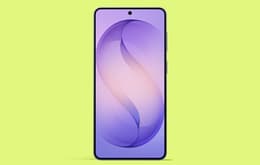
Galaxy S24
Starting at

Refurbished price:£279.00

Versus £854.48 new

See options
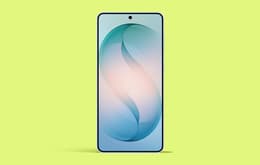
Galaxy S26
Starting at

Refurbished price:£563.00

Versus £999.00 new

See options

Differences at a glance

The Samsung Galaxy S24 (2024) and the Samsung Galaxy S26 (2026) represent two generations of compact flagship smartphones from Samsung's established lineup. While both devices share a similar philosophy of packing advanced capabilities into pocket-friendly builds, the newer model introduces refined internal components, a slightly larger screen within a similar footprint, and newer software baseline options. Both devices run the Android operating system paired with Samsung's custom interface, though they launch with different out-of-the-box software versions reflecting their release years. Choosing between them depends on how you weigh generational refinements in everyday interaction against established capabilities.

Available Models

Colour

Storage (GB)

Scores

Durability

When evaluating lifespan and maintenance, these two smartphones differ primarily in their release timelines and corresponding software support windows. Selecting a quality-assured refurbished option provides a sustainable choice that extends device utility while matching individual feature preferences.

  • Release timeline: The Galaxy S24 launched in early 2024, while the Galaxy S26 debuted two years later in early 2026, meaning the newer model benefits from an extended software support lifecycle from its launch date.
  • Software updates: Both devices receive multi-year operating system upgrades and security patches, but the Galaxy S26 extends active manufacturer support further into the future due to its newer release schedule.
  • Repairability: Both models utilize standard modern smartphone construction with glued glass panels and internal modular components, yielding comparable repair scores when serviced by professional technicians.

Year of Release

2024

2026

Compatible with latest Update

Yes

Yes

OS

Android

Android

Foldable

No

No

Performance

In daily usage, both smartphones handle demanding tasks, rapid app switching, and casual mobile gaming without noticeable friction, though the newer model provides additional headroom for resource-intensive processes. Storage configurations and battery behaviors vary between the two generations.

  • Multitasking and storage: The Galaxy S24 offers baseline configurations starting with lower internal storage options alongside standard memory, whereas the Galaxy S26 begins its storage lineup at higher capacities and includes increased RAM for smoother background app retention.
  • System responsiveness: Applications launch instantly and complex software runs fluidly on both devices, though the Galaxy S26 benefits from a more advanced processor that manages thermal efficiency during extended heavy tasks.
  • Battery behavior: The Galaxy S26 features a slightly larger battery capacity paired with power-efficient components, translating to reliable full-day usage under typical conditions, whereas heavy users of the Galaxy S24 may require a midday top-up depending on screen-on time.

Screen quality

Visual output is a core strength for both devices, utilizing advanced display panels that deliver crisp text, deep contrast levels, and vibrant color reproduction for media consumption and reading.

  • Display technology: Both models use vibrant OLED panels with high refresh rates that ensure smooth scrolling through web pages, social media feeds, and user interfaces.
  • Size and dimensions: The Galaxy S24 features a compact 6.2-inch display, while the Galaxy S26 slightly expands the screen area to 6.3 inches by narrowing the surrounding bezels without significantly increasing the physical phone size.
  • Outdoor visibility: High peak brightness capabilities on both screens ensure that content remains legible and clear even under direct sunlight or bright outdoor environments.

Resolution

1080 x 2340

1080 x 2340

Audiovisual

Both smartphones provide versatile camera arrays capable of capturing detailed high-resolution photographs and stable video recordings across various lighting scenarios.

  • Camera hardware: Both models rely on a dependable multi-lens rear setup featuring a high-resolution main wide sensor, an ultra-wide lens for landscapes, and a telephoto lens with optical zoom capabilities.
  • Everyday and low-light photography: Image processing software on both devices balances shadows and highlights effectively, producing clear shots in daylight and utilizing computational night modes to reduce grain in dark settings.
  • Audio and video: Built-in stereo speakers deliver balanced sound for media playback and hands-free calls, while integrated multi-microphone arrays capture clear voice audio during video recordings and phone conversations.

Front camera

12 megapixels

12.0

Miscellaneous

Practical physical and connectivity attributes determine how each device integrates into daily routines, travel, and accessories usage.

  • Connectivity standards: Both smartphones support fast 5G cellular networks, modern Wi-Fi standards for home networks, and Bluetooth for connecting wireless headphones and accessories.
  • Ports and biometrics: Both models utilize reversible USB-C ports for charging and data transfer, and incorporate rapid biometric authentication via secure under-display fingerprint sensors and facial recognition.
  • Build and handling: Both devices combine durable glass backs with sturdy metallic frames and official water resistance ratings, maintaining a comfortable, ergonomic grip for single-handed operation.

Weight

167 g

167 g

Screen size (in)

6.2

6.3

Mobile network

5G

5G

SIM card

Dual Physical SIM + eSIM

Dual Physical SIM + eSIM

Carrier compatibility

Unlocked

Unlocked

What the community thinks

User feedback from online communities highlights distinct praise and critique points for both smartphones. Owners of the Galaxy S24 frequently praise its genuinely compact form factor, reliable everyday speed, and balanced camera system, though some users note that heavy usage drains the battery before the end of the day. Conversely, users of the Galaxy S26 highlight the expanded screen estate within a nearly identical physical footprint, improved multitasking stability, and extended battery endurance, while noting that the camera hardware upgrades are incremental compared to the previous generation.

Users prioritizing maximum software longevity, higher baseline storage, and optimized power efficiency may prefer the Galaxy S26, while those seeking a pocket-friendly device with core flagship capabilities at a different stage of its lifecycle will find the Galaxy S24 well-suited to their needs. Eco-conscious buyers can explore quality-assured refurbished options for either model to make a sustainable choice without compromising on core performance.