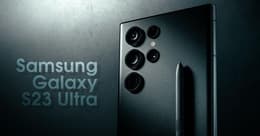
Galaxy S23 Ultra Vs Galaxy S25+

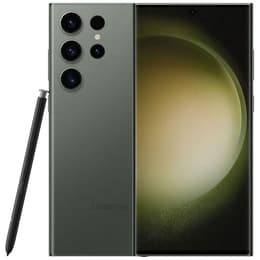
Galaxy S23 Ultra
Galaxy S23 Ultra
Starting at

Refurbished price:£299.00

Versus £1,599.00 new

See options
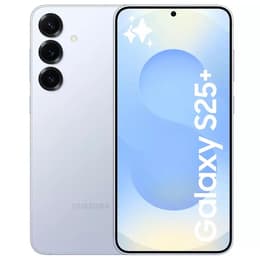
Galaxy S25+
Galaxy S25+
Starting at

Refurbished price:£550.00

Versus £958.39 new

See options

Ratings

The Samsung Galaxy S23 Ultra, released in February 2023, and the Samsung Galaxy S25 Plus, launched in February 2025, represent different tiers within Samsung's flagship smartphone offerings. While the S23 Ultra was a top-tier device at its release, featuring advanced camera capabilities and an integrated stylus, the S25 Plus, as a newer model, brings updated internal components and software enhancements. Both devices operate on the Android platform, offering a familiar user experience with Samsung's One UI.

For those considering an eco-friendly alternative, both models are available as quality-assured refurbished options, providing a sustainable choice for consumers.

Scores

Durability

When evaluating the longevity of these devices, several factors come into play, including their release timelines, software support, and physical resilience.

  • Release Timeline: The Galaxy S23 Ultra was released in February 2023, making it a two-year-old device at the time of the S25 Plus's launch in February 2025. This two-year difference directly impacts their expected software support cycles.
  • OS Support Duration: The Galaxy S25 Plus launched with Android 15, and Samsung typically provides several years of major OS updates and security patches for its flagship devices. The S23 Ultra, having launched with Android 13, will receive fewer future OS updates compared to the S25 Plus. Samsung has promised 7 years of OS and security updates to the S25 series of phones.
  • Physical Durability: Both models feature an IP68 rating for dust and water resistance, indicating protection against immersion in up to 1.5 meters of fresh water for 30 minutes. The S23 Ultra incorporates Gorilla Glass Victus 2 on its front and back, along with an Armor Aluminum Frame. The S25 Plus also uses Gorilla Glass Victus 2 for its display and back, paired with a standard aluminum frame.

Year of Release

2023

2025

OS

Android

Android

Foldable

No

No

Performance

The performance of a smartphone is largely dictated by its internal processing power, which influences app responsiveness, multitasking capabilities, and gaming experiences.

  • Processor Capabilities: The Galaxy S23 Ultra is powered by a custom version of a previous-generation Snapdragon processor, optimized for Galaxy devices, which provides robust performance for demanding applications and smooth multitasking. The Galaxy S25 Plus features a newer generation Snapdragon 8 Elite processor, which offers significant improvements in CPU performance and power efficiency. This newer chipset ensures a notable leap in performance, resulting in smoother animations and enhanced AI capabilities.
  • Multitasking and Storage: The S23 Ultra is available with 8GB or 12GB of RAM, and storage options up to 1TB. The S25 Plus comes with 12GB of RAM as standard, and offers 256GB or 512GB storage variants. The higher standard RAM in the S25 Plus can contribute to more fluid multitasking, especially with numerous applications open simultaneously.
  • Real-world Usage: Users of the S23 Ultra generally experience quick app loading and efficient handling of graphics-intensive games. The S25 Plus, with its more advanced processor, delivers even faster performance and improved power efficiency, making it well-suited for future demanding applications and advanced AI features.

Memory (GB)

8 GB

12 GB

Screen quality

The display is a primary interface for smartphone interaction, and both devices offer high-quality viewing experiences with some key distinctions.

  • Display Technology and Resolution: Both the Galaxy S23 Ultra and the Galaxy S25 Plus feature Dynamic AMOLED 2X displays, known for their vibrant colors and deep blacks. The S23 Ultra has a 6.8-inch display with a QHD+ resolution of 3088 x 1440 pixels. The S25 Plus features a slightly smaller 6.7-inch display, also with a QHD+ resolution of 3120 x 1440 pixels.
  • Brightness and Refresh Rate: Both models offer an adaptive refresh rate of up to 120Hz, providing smooth scrolling and fluid animations. The S23 Ultra reaches a peak brightness of 1750 nits. The S25 Plus boasts a higher peak brightness of 2600 nits, which can improve visibility in bright outdoor conditions.
  • Viewing Experience: The S23 Ultra's larger screen size offers a more expansive canvas for media consumption and productivity. The S25 Plus, despite being slightly smaller, maintains a high-resolution and high-brightness display, ensuring a clear and vibrant viewing experience.

Resolution

1440 x 3088

1440x3120

Audiovisual

Camera capabilities are a significant consideration for many users, and these two Samsung devices offer distinct photographic strengths.

  • Rear Camera Systems: The Galaxy S23 Ultra features a versatile quad-camera setup, highlighted by a 200MP main sensor, a 12MP ultrawide camera, and two 10MP telephoto lenses offering 3x and 10x optical zoom. The Galaxy S25 Plus comes with a triple-camera system, including a 50MP main sensor, a 12MP ultrawide camera, and a 10MP telephoto lens with 3x optical zoom.
  • Photography Performance: The S23 Ultra's 200MP main sensor allows for highly detailed images and greater flexibility for cropping. Its dual telephoto lenses provide superior optical zoom capabilities for capturing distant subjects. The S25 Plus, while having a lower megapixel count on its main sensor, benefits from newer software optimizations and processing, which can enhance image quality and post-production tools. Both devices offer strong low-light performance and vibrant color reproduction.
  • Video Recording and Front Camera: Both models are capable of recording high-resolution video, with the S23 Ultra supporting 8K video at 30fps. Both devices feature a 12MP front-facing camera for selfies and video calls.

Miscellaneous

Beyond the core specifications, several other features contribute to the overall user experience and practical utility of these smartphones.

  • Connectivity and Ports: Both devices support 5G connectivity, Wi-Fi, and Bluetooth for wireless communication. The S23 Ultra features Wi-Fi 6E and Bluetooth 5.3, along with a USB-C 3.2 port. The S25 Plus likely supports newer Wi-Fi standards and Bluetooth versions, offering potentially faster and more stable connections. Both utilize a USB-C port for charging and data transfer.
  • Biometric Security: Both smartphones incorporate an under-display ultrasonic fingerprint sensor for secure unlocking and authentication. They also offer face recognition capabilities.
  • Unique Features and Design: A key differentiator for the S23 Ultra is its integrated S Pen stylus, which offers enhanced productivity for note-taking, drawing, and navigation. The S25 Plus does not include an S Pen. In terms of physical design, the S23 Ultra has dimensions of 163.4 x 78.1 x 8.9 mm and weighs 233-234g. The S25 Plus is lighter at 190 grams.

Weight

234 g

190 g

Screen size (in)

6.8

6.7

Mobile network

5G

5G

SIM card

Dual Physical SIM + eSIM

Dual Physical SIM

Carrier compatibility

Unlocked

Unlocked

User feedback for the Galaxy S23 Ultra often praises its exceptional camera system, particularly the zoom capabilities, and the versatility offered by the integrated S Pen. Its long battery life and powerful performance for gaming and demanding tasks are also frequently highlighted. Some users, however, have noted its substantial size and weight. For the Galaxy S25 Plus, common praise points revolve around its enhanced processing power, brighter display, and the overall refinement of the user experience. Criticisms, if any, might focus on the camera hardware not seeing a significant megapixel upgrade from its predecessor, though software improvements are acknowledged.

Users who prioritize a highly versatile camera system with extensive zoom capabilities and the unique functionality of an integrated stylus will find the Galaxy S23 Ultra well-suited to their needs. Its larger form factor also appeals to those who prefer a more expansive screen. Conversely, users seeking the latest in processing power, a brighter display for outdoor visibility, and a slightly lighter device will likely lean towards the Galaxy S25 Plus. Its newer software and extended update support also make it a compelling choice for those focused on long-term software longevity. Both devices offer robust performance and premium features, and considering a quality-assured refurbished option can be a smart, sustainable way to acquire either model.

See all articles

Our recent comparisons