Galaxy S22+ 5G Vs Galaxy S25 Ultra

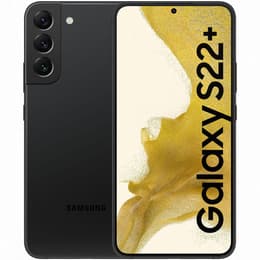
Galaxy S22+ 5G
Galaxy S22+ 5G
Starting at

Refurbished price:£166.00

Versus £1,174.01 new

See options
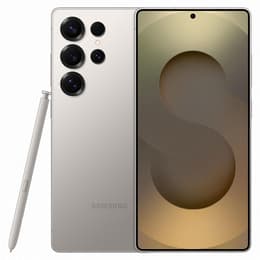
Galaxy S25 Ultra
Galaxy S25 Ultra
Starting at

Refurbished price:£649.00

Versus £1,249.00 new

See options

Ratings

The Samsung Galaxy S22 Plus 5G, released in February 2022, and the Samsung Galaxy S25 Ultra, launched in February 2025, represent different generations within Samsung's premium smartphone lineup. While both devices operate on the Android platform, the S25 Ultra, as a more recent and higher-tier model, introduces advancements in display technology, camera capabilities, and long-term software support. This comparison will explore the practical differences between these two devices to help users determine which aligns best with their needs.

Scores

Durability

When considering the longevity of a smartphone, both software support and physical durability play significant roles. The Galaxy S22 Plus 5G, released in early 2022, benefits from Samsung's commitment to software updates, having received several major Android OS upgrades since its launch. The Galaxy S25 Ultra, being a 2025 release, offers a substantially longer period of guaranteed software and security updates.

  • Software Longevity: The Galaxy S25 Ultra is promised seven years of major Android OS and security updates, extending its support well into the next decade. The Galaxy S22 Plus 5G, while still receiving updates, is nearing the end of its major OS upgrade cycle, typically receiving four generations of Android updates from its release.
  • Physical Durability: Both devices feature robust builds with IP68 ratings for dust and water resistance. The S22 Plus 5G utilizes Gorilla Glass Victus+ for screen protection, while the S25 Ultra incorporates newer Gorilla Glass Armor and a titanium frame, offering enhanced resistance against drops and scratches.
  • Practical Lifespan: Users prioritizing the absolute latest software features and security patches for the longest possible duration will find the S25 Ultra more future-proof. The S22 Plus 5G remains a capable device, but its software support window is closing, meaning it will eventually cease to receive new Android versions, though security updates may continue for a period.

Year of Release

2022

2025

Compatible with latest Update

Yes

Yes

OS

Android

Android

Foldable

No

No

Performance

The performance of a smartphone is crucial for daily operations, from launching applications to managing multiple tasks simultaneously. Both the Galaxy S22 Plus 5G and the Galaxy S25 Ultra are designed to deliver a smooth user experience, though the newer model incorporates more advanced internal components.

  • Everyday Responsiveness: The Galaxy S25 Ultra provides a highly responsive experience, handling demanding applications and intensive multitasking with ease, ensuring a fluid interaction even with complex tasks. The Galaxy S22 Plus 5G also offers strong performance for everyday use, with smooth navigation and efficient app loading, though it may show its age when running the most graphically intensive games or applications.
  • Multitasking and Storage: The S25 Ultra typically comes with a higher base RAM configuration, often 12GB or 16GB, which allows for more applications to run in the background without slowdowns. It also offers larger storage options, up to 1TB. The S22 Plus 5G usually features 8GB of RAM and storage options up to 256GB, which is sufficient for most users but offers less headroom for extensive multitasking or large media libraries.
  • Battery Behavior: The Galaxy S25 Ultra is equipped with a 5000 mAh battery, which, combined with its efficient processor, often translates to extended usage times, with some users reporting up to 1.5 days on a single charge. The S22 Plus 5G has a 4500 mAh battery, providing solid all-day power for moderate users, though heavy usage might necessitate a midday recharge. Both support fast wired and wireless charging.

Memory (GB)

8 GB

12 GB

Screen quality

The display is a primary interface for any smartphone, and both Samsung devices offer high-quality viewing experiences, though with notable differences in their specifications and capabilities.

  • Display Technology and Clarity: Both phones feature Dynamic AMOLED 2X displays, known for their vibrant colors and deep blacks. The Galaxy S25 Ultra boasts a larger 6.9-inch screen with a sharper QHD+ resolution (1440 x 3120 pixels), resulting in a higher pixel density and finer detail. The S22 Plus 5G has a 6.6-inch screen with an FHD+ resolution (1080 x 2340 pixels), which still provides a clear and enjoyable viewing experience for most content.
  • Brightness and Outdoor Visibility: The S25 Ultra offers a significantly higher peak brightness of up to 2600 nits, along with an anti-reflective coating, making it exceptionally legible even in direct sunlight. The S22 Plus 5G also provides excellent brightness at up to 1750 nits, ensuring good visibility in various lighting conditions, but the S25 Ultra holds an advantage in extremely bright environments.
  • Refresh Rate and Smoothness: Both devices feature a 120Hz adaptive refresh rate, which contributes to smooth scrolling, fluid animations, and a responsive touch experience. The S25 Ultra's display also incorporates LTPO technology, allowing for more dynamic adjustment of the refresh rate to conserve battery life more efficiently.

Resolution

1080 x 2340

1440x3120

Audiovisual

Photography and videography capabilities are often key differentiators for premium smartphones, and both the Galaxy S22 Plus 5G and the Galaxy S25 Ultra offer versatile camera systems, with the Ultra model featuring more advanced hardware.

  • Main Camera System: The Galaxy S25 Ultra features a quad-camera setup, highlighted by a 200MP main sensor, a 50MP ultrawide lens, a 50MP periscope telephoto lens with 5x optical zoom, and a 10MP telephoto lens with 3x optical zoom, offering extensive versatility and detail. The S22 Plus 5G comes with a triple-camera system, including a 50MP main sensor with optical image stabilization (OIS), a 12MP ultrawide, and a 10MP telephoto lens with 3x optical zoom, capable of producing high-quality images in good lighting.
  • Low-Light and Video Performance: The S25 Ultra generally excels in low-light conditions due to its larger sensors and advanced processing, capturing more detail and brighter images. It also offers enhanced video recording features and stability. While the S22 Plus 5G performs well in daylight, its low-light photography may not match the newer Ultra model, and its video capabilities, while strong, are a generation behind. Both support 8K video recording.
  • Front Camera and Audio: The S25 Ultra features a 12MP front camera, while the S22 Plus 5G has a 10MP front camera, both capable of clear selfies and video calls. For audio, both devices provide stereo speakers for an immersive media consumption experience, and their microphones are suitable for calls and basic recording.

Front camera

10 megapixels

12

Miscellaneous

Beyond core performance and display, several practical elements contribute to the overall user experience, including connectivity, physical design, and additional features.

  • Connectivity and Ports: The Galaxy S25 Ultra supports the latest Wi-Fi 7 standard, offering faster and more reliable wireless connections, alongside 5G capabilities. The S22 Plus 5G supports Wi-Fi 6 and 5G, which are still robust for current network infrastructures. Both devices utilize a USB-C port for charging and data transfer, and neither includes a traditional headphone jack.
  • Dimensions and Handling: The S25 Ultra is a larger and slightly heavier device, measuring 162.8 x 77.6 x 8.2 mm and weighing 218g, which might appeal to users who prefer a more expansive screen. The S22 Plus 5G is more compact at 157.4 x 75.8 x 7.6 mm and 196g, offering a more manageable size for one-handed use for some individuals.
  • Security and Build Materials: Both phones feature in-display fingerprint sensors and face recognition for secure unlocking. The S25 Ultra incorporates a titanium frame and Gorilla Glass Armor 2, providing a premium feel and enhanced durability. The S22 Plus 5G uses an aluminum frame and Gorilla Glass Victus+, also offering a solid and premium build.

Weight

195 g

233 g

Screen size (in)

6.6

6.9

Mobile network

5G

5G

SIM card

Physical SIM + eSIM

Dual Physical SIM + eSIM

Carrier compatibility

Unlocked

Unlocked

Connector

USB-C

USB-C

The Samsung Galaxy S22 Plus 5G and the Galaxy S25 Ultra cater to different user expectations and priorities. The S22 Plus 5G, despite being an older model, continues to be a capable device, praised by users for its stunning display, solid performance for daily tasks, and good camera in well-lit conditions. Common feedback notes its battery life is sufficient for moderate use, though heavy gaming can lead to heating, and its low-light camera performance is not its strongest suit.

The Galaxy S25 Ultra, as the newer flagship, receives acclaim for its exceptional display with superior brightness and anti-reflective properties, extended battery life, and the inclusion of advanced AI features. Users appreciate its smooth performance and versatile camera system, though some reviews mention that the hardware upgrades over its immediate predecessor might not feel revolutionary, and some S Pen features might be missed by certain users.

Users prioritizing the longest possible software support, cutting-edge display technology, and the most advanced camera system, particularly for zoom and low-light photography, may find the Galaxy S25 Ultra well-suited to their needs. Its larger screen and enhanced durability features also appeal to those seeking a premium, expansive experience. Conversely, users who prefer a slightly more compact device, still desire strong performance for everyday tasks, and are comfortable with a shorter remaining software update window, may find the Galaxy S22 Plus 5G to be a suitable option. For those considering a sustainable choice, both models are available as quality-assured refurbished options, offering an eco-friendly alternative to purchasing new.


See all articles

Our recent comparisons