
Compare models
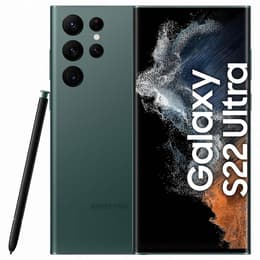
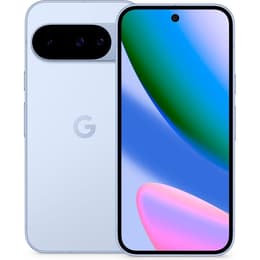
Galaxy S22 Ultra 5G Vs Google Pixel 10
- 1-year minimum warranty
- Free delivery on all items
- Free 30-day returns
Differences at a glance
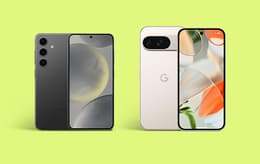
The Samsung Galaxy S22 Ultra 5G (2022) and the Google Pixel 10 (2025) represent different generations and philosophies within the premium smartphone landscape. While the Galaxy S22 Ultra 5G emphasizes a productivity-focused build with an integrated stylus and a versatile multi-lens camera system, the Google Pixel 10 focuses on streamlined artificial intelligence integration and a clean software experience. Both devices run on the Android operating system, though they offer distinct interface customizations and long-term software support timelines.
Available Models
Colour
Storage (GB)
Scores
Durability
When evaluating the longevity and maintenance of these two smartphones, release timelines and software update schedules play a central role in determining their active lifespan.
- Software support timeline: The Google Pixel 10 benefits from an extended software update schedule spanning multiple years, ensuring current security features and system upgrades. The Galaxy S22 Ultra 5G has a shorter remaining official support window given its earlier release year, though it continues to receive standard security patches.
- Repairability and durability: Both handsets feature robust construction materials, including reinforced glass and aluminum frames, alongside official water resistance ratings. Professional repair services maintain standard component availability for both models, supporting extended hardware use through quality-assured refurbished options that reduce electronic waste.
Year of Release
2022
2025
Compatible with latest Update
Yes
Yes
OS
Android
Android
Foldable
No
No
Performance
Daily operation, multitasking smoothness, and energy management differ between these devices due to variations in internal hardware and processor generations.
- Multitasking and app responsiveness: The Google Pixel 10 handles demanding applications, intensive multitasking, and background processes smoothly thanks to its contemporary processor. The Galaxy S22 Ultra 5G remains capable for everyday tasks and heavy workloads, though its processor generation reflects an earlier hardware standard.
- Storage and battery behavior: Both devices offer varied internal storage configurations without expandable memory slots. The Galaxy S22 Ultra 5G features a larger physical battery capacity to power its expansive screen, whereas the Google Pixel 10 relies on efficient power management to sustain a full day of typical use under mixed conditions.
Screen quality
Visual output and display characteristics vary significantly in size, technology implementation, and everyday viewing comfort.
- Display technology and clarity: Both smartphones utilize advanced OLED panel technology, delivering deep black levels, high contrast, and vivid color reproduction suitable for media consumption. The Galaxy S22 Ultra 5G features a larger, curved screen with a high resolution, whereas the Google Pixel 10 presents a flat display panel tailored for comfortable single-handed navigation.
- Outdoor brightness and responsiveness: Both displays achieve high peak brightness levels to maintain legibility under direct sunlight. Variable refresh rate technology ensures fluid scrolling through web pages and smooth animation transitions during regular system navigation on both handsets.
Resolution
1440 x 3088
1080x2424
Screen type
Dynamic AMOLED 2X
OLED
Audiovisual
Photography and media recording capabilities highlight different approaches to image processing and hardware configurations.
- Camera system versatility: The Galaxy S22 Ultra 5G includes a dedicated multi-lens setup featuring dual telephoto lenses for extended optical zoom range, alongside a high-resolution main sensor and an ultra-wide lens. The Google Pixel 10 prioritizes computational photography algorithms, delivering consistent everyday images, reliable low-light performance, and balanced portrait effects with fewer physical lenses.
- Video and audio performance: Both devices support high-definition and high-frame-rate video recording equipped with digital stabilization features. Integrated microphones capture clear audio during calls and video capture, while built-in stereo speakers provide balanced sound output for casual media playback.
Front camera
40 megapixels
42 megapixels
Miscellaneous
Practical physical characteristics, connectivity standards, and daily handling features shape the overall user experience.
- Connectivity and ports: Both models support current 5G cellular networks, modern Wi-Fi standards, and Bluetooth for accessory pairing, utilizing reversible USB Type-C ports for charging and data transfer.
- Design and physical handling: The Galaxy S22 Ultra 5G features a larger, heavier chassis designed to accommodate an internal stylus slot, making it well-suited for note-taking and precise drawing tasks. In contrast, the Google Pixel 10 offers a more compact, rounded physical profile that rests lighter in the hand for daily portability.
Weight
228 g
204 g
Screen size (in)
6.8
6.3
Mobile network
5G
5G
SIM card
Physical SIM + eSIM
eSIM
Carrier compatibility
Unlocked
Unlocked
What the community thinks
User community discussions and long-term feedback highlight distinct preferences for each device. Owners of the Galaxy S22 Ultra 5G frequently praise its expansive display, integrated stylus functionality, and versatile zoom capabilities, while noting that its larger physical footprint can feel heavy during extended one-handed use. Conversely, Google Pixel 10 users often emphasize the clean software environment, reliable automated photography features, and efficient daily battery handling, though some miss the specialized optical zoom reach found on older ultra-tier models.
Users prioritizing productivity tools, large screen estate, and multi-range optical zoom will find the Galaxy S22 Ultra 5G well-suited to their daily routines. Meanwhile, users focusing on streamlined software, extended update longevity, and a lighter physical build may lean toward the Google Pixel 10. Choosing a quality-assured refurbished device provides an eco-friendly alternative that extends product lifecycles while delivering fully tested hardware performance.