
Galaxy S21 Ultra 5G Vs OnePlus 10 Pro

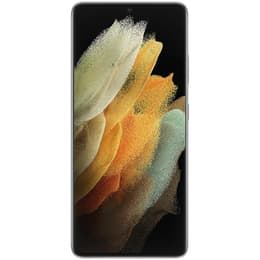
Galaxy S21 Ultra 5G
Galaxy S21 Ultra 5G
Starting at

Refurbished price:£193.00

Versus £1,149.00 new

See options
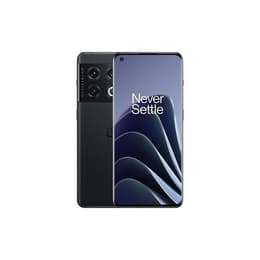
OnePlus 10 Pro
OnePlus 10 Pro
Starting at

Refurbished price:£231.00

Versus £899.00 new

See options

Ratings

The Samsung Galaxy S21 Ultra 5G, released in January 2021, and the OnePlus 10 Pro, which launched globally in March/April 2022, are both high-end Android smartphones designed to offer a comprehensive mobile experience. While both devices feature powerful internals and advanced displays, they differentiate themselves through their camera philosophies, software approaches, and subtle design choices.

Scores

Durability

When considering the long-term usability of a smartphone, factors like software support and physical durability are key. These two devices offer different timelines for software updates and present varying levels of repairability.

  • Software Longevity: The Samsung Galaxy S21 Ultra 5G, initially running Android 11, has received updates up to Android 14. Samsung typically provides four major OS upgrades and five years of security updates for its flagship devices, suggesting continued support for a reasonable period. The OnePlus 10 Pro, launched with Android 12, is expected to receive three major Android version upgrades and four years of security updates, extending its support to Android 15.
  • Repairability: The Galaxy S21 Ultra 5G received a repairability score of 3 out of 10 from iFixit, primarily due to the extensive use of adhesive for the battery and display, and a non-modular display cable, making repairs challenging. The OnePlus 10 Pro has been noted with repairability scores ranging from 6/10 to 8.0/10, indicating a somewhat easier repair process for certain components like the battery and screen, though adhesive use is still present.
  • Physical Durability: Both phones feature glass backs, with the S21 Ultra using Gorilla Glass Victus. The OnePlus 10 Pro also uses Gorilla Glass Victus for screen protection. However, the OnePlus 10 Pro faced notable concerns regarding its structural integrity in bend tests, with some reports indicating it could snap under significant pressure.

Year of Release

2021

2022

Compatible with latest Update

Yes

Yes

OS

Android

Android

Foldable

No

No

Performance

Both the Galaxy S21 Ultra 5G and the OnePlus 10 Pro are equipped with powerful components designed for demanding tasks, though their real-world performance and battery management exhibit some differences.

  • Processing Power: The Galaxy S21 Ultra 5G is powered by a processor that handles intensive applications and multitasking efficiently, ensuring a smooth user experience across various activities. The OnePlus 10 Pro features a newer generation processor, providing robust performance for gaming and heavy application usage, with a responsive interface.
  • Multitasking Capabilities: The Galaxy S21 Ultra 5G offers generous RAM configurations, with options up to 16GB, which contributes to seamless multitasking and app switching. The OnePlus 10 Pro comes with up to 12GB of RAM, also enabling smooth operation even with multiple applications running simultaneously.
  • Battery Performance: The Galaxy S21 Ultra 5G includes a 5000mAh battery, capable of lasting a full day for many users, even with the high-resolution, high-refresh-rate display enabled. Users have reported around 6-7 hours of screen-on time under these conditions. The OnePlus 10 Pro also features a 5000mAh battery, with user reports indicating it can last approximately 5-6 hours of screen-on time with moderate use, and up to 43 hours between charges on average with about three hours of 5G usage.
  • Charging Speed: The Galaxy S21 Ultra 5G supports 25W wired and 15W wireless charging. The OnePlus 10 Pro offers significantly faster charging, with 80W wired charging (65W in North America) and 50W wireless charging, allowing for quicker power replenishment.

Memory

12 GB

8 GB

Screen quality

Both smartphones offer high-quality displays, providing vibrant visuals and smooth interactions, though with some distinctions in their underlying technology and brightness levels.

  • Display Technology and Clarity: The Samsung Galaxy S21 Ultra 5G features a 6.8-inch Dynamic AMOLED 2X display, offering a QHD+ resolution (3200x1440 pixels) with a pixel density of 515ppi. This results in sharp images and text, along with deep blacks and vibrant colors. The OnePlus 10 Pro comes with a 6.7-inch Fluid AMOLED display, also boasting a QHD+ resolution (3216x1440 pixels) and a pixel density of 525ppi, delivering a similarly clear and colorful viewing experience.
  • Adaptive Refresh Rate: The S21 Ultra's display features an adaptive refresh rate that can dynamically adjust from 10Hz to 120Hz, optimizing for both smooth scrolling and power efficiency depending on the content. The OnePlus 10 Pro utilizes second-generation LTPO technology, allowing its refresh rate to vary even more widely, from 1Hz to 120Hz, which further aids in battery conservation by adjusting to static or fast-moving content.
  • Brightness and Color Accuracy: The Galaxy S21 Ultra 5G offers a peak brightness of 1500 nits, ensuring excellent visibility even in bright outdoor conditions. The OnePlus 10 Pro reaches a peak brightness of 1300 nits and incorporates Dual Color Calibration, which aims to maintain accurate and natural colors across different brightness levels.

Resolution

1440 x 3200

1440 x 3216

Screen type

Dynamic AMOLED 2X

LTPO2 Fluid AMOLED

Audiovisual

Both devices feature advanced camera systems, each with its own strengths in capturing photos and videos, catering to different photographic preferences.

  • Rear Camera Systems: The Samsung Galaxy S21 Ultra 5G is equipped with a versatile quad-camera setup, including a 108MP main sensor, a 12MP ultrawide lens, a 10MP telephoto lens with 3x optical zoom, and a 10MP periscope telephoto lens offering 10x optical zoom. This configuration provides extensive flexibility for various shooting scenarios, from wide landscapes to distant subjects. The OnePlus 10 Pro features a triple-camera system co-developed with Hasselblad, comprising a 48MP main sensor, a 50MP ultrawide lens with an expansive 150-degree field of view, and an 8MP telephoto lens with 3.3x optical zoom.
  • Photography Performance: The S21 Ultra's main camera is known for capturing highly detailed images, and its multiple telephoto lenses offer significant zoom capabilities. Its camera system is generally praised for its overall quality and consistency. The OnePlus 10 Pro's main camera also delivers good detail and color reproduction, particularly in daylight. Its 150-degree ultrawide camera provides a unique perspective. However, some users have noted inconsistencies in color science between its different lenses and weaker low-light performance on secondary cameras compared to the main sensor.
  • Video Recording: Both smartphones are capable of recording 8K video at 24 frames per second. The Galaxy S21 Ultra 5G also supports 4K video at 30/60fps. The OnePlus 10 Pro offers more advanced video recording options, including 4K video at up to 120 frames per second, providing greater flexibility for slow-motion and high-fidelity capture.
  • Front Camera: The S21 Ultra features a 40MP front-facing camera, capable of capturing detailed selfies and 4K video. The OnePlus 10 Pro has a 32MP front camera, which also delivers good quality for self-portraits and video calls.

Main camera

108 megapixels

48 megapixels

Front camera

40 megapixels

32 megapixels

Miscellaneous

Beyond their core features, both the Galaxy S21 Ultra 5G and the OnePlus 10 Pro offer a range of practical elements that influence daily usability and overall experience.

  • Connectivity and Ports: Both devices support 5G connectivity, ensuring access to the latest mobile network speeds. The Galaxy S21 Ultra 5G also features Wi-Fi 6E, offering enhanced wireless performance, while the OnePlus 10 Pro supports Wi-Fi 6. Both include Bluetooth 5.2 and utilize a USB-C port for charging and data transfer, but neither has a traditional 3.5mm headphone jack.
  • Biometric Security: For secure unlocking, both smartphones incorporate an under-display fingerprint sensor. The Galaxy S21 Ultra 5G uses an ultrasonic sensor, while the OnePlus 10 Pro employs an optical sensor. Both also offer face recognition capabilities.
  • Design and Handling: The Galaxy S21 Ultra 5G measures 165.1 x 75.6 x 8.9mm and weighs between 227g and 229g, presenting a substantial feel in hand. The OnePlus 10 Pro is slightly more compact and lighter at 163 x 73.9 x 8.9mm and 200.5g, which may contribute to a more comfortable grip for some users. Both phones feature premium build materials, including glass backs.
  • Additional Features: The Galaxy S21 Ultra 5G stands out with its support for the S Pen, offering expanded functionality for note-taking and drawing. It also boasts an IP68 rating for dust and water resistance, providing a higher level of protection against environmental elements. The OnePlus 10 Pro does not have an official IP rating, though it is generally expected to withstand splashes.

Weight

227 g

201 g

Screen size (in)

6.8

6.7

Network

5G

5G

SIM card

Dual Physical SIM + eSIM

Dual Physical SIM

Carrier compatibility

Unlocked

Unlocked

User sentiment for the Samsung Galaxy S21 Ultra 5G often highlights its exceptional camera system, particularly its versatile zoom capabilities, and its vibrant, bright display. Many users appreciate its premium build and comprehensive feature set. However, common criticisms include its substantial size and weight, and some users have noted that maintaining the highest display settings can lead to faster battery drain.

The OnePlus 10 Pro is frequently praised for its stunning display, which offers excellent clarity and smooth visuals, as well as its remarkably fast charging speeds. Its overall smooth performance and unique ultrawide camera are also often cited as strong points. Conversely, some users have expressed concerns about the consistency of its camera performance across all lenses, particularly in challenging lighting conditions, and there have been discussions regarding its structural durability in extreme stress tests.

Users prioritizing a highly versatile camera system with extensive zoom capabilities and a robust, water-resistant build may find the Samsung Galaxy S21 Ultra 5G well-suited to their needs. Its S Pen support also appeals to those seeking enhanced productivity features. On the other hand, individuals who value a slightly lighter device with exceptionally fast charging, a highly adaptive display, and a unique ultrawide camera experience might lean towards the OnePlus 10 Pro. Both devices offer powerful performance for everyday tasks and demanding applications.

For those looking to make a sustainable choice, considering a quality-assured refurbished option for either of these models can provide an excellent way to enjoy premium smartphone technology while also contributing to environmental responsibility.

See all articles

Our recent comparisons