
Galaxy S20 5G Vs Google Pixel 6A

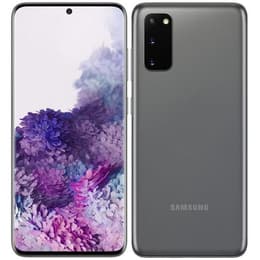
Galaxy S20 5G
Galaxy S20 5G
Starting at

Refurbished price:£133.00

Versus £899.00 new

See options
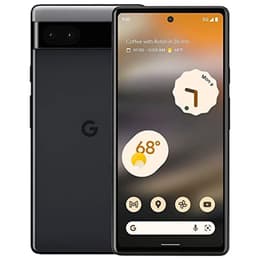
Google Pixel 6A
Google Pixel 6A
Starting at

Refurbished price:£107.00

Versus £459.00 new

See options

Ratings

The Samsung Galaxy S20 5G, released in March 2020, and the Google Pixel 6A, launched in July 2022, are both Android smartphones that offer distinct user experiences. While the Galaxy S20 5G was a flagship device at its release, the Pixel 6A entered the market as a more accessible option, focusing on Google's software strengths. These devices differ primarily in their display technology, camera approach, and software longevity, both running on the Android operating system.

Scores

Durability

When considering the practical lifespan of these devices, several factors come into play, including their release timelines, software support, and physical durability.

  • Release Timeline: The Galaxy S20 5G was released in March 2020, making it an older device compared to the Pixel 6A, which launched in July 2022. This difference in release year directly impacts their remaining software support.
  • Software Longevity: The Pixel 6A is expected to receive a minimum of five years of security updates and major Android OS upgrades from its release, potentially extending its usable life further into the future. The Galaxy S20 5G, having been released earlier, has likely reached or is nearing the end of its official software update cycle, typically receiving around three major OS updates.
  • Durability Features: The Galaxy S20 5G features Gorilla Glass 6 on its display and an IP68 rating for dust and water resistance, indicating a higher level of protection against environmental elements. The Pixel 6A uses Gorilla Glass 3 for its screen and has an IP67 rating for dust and water resistance, offering solid protection but a slightly lower ingress protection rating.

Year of Release

2020

2022

Compatible with latest Update

No

Yes

OS

Android

Android

Foldable

No

No

Performance

The performance of a smartphone is influenced by its internal components, affecting how smoothly applications run and how efficiently it handles daily tasks.

  • Processing Power: The Galaxy S20 5G is equipped with a high-end processor from its release era, providing robust performance for demanding applications and multitasking. The Pixel 6A features Google's custom-designed processor, which is optimized for artificial intelligence and machine learning tasks, contributing to efficient performance in everyday use and specific Google features.
  • Multitasking and Storage: The Galaxy S20 5G typically comes with 12GB of RAM, allowing for extensive multitasking and seamless switching between numerous applications. It also offers 128GB of internal storage, expandable via a microSD card. The Pixel 6A includes 6GB of RAM and 128GB of internal storage, which is not expandable.
  • Battery Behavior: The Galaxy S20 5G has a 4000 mAh battery. User experiences suggest that its battery life can be moderate, especially when utilizing its high refresh rate display. The Pixel 6A houses a larger 4410 mAh battery, and users generally report that it provides reliable all-day power, with an adaptive battery feature designed to extend usage.

Memory (GB)

12 GB

6 GB

Screen quality

The display is a primary interface for smartphone interaction, and both devices offer distinct visual experiences.

  • Display Technology and Resolution: The Galaxy S20 5G features a 6.2-inch Dynamic AMOLED 2X display with a high resolution of 3200x1440 pixels, offering sharp and detailed visuals. The Pixel 6A comes with a 6.1-inch OLED display with a resolution of 2400x1080 pixels, providing clear and vibrant images.
  • Refresh Rate and Smoothness: A key differentiator is the refresh rate; the Galaxy S20 5G supports a 120Hz refresh rate (at 1080p resolution), which results in noticeably smoother scrolling and more fluid animations. The Pixel 6A has a standard 60Hz refresh rate, which is sufficient for most daily tasks but does not offer the same level of visual fluidity.
  • Brightness and Clarity: The Galaxy S20 5G's display can reach a peak brightness of up to 1200 nits, enhancing visibility in bright outdoor conditions and improving HDR content viewing. Both displays offer HDR support, contributing to a wider range of colors and contrast.

Resolution

1440 x 3200

1080 x 2400

Screen type

Dynamic AMOLED 2X

OLED

Audiovisual

Both smartphones offer capable camera systems, though they approach photography with different hardware and software philosophies.

  • Rear Camera System: The Galaxy S20 5G features a versatile triple-camera setup, including a 12MP wide-angle lens, a 64MP telephoto lens with 3x hybrid optical zoom, and a 12MP ultrawide lens. The Pixel 6A utilizes a dual-camera system with a 12.2MP wide-angle lens and a 12MP ultrawide lens, relying heavily on Google's computational photography for image enhancement.
  • Photography Performance: The Galaxy S20 5G offers strong performance across various lighting conditions, with its telephoto lens providing optical zoom capabilities. The Pixel 6A is known for its consistent image quality, particularly in challenging lighting and portrait modes, due to its advanced software processing.
  • Video Recording and Audio: The Galaxy S20 5G is capable of recording 8K video at 24 frames per second and 4K video at 30 or 60 frames per second. The Pixel 6A records 4K video at 30 or 60 frames per second. Both devices offer good microphone quality for calls and recording, and stereo speakers for media consumption.

Main camera

12 megapixels

12.2 megapixels

Front camera

10 megapixels

8 megapixels

Miscellaneous

Beyond core features, several practical elements contribute to the overall user experience and device utility.

  • Connectivity and Ports: Both devices support 5G connectivity, Wi-Fi 6, and NFC for contactless payments. The Pixel 6A also supports the newer Wi-Fi 6E standard and Bluetooth 5.2, while the Galaxy S20 5G uses Bluetooth 5.0. Both phones feature a USB-C port for charging and data transfer but lack a 3.5mm headphone jack.
  • Biometric Security: The Galaxy S20 5G incorporates an ultrasonic in-display fingerprint sensor for secure unlocking. The Pixel 6A also uses an under-display fingerprint sensor for authentication.
  • Physical Design and Materials: The Galaxy S20 5G has dimensions of 151.7 x 69.1 x 7.9 mm and weighs 163g, featuring a glass front and back with an aluminum frame. The Pixel 6A measures 152.2 x 71.8 x 8.7 mm and weighs 178g, with a glass front, plastic back, and an aluminum frame. Both offer a comfortable in-hand feel, with the S20 being slightly lighter and thinner.

Weight

163 g

250 g

Screen size (in)

6.2

6.1

Mobile network

5G

5G

SIM card

Dual Physical SIM

Physical SIM + eSIM

Carrier compatibility

Unlocked

Unlocked

Connector

USB-C

USB-C

The Samsung Galaxy S20 5G and Google Pixel 6A cater to slightly different user priorities. The Galaxy S20 5G, as a former flagship, offers a premium display experience with a high refresh rate and a versatile camera system with optical zoom, making it suitable for users who prioritize a visually fluid experience and advanced camera hardware. However, its battery life, especially with the 120Hz display enabled, might require more frequent charging for heavy users.

The Google Pixel 6A, on the other hand, excels with its consistent camera performance driven by computational photography, extended software support, and reliable all-day battery life. It is well-suited for users who value a clean Android experience, strong software longevity, and a camera that consistently produces high-quality images without extensive manual adjustments. Its 60Hz display might be a consideration for those accustomed to higher refresh rates.

Users prioritizing a high-resolution, high-refresh-rate display and a camera with dedicated telephoto capabilities may prefer the Galaxy S20 5G. Conversely, users who prioritize long-term software support, a robust battery, and a camera that leverages advanced software processing for excellent results will find the Pixel 6A a compelling choice. Both devices represent solid options, and considering a quality-assured refurbished option for either model can be a sustainable choice for consumers.

See all articles

Our recent comparisons