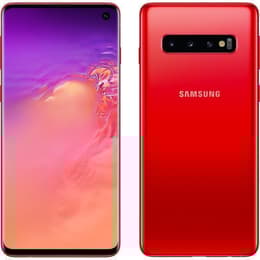


Galaxy S10+ Vs OnePlus 10 Pro

Galaxy S10+
Galaxy S10+
Starting at

Refurbished price:£115.32

Versus £330.00 new

See options
OnePlus 10 Pro
OnePlus 10 Pro
Starting at

Refurbished price:£391.00

Versus £769.39 new

See options

Ratings

The Samsung Galaxy S10 Plus, released in March 2019, and the OnePlus 10 Pro, launched globally in March 2022, represent different generations of Android flagship smartphones. While both devices offer premium experiences, the OnePlus 10 Pro benefits from newer hardware and a more extended software support timeline. Both operate on the Android platform, though with distinct user interfaces: Samsung's One UI and OnePlus's OxygenOS.

Scores

Durability

The practical lifespan of a smartphone is significantly influenced by its release date and the manufacturer's commitment to software updates and repairability.

  • Release Timeline: The Galaxy S10 Plus was released in March 2019, making it an older device compared to the OnePlus 10 Pro, which launched globally in March 2022. This age difference directly impacts the remaining period of official software support.
  • Software Longevity: The Galaxy S10 Plus received its last major Android operating system update with Android 12, released in December 2021, and has since transitioned to security patches. In contrast, the OnePlus 10 Pro, initially launched with Android 12, has received Android 16 as its fourth and final major OS upgrade, with security updates expected until 2027. This means the OnePlus 10 Pro offers a considerably longer period of current software features and security protection.
  • Repairability: The Galaxy S10 Plus received a repairability score of 3 out of 10 from iFixit, indicating challenges in disassembly due to extensive adhesive use and a soldered charging port. The OnePlus 10 Pro generally scores better, with some sources giving it a 6 out of 10, noting that while some components are accessible, adhesive and plastic covers can complicate repairs. However, the OnePlus 10 Pro has also been noted in durability tests for a structural weakness that could lead to it snapping under significant pressure.

Year of Release

2019

2022

Compatible with latest Update

No

Yes

OS

Android

Android

Foldable

No

No

Performance

Performance in daily use is a key differentiator, with the newer OnePlus 10 Pro generally offering a more responsive experience due to its advanced internal components.

  • System Responsiveness: The OnePlus 10 Pro, equipped with a more recent generation processor, handles demanding applications and multitasking with greater fluidity and speed. Users will experience quicker app loading times and smoother transitions between tasks. The Galaxy S10 Plus, while capable for its time, may show more hesitation with intensive workloads or numerous applications running simultaneously.
  • Battery Behavior: The OnePlus 10 Pro features a larger 5000 mAh battery, which, combined with its efficient display technology, often translates to extended usage times, with many users reporting a full day of heavy use. The Galaxy S10 Plus has a 4100 mAh battery, providing solid all-day power for moderate use, though heavy users might find themselves needing to recharge more frequently.
  • Storage and Multitasking: Both devices offer various storage and RAM configurations, typically starting at 8GB of RAM. The OnePlus 10 Pro's more modern memory management and faster storage technologies contribute to a snappier overall experience, particularly when switching between many open applications. The Galaxy S10 Plus offers expandable storage via a microSD card, a feature not present on the OnePlus 10 Pro.

Memory (GB)

8 GB

8 GB

Screen quality

Both smartphones feature high-quality displays, but the OnePlus 10 Pro introduces advancements in refresh rate and overall visual fluidity.

  • Display Technology and Clarity: The Galaxy S10 Plus features a 6.4-inch Dynamic AMOLED display, known for its deep blacks and vibrant colors, with a resolution of 1440 x 3040 pixels. The OnePlus 10 Pro sports a slightly larger 6.7-inch LTPO2 Fluid AMOLED display, offering a similar high resolution of 1440 x 3216 pixels, which provides sharp and detailed visuals.
  • Brightness and Refresh Rate: The OnePlus 10 Pro's display stands out with an adaptive 120Hz refresh rate, allowing for smoother scrolling and more responsive interactions compared to the Galaxy S10 Plus's standard 60Hz refresh rate. This higher refresh rate contributes to a more fluid visual experience, especially during gaming or fast-paced content. Both displays offer ample brightness for comfortable outdoor viewing.
  • Viewing Experience: The Galaxy S10 Plus has a dual punch-hole cutout for its front cameras, while the OnePlus 10 Pro opts for a single punch-hole, which can offer a slightly less intrusive viewing experience. Both devices provide an immersive viewing experience with curved edges and minimal bezels.

Resolution

1440 x 3040

1440 x 3216

Screen type

Dynamic AMOLED

LTPO2 Fluid AMOLED

Audiovisual

The camera systems on both devices offer versatile photography options, with the OnePlus 10 Pro benefiting from a newer sensor generation and Hasselblad collaboration for color calibration.

  • Camera System Capabilities: The Galaxy S10 Plus features a triple rear camera setup with a 12 MP wide, 12 MP telephoto, and 16 MP ultrawide lens, alongside a dual front camera system. The OnePlus 10 Pro also has a triple rear camera array, consisting of a 48 MP wide, 8 MP telephoto, and 50 MP ultrawide lens, with a single 32 MP front camera. The OnePlus 10 Pro's ultrawide lens offers a wider field of view.
  • Photography Performance: The OnePlus 10 Pro's main camera generally produces detailed images with accurate colors, particularly in good lighting conditions, and benefits from Hasselblad's color science. While the Galaxy S10 Plus offers versatility with its three lenses, user reviews sometimes note its image quality, especially in low light, can be less competitive compared to newer flagships. The OnePlus 10 Pro's low-light performance is generally improved, though some users find its night mode and zoom capabilities not always class-leading.
  • Video Recording and Audio: Both phones are capable of recording high-resolution video. The Galaxy S10 Plus can record 4K video at 60fps, with features like HDR10+. The OnePlus 10 Pro also supports 4K video recording, with some models capable of 8K at 24fps, and offers improved stabilization. Both devices provide stereo speakers for media consumption, and the Galaxy S10 Plus notably retains a 3.5mm headphone jack, which is absent on the OnePlus 10 Pro.

Main camera

12 megapixels

48 megapixels

Front camera

10 megapixels

32 megapixels

Miscellaneous

Beyond core features, several practical elements contribute to the overall user experience and daily convenience of these devices.

  • Connectivity and Ports: The OnePlus 10 Pro supports 5G connectivity, offering faster mobile data speeds where available, along with Wi-Fi 6 and Bluetooth 5.2. The Galaxy S10 Plus supports Wi-Fi 6 and Bluetooth 5.0, but is limited to 4G LTE networks. Both devices utilize a USB-C port for charging and data transfer. A notable difference is the presence of a 3.5mm headphone jack on the Galaxy S10 Plus, which is not found on the OnePlus 10 Pro.
  • Biometric Security: Both phones feature in-display fingerprint sensors. The Galaxy S10 Plus uses an ultrasonic sensor, while the OnePlus 10 Pro employs an optical sensor, both offering convenient unlocking. Both also support face recognition for unlocking.
  • Design and Handling: The Galaxy S10 Plus has dimensions of 157.6 x 74.1 x 7.8 mm and weighs around 175g (or 198g for ceramic models), featuring a glass front (Gorilla Glass 6) and back (Gorilla Glass 5) with an aluminum frame, and an IP68 rating for dust and water resistance. The OnePlus 10 Pro is slightly larger and heavier at 163 x 73.9 x 8.55 mm and 200.5g, with a Gorilla Glass Victus front and Gorilla Glass 5 back, and an aluminum frame. The global version of the OnePlus 10 Pro typically lacks an official IP water resistance rating, though some carrier-specific models may have it.

Weight

175 g

201 g

Screen size (in)

6.4

6.7

Mobile network

4G

5G

SIM card

Dual Physical SIM

Physical SIM

Carrier compatibility

Unlocked

Unlocked

The Samsung Galaxy S10 Plus and OnePlus 10 Pro cater to different user priorities, largely due to their respective release timelines and the advancements in smartphone technology over those years. Users often praise the Galaxy S10 Plus for its vibrant display, the inclusion of a 3.5mm headphone jack, and expandable storage, which are features less common in newer devices. However, common criticisms include its limited software update longevity and, for some, camera performance that was surpassed by contemporary rivals.

The OnePlus 10 Pro is frequently lauded for its smooth, high refresh rate display, strong overall performance, and significantly improved battery life. Its camera system, co-developed with Hasselblad, generally receives positive feedback for color accuracy and detail, though some users note its low-light and zoom capabilities might not always match the absolute best in its class. A notable concern for some users has been its durability in extreme bend tests and the lack of an official IP rating for all models.

Users prioritizing a more modern software experience, longer update support, and a higher refresh rate display for smoother interactions will find the OnePlus 10 Pro well-suited to their needs. Those who value traditional features like a headphone jack and expandable storage, and are content with an older software version, may lean toward the Galaxy S10 Plus. Both devices, especially as quality-assured refurbished options, offer a sustainable choice for consumers seeking premium smartphone features without purchasing new.


See all articles

Our recent comparisons