
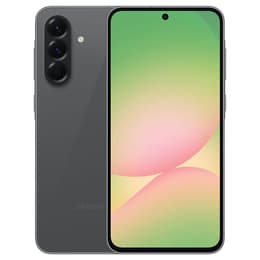


Galaxy A56 Vs Google Pixel 7 Pro

Galaxy A56
Galaxy A56
Starting at

Refurbished price:£274.00

Versus £422.50 new

See options
Google Pixel 7 Pro
Google Pixel 7 Pro
Starting at

Refurbished price:£169.75

Versus £899.99 new

See options

Ratings

The Samsung Galaxy A56 (released March 2025) and the Google Pixel 7 Pro (released October 2022) are distinct Android smartphones, each offering a different approach to the user experience. While the Galaxy A56 focuses on a balanced mid-range offering with extended software support, the Pixel 7 Pro, a former flagship, emphasizes advanced camera capabilities and a pure Android experience. Both devices operate on the Android platform, but they differ significantly in their hardware and software philosophies.

Scores

Durability

When considering the longevity of these devices, their respective release timelines and software support policies are key factors.

  • Release Timeline: The Samsung Galaxy A56 was released in March 2025, making it a newer device compared to the Google Pixel 7 Pro, which launched in October 2022. This difference in release dates inherently grants the A56 a longer potential lifespan in terms of receiving the latest software features and security updates.
  • OS Support Duration: Samsung has committed to providing the Galaxy A56 with six Android OS upgrades and six years of security updates, with support expected to end in 2031. The Pixel 7 Pro, having been released earlier, received three years of OS updates and five years of security updates from its launch. This means the Galaxy A56 offers a significantly longer period of official software support.
  • Expected Practical Lifespan: Users prioritizing the longest possible software support and access to the latest Android versions will find the Galaxy A56 more aligned with their needs. Both devices feature durable builds, with the A56 sporting Gorilla Glass Victus+ on the front and back and an aluminum frame, while the Pixel 7 Pro also uses robust materials.

Year of Release

2025

2022

Compatible with latest Update

Yes

Yes

OS

Android

Android

Foldable

No

No

Performance

The performance of these two smartphones caters to different user expectations, reflecting their original market positioning.

  • Processor Capabilities: The Galaxy A56 is powered by a current-generation processor designed for efficient everyday use and smooth multitasking. It handles demanding applications and gaming adequately for casual users. The Pixel 7 Pro, on the other hand, features a processor engineered for high-end performance, delivering a very responsive experience for intensive tasks, advanced gaming, and complex AI-driven features.
  • System Responsiveness: Users of the Pixel 7 Pro generally experience very fluid navigation and quick app loading times, indicative of its former flagship status. The Galaxy A56 provides a smooth and reliable experience for typical smartphone activities, though it may not match the raw speed of the Pixel 7 Pro in highly demanding scenarios.
  • RAM and Storage: The Galaxy A56 is available with 8GB or 12GB of RAM and 128GB or 256GB of internal storage. The Pixel 7 Pro offers 12GB of RAM across its storage options of 128GB, 256GB, or 512GB, providing ample memory for extensive multitasking. The Galaxy A56 is the first in its series to no longer support expandable storage via microSD.

Memory (GB)

8 GB

12 GB

Screen quality

Both devices offer vibrant displays, but there are notable differences in their specifications and viewing experiences.

  • Display Technology and Resolution: The Samsung Galaxy A56 features a 6.7-inch FHD+ Super AMOLED display with a resolution of 2340x1080 pixels. The Google Pixel 7 Pro comes with a 6.7-inch LTPO AMOLED display, offering a higher resolution of 3120x1440 pixels. This higher resolution on the Pixel 7 Pro results in a sharper image with more detailed visuals.
  • Brightness and Refresh Rate: Both phones feature a 120Hz refresh rate, contributing to smooth scrolling and responsive interactions. The Galaxy A56 offers a peak brightness of 1900 nits, ensuring good visibility in various lighting conditions. The Pixel 7 Pro also provides excellent brightness for outdoor use, though specific peak nits can vary.
  • Viewing Experience: The Pixel 7 Pro's higher resolution and LTPO technology allow for more dynamic refresh rate adjustments, potentially contributing to better power efficiency while maintaining smoothness. The Galaxy A56's Super AMOLED panel delivers deep blacks and vibrant colors, providing an engaging viewing experience for media consumption.

Resolution

1080 x 2340

1440 x 3120

Screen type

Super AMOLED

LTPO AMOLED

Audiovisual

The camera systems on these smartphones represent different strengths, with the Pixel 7 Pro known for its computational photography and the A56 offering a versatile setup.

  • Camera System Capabilities: The Galaxy A56 features a triple-camera setup with a 50MP main sensor with optical image stabilization (OIS), a 12MP ultrawide lens, and a 5MP macro camera. Its front camera is 12MP. The Pixel 7 Pro boasts a more advanced triple-camera system, including a 50MP main sensor with OIS, a 48MP telephoto lens with 5x optical zoom, and a 12MP ultrawide lens. It has a 10.8MP front camera.
  • Photography Performance: The Galaxy A56 excels in detail preservation and natural color accuracy with its primary camera, and includes AI capabilities like enhanced subject detection and Object Eraser. The Pixel 7 Pro is renowned for its computational photography, delivering consistently high-quality images across various conditions, particularly in low light and with its advanced zoom capabilities.
  • Video Recording Quality: Both devices are capable of recording videos up to 4K at 30 frames per second. The Galaxy A56 offers sufficient stabilization and good autofocus speed. The Pixel 7 Pro also provides strong video performance with excellent stabilization and detail.

Main camera

4K@30fps

50 megapixels

Front camera

13 megapixels

10.8 megapixels

Miscellaneous

Beyond the core features, several practical elements differentiate these two devices in daily use.

  • Connectivity Options: Both smartphones support 5G connectivity, Wi-Fi 6 (802.11ax), and Bluetooth. The Galaxy A56 supports Wi-Fi 6E, offering access to the 6GHz band for potentially faster and less congested wireless connections. The Pixel 7 Pro supports Bluetooth 5.2, while the A56 supports Bluetooth 5.4.
  • Port Types and Sensors: Both devices utilize a USB-C port for charging and data transfer and lack a 3.5mm headphone jack. The Galaxy A56 features an under-display fingerprint sensor. The Pixel 7 Pro also includes an under-display fingerprint reader and face unlock.
  • Build Materials and Dimensions: The Galaxy A56 has an aluminum frame with Corning Gorilla Glass Victus+ on both the front and back, and an IP67 rating for dust and water resistance. It measures 162.2 x 77.5 x 7.4 mm and weighs 198g. The Pixel 7 Pro also features an aluminum finish and an IP68 rating, offering slightly better water resistance. It measures 162.9 x 76.6 x 8.9 mm and weighs 212g.

Weight

197 g

212 g

Screen size (in)

6.5

6.7

Mobile network

5G

5G

SIM card

Dual Physical SIM + eSIM

Physical SIM + eSIM

Carrier compatibility

Unlocked

Unlocked

User feedback for the Samsung Galaxy A56 often highlights its strong battery life, vibrant display, and the promise of extensive software updates as significant advantages. Many appreciate its balanced performance for everyday tasks and its capable camera system, especially for its segment. Some common observations include its lack of expandable storage, which might be a consideration for users with large media libraries.

The Google Pixel 7 Pro is frequently praised for its exceptional camera performance, delivering consistent and high-quality photos, particularly in challenging conditions. Users also value its clean Android experience and the advanced AI features powered by its custom processor. Some users have noted its battery life, while generally good, might require more frequent charging for very heavy use compared to some competitors.

Users prioritizing long-term software support and a modern, durable design with good all-around performance may find the Samsung Galaxy A56 well-suited to their needs. Its extended update policy makes it a compelling choice for those who keep their devices for several years. Conversely, users who prioritize a top-tier camera experience, a pure Android interface, and advanced computational features will likely lean towards the Google Pixel 7 Pro. Both devices offer a quality-assured refurbished option, providing an eco-friendly alternative for consumers seeking reliable technology.


See all articles

Our recent comparisons






