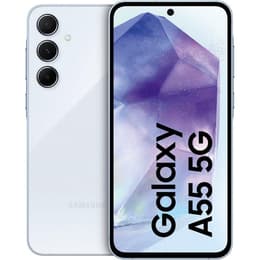


Galaxy A55 Vs iPhone 15 Plus

Galaxy A55
Galaxy A55
Starting at

Refurbished price:£177.00

Versus £426.69 new

See options
iPhone 15 Plus
iPhone 15 Plus
Starting at

Refurbished price:£345.00

Versus £799.00 new

See options

Ratings

The Samsung Galaxy A55 (2024) and the iPhone 15 Plus (2023) are both prominent smartphones, though they cater to different segments of the market. While the Galaxy A55 operates on the Android platform, offering extensive customization and an open ecosystem, the iPhone 15 Plus runs on Apple's iOS, known for its integrated services and streamlined user experience. Key differentiators include their display technologies, camera systems, and overall software philosophies.

Scores

Durability

When considering the long-term usability of these devices, their release timelines and software support policies are important factors.

  • Software Longevity: The Samsung Galaxy A55 is expected to receive four major Android OS updates and five years of security patches from its March 2024 release, extending its software support well into the future. The iPhone 15 Plus, released in September 2023, typically receives major iOS updates for approximately five to six years, ensuring a long period of current software features and security.
  • Repairability: The Galaxy A55 has demonstrated a high repairability score of 8.5 out of 10, indicating that components are generally accessible and replaceable, which can contribute to a longer practical lifespan through easier maintenance. Information regarding a specific repairability score for the iPhone 15 Plus is not as readily available, though Apple devices are designed with specific repair processes.
  • Expected Lifespan: Both devices are built to offer several years of reliable performance. The Galaxy A55's robust update policy and high repairability suggest a sustained functional life, while the iPhone 15 Plus benefits from Apple's consistent software support and durable build materials.

Year of Release

2024

2023

Compatible with latest Update

Yes

Yes

OS

Android

iOS

Foldable

No

No

Performance

The performance of a smartphone is crucial for daily tasks, app responsiveness, and demanding applications like gaming.

  • System Responsiveness: The iPhone 15 Plus delivers a consistently fluid and responsive user experience, handling demanding applications and multitasking with ease. Users often report a lag-free and smooth operation, even with numerous apps open simultaneously. The Galaxy A55 provides a capable performance for everyday use, with fast app opening and closing times, and generally smooth navigation through its interface.
  • Multitasking and Storage: The Galaxy A55 is available with 8GB or 12GB of RAM, which supports efficient multitasking and keeps multiple applications active in the background. It offers storage options of 128GB and 256GB, with the added flexibility of expandable storage via a microSD card up to 1TB. The iPhone 15 Plus comes with 6GB of RAM and storage configurations of 128GB, 256GB, and 512GB, providing ample space for most users, though it does not offer expandable storage.
  • Battery Behavior: The Galaxy A55 features a 5000mAh battery, which users report provides excellent endurance, often lasting through a full day of heavy use. The iPhone 15 Plus, with its 4383mAh battery, is also praised for its impressive battery life, often exceeding expectations and providing extended usage on a single charge.

Memory (GB)

8 GB

6 GB

Screen quality

The display is a primary interface for smartphone interaction, influencing everything from media consumption to daily navigation.

  • Display Technology and Clarity: The iPhone 15 Plus features a 6.7-inch Super Retina XDR OLED display, offering deep blacks, vibrant colors, and a high resolution of 2796x1290 pixels at 460 pixels per inch (ppi), resulting in sharp and clear visuals. The Galaxy A55 sports a 6.6-inch Super AMOLED display with a resolution of 2340x1080 pixels, providing vivid colors and good clarity for typical viewing.
  • Brightness and Refresh Rate: The iPhone 15 Plus offers a standard 60Hz refresh rate, with a typical brightness of 1000 nits, peaking at 1600 nits for HDR content and up to 2000 nits for outdoor visibility. The Galaxy A55 features a 120Hz adaptive refresh rate, which provides smoother scrolling and animations, and reaches up to 1000 nits peak brightness. Users accustomed to higher refresh rates might notice the difference on the iPhone 15 Plus.
  • Viewing Experience: Both devices offer excellent viewing experiences for media. The iPhone 15 Plus includes the Dynamic Island, an interactive area around the front camera and sensors that displays alerts and live activities. The Galaxy A55's display is noted for its immersive visuals and is well-suited for streaming content.

Resolution

1080 x 2340

1290 x 2796

Screen type

Super AMOLED

Super Retina XDR OLED

Audiovisual

Camera capabilities are a significant consideration for many users, impacting the quality of photos and videos captured.

  • Rear Camera Systems: The iPhone 15 Plus is equipped with a dual-camera system featuring a 48MP main sensor with optical image stabilization (OIS) and a 12MP ultrawide lens. It also offers a 2x optical zoom option through computational photography. The Galaxy A55 features a triple-camera setup on the rear, including a 50MP main sensor with OIS, a 12MP ultrawide lens, and a 5MP macro lens.
  • Photography Performance: The iPhone 15 Plus excels in capturing detailed and color-accurate photos in various lighting conditions, with improved low-light performance and next-generation portrait capabilities. The Galaxy A55 delivers clear photos in good lighting, and its night mode can produce legible results in very dark conditions. Some users have noted that the iPhone 15 Plus's camera, while good, might not match the low-light performance or macro capabilities of some high-end Android devices.
  • Video and Audio: Both devices offer strong video recording capabilities. The iPhone 15 Plus can record video up to 4K at 60 frames per second (fps), including HDR Dolby Vision. The Galaxy A55 also supports 4K video recording at 30fps for both its rear and front cameras. Both phones provide good microphone quality for calls and recording, and stereo speakers for media consumption.

Main camera

50 megapixels

48 megapixels

Front camera

32 megapixels

12 megapixels

Miscellaneous

Beyond core features, several practical elements contribute to the overall user experience and device utility.

  • Connectivity and Ports: Both the Galaxy A55 and iPhone 15 Plus support 5G connectivity, Wi-Fi 6, and Bluetooth 5.3 for robust wireless connections. A notable change for the iPhone 15 Plus is the adoption of a USB-C 2.0 port for charging and data transfer, aligning with a more universal standard. The Galaxy A55 also uses a USB Type-C 2.0 port.
  • Sensors and Security: The iPhone 15 Plus features Face ID for secure facial recognition and includes an Ultra Wideband chip for enhanced spatial awareness and Precision Finding with compatible devices. The Galaxy A55 incorporates a fingerprint sensor for biometric authentication. Both devices include standard sensors like accelerometers, gyroscopes, and ambient light sensors.
  • Build and Handling: The iPhone 15 Plus features an aluminum design with a Ceramic Shield front and a color-infused glass back, offering IP68 dust and water resistance. It weighs 201 grams. The Galaxy A55 has an aluminum frame and Gorilla Glass Victus+ on the front, with a glass back, and boasts an IP67 rating for dust and water resistance. It weighs 213 grams.

Weight

213 g

201 g

Screen size (in)

6.6

6.7

Mobile network

5G

5G

SIM card

Dual Physical SIM

Physical SIM + eSIM

Carrier compatibility

Unlocked

Unlocked

Connector

USB-C

USB-C

The Samsung Galaxy A55 and iPhone 15 Plus offer distinct experiences, each with its own set of strengths. User feedback for the Galaxy A55 often highlights its excellent battery life, vibrant display, and smooth performance for everyday tasks. Some users have noted its larger bezels and occasional inconsistencies in camera performance, particularly with moving subjects or in very low light. The iPhone 15 Plus is frequently praised for its consistently fluid operation, impressive battery endurance, and bright, clear display. However, some users coming from Android devices with higher refresh rates might find the 60Hz display noticeable, and the absence of a dedicated macro camera is sometimes mentioned.

Users prioritizing extensive software update longevity and a highly repairable device with expandable storage may find the Galaxy A55 well-suited to their needs. Its 120Hz display also offers a smoother visual experience. Conversely, users who value a highly integrated ecosystem, consistent performance, and a streamlined user interface might lean towards the iPhone 15 Plus. Its robust build and advanced computational photography features are also strong considerations. Both devices represent solid choices within their respective ecosystems, and opting for a quality-assured refurbished option for either model can be a sustainable choice for consumers.