
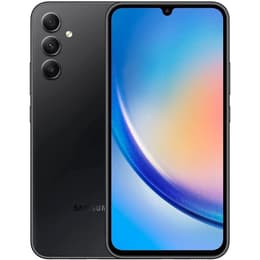
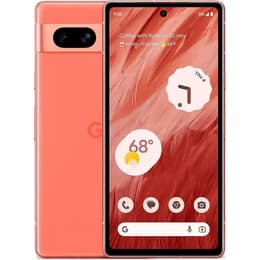

Galaxy A34 Vs Google Pixel 7A

Galaxy A34
Galaxy A34
Starting at

Refurbished price:£105.00

Versus £399.00 new

See options
Google Pixel 7A
Google Pixel 7A
Starting at

Refurbished price:£129.00

Versus £649.99 new

See options

Ratings

The Samsung Galaxy A34 and the Google Pixel 7a are both Android smartphones released in 2023, offering distinct approaches to the mid-range segment. While the Galaxy A34, launched in March 2023, emphasizes a larger display and extensive battery capacity, the Pixel 7a, released in May 2023, focuses on advanced computational photography and a compact form factor. Both devices operate on the Android platform, providing users with a familiar and customizable software experience.

Scores

Durability

When considering the long-term usability of these devices, their release timelines and software support policies are key factors.

  • Release and Software Support: The Samsung Galaxy A34 was released in March 2023 and is expected to receive four years of Android operating system updates and five years of security updates, extending its support until approximately 2027. The Google Pixel 7a, launched in May 2023, typically receives three years of Android version updates and five years of security updates. This means the Galaxy A34 may offer a slightly longer period of major OS upgrades.
  • Physical Durability: Both smartphones feature an IP67 rating for dust and water resistance, indicating they can withstand submersion in up to one meter of freshwater for 30 minutes. The Galaxy A34 uses Corning Gorilla Glass 5 for its front display, while the Pixel 7a features Corning Gorilla Glass 3.
  • Expected Lifespan: Given their respective update policies and build quality, both devices are designed for a practical lifespan of several years, with the Galaxy A34 potentially offering an extra year of OS feature updates.

Year of Release

2023

2023

Compatible with latest Update

Yes

Yes

OS

Android

Android

Foldable

No

No

Performance

The performance of a smartphone is crucial for daily tasks, from browsing to demanding applications. Both the Galaxy A34 and Pixel 7a offer capable hardware for a smooth user experience.

  • Processing Power: The Galaxy A34 is equipped with an octa-core processor that handles everyday applications and multitasking efficiently. The Pixel 7a features a different octa-core processor designed by Google, which is optimized for artificial intelligence tasks and computational photography, contributing to a responsive feel across the system.
  • Memory and Storage: The Galaxy A34 is available with 6GB or 8GB of RAM and 128GB or 256GB of internal storage, with the added benefit of expandable storage up to 1TB via a microSD card. The Pixel 7a comes with 8GB of RAM and 128GB of internal storage, which is not expandable.
  • Battery Performance: The Galaxy A34 houses a 5000 mAh battery, which typically provides extended usage times, with some tests showing it lasting over 11 hours in continuous use scenarios. The Pixel 7a has a 4385 mAh battery, and user experiences suggest it can comfortably last through a full day, with streaming tests indicating over 13 hours of use.

Memory (GB)

6 GB

8 GB

Screen quality

The display is a primary interface for smartphone interaction, and both devices offer vibrant viewing experiences with some key differences.

  • Display Technology and Size: The Samsung Galaxy A34 features a larger 6.6-inch Super AMOLED display, providing deep blacks and vibrant colors. The Google Pixel 7a has a more compact 6.1-inch OLED display, also known for its excellent contrast and color reproduction.
  • Resolution and Clarity: Both phones offer Full HD+ resolution, with the Galaxy A34 at 1080 x 2340 pixels and the Pixel 7a at 1080 x 2400 pixels. The Pixel 7a's smaller screen size with a similar resolution results in a slightly higher pixel density, contributing to sharp image and text clarity.
  • Refresh Rate and Brightness: The Galaxy A34 boasts a 120Hz refresh rate for smoother scrolling and animations, along with a peak brightness of 1000 nits for good outdoor visibility. The Pixel 7a offers a 90Hz refresh rate, which still provides a fluid visual experience, and also reaches a peak brightness of 1000 nits.

Resolution

1080 x 2340

1080 x 2400

Screen type

Super AMOLED

OLED

Audiovisual

Photography is a significant aspect of modern smartphones, and both the Galaxy A34 and Pixel 7a deliver capable camera systems with different strengths.

  • Rear Camera System: The Galaxy A34 features a triple rear camera setup, including a 48MP main sensor with optical image stabilization (OIS), an 8MP ultrawide lens, and a 5MP macro lens. The Pixel 7a comes with a dual-camera system, highlighted by a 64MP main sensor with OIS (which often uses pixel-binning to produce 16MP images) and a 13MP ultrawide lens.
  • Photography Performance: The Pixel 7a is often praised for its computational photography, which enhances image quality, particularly in challenging lighting conditions, and provides consistent results. The Galaxy A34 offers versatile shooting options with its dedicated macro lens and generally produces clear and detailed photos in good lighting.
  • Video and Front Camera: Both devices are capable of recording 4K video at 30 frames per second with their rear cameras. The Pixel 7a can also record 4K video at 60 frames per second. For selfies and video calls, both phones feature a 13MP front-facing camera.

Main camera

48 megapixels

64 megapixels

Front camera

13 megapixels

13 megapixels

Miscellaneous

Beyond core features, several practical elements contribute to the overall user experience of these smartphones.

  • Connectivity and Ports: Both the Galaxy A34 and Pixel 7a support 5G connectivity and Bluetooth 5.3. The Galaxy A34 includes Wi-Fi 5 (802.11 a/b/g/n/ac), while the Pixel 7a offers the newer Wi-Fi 6E standard for potentially faster and more stable wireless connections. Both devices utilize a USB-C port for charging and data transfer, but neither includes a traditional 3.5mm headphone jack.
  • Biometric Security: Both smartphones incorporate an under-display fingerprint sensor for secure unlocking. The Pixel 7a also offers face unlock as an additional biometric option.
  • Design and Handling: The Galaxy A34 weighs 199g and measures 161.3 x 78.1 x 8.2 mm, offering a larger footprint. The Pixel 7a is slightly lighter at 193.5g and more compact at 152 x 72.9 x 9 mm, which might appeal to users preferring a smaller device for one-handed use. Both phones feature stereo speakers for an enhanced audio experience.

Weight

199 g

193 g

Screen size (in)

6.6

6.1

Mobile network

5G

5G

SIM card

Dual Physical SIM

Physical SIM + eSIM

Carrier compatibility

Unlocked

Unlocked

User feedback often highlights the Samsung Galaxy A34's strong battery life and expansive Super AMOLED display as significant advantages, making it suitable for users who prioritize media consumption and extended usage without frequent charging. Some users note that while its processor is capable, it might not match the raw performance of higher-end chipsets for very demanding tasks. The Google Pixel 7a, on the other hand, consistently receives praise for its exceptional camera performance, often rivaling more expensive devices due to its advanced image processing. Its compact size and clean Android experience are also frequently cited as positive aspects, though some users might desire expandable storage.

Users prioritizing a larger, vibrant display and long battery life, along with the flexibility of expandable storage, may find the Samsung Galaxy A34 well-suited to their needs. Conversely, individuals who value a top-tier camera experience, a more compact form factor, and Google's optimized software features will likely lean towards the Google Pixel 7a. Both devices represent compelling options in their category, and choosing between them often comes down to these specific user priorities. For those considering either model, exploring quality-assured refurbished options can provide an eco-friendly alternative to new purchases.


See all articles

Our recent comparisons





